


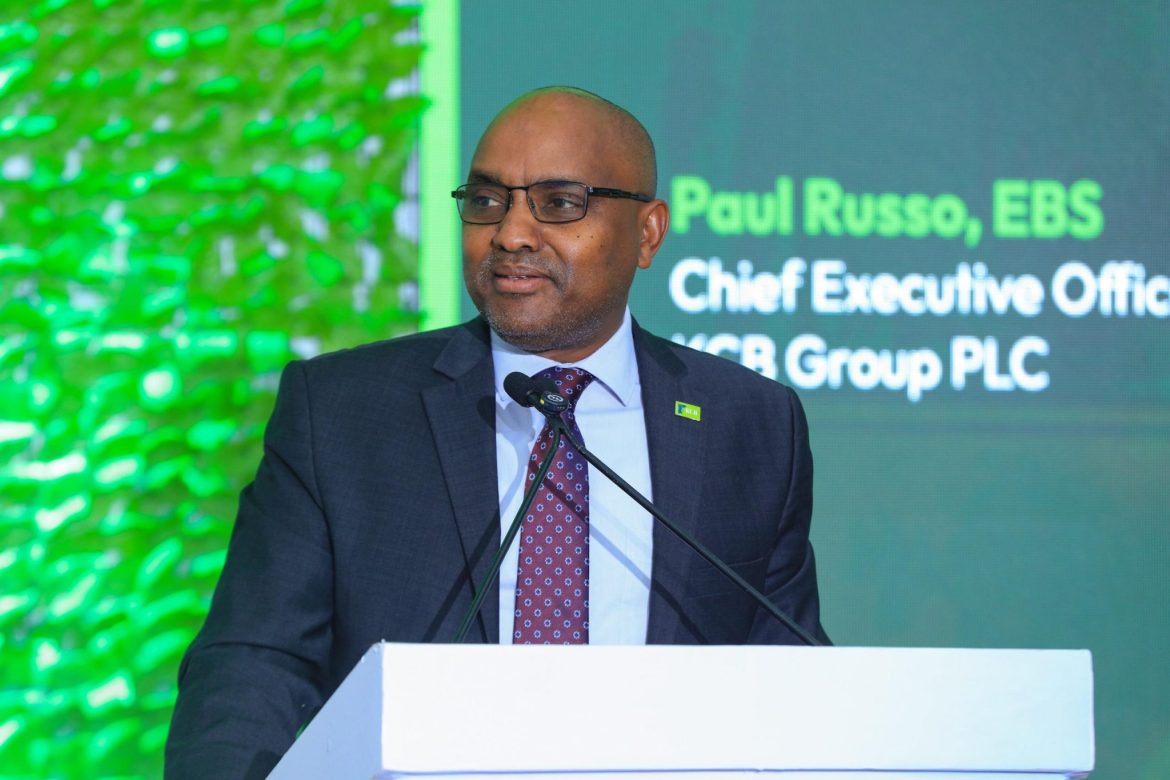
KCB Group has launched a Sustainability Bond Framework that could support up to KSh300 billion ($2.3 billion) in medium-term financing over five years, positioning one of East Africa’s largest banking groups to channel capital into renewable energy, climate-resilient infrastructure, water systems, affordable housing and underserved businesses. The framework, unveiled at the KCB PowerTalk series in Nairobi, will underpin a Medium-Term Note Programme to be issued by KCB Bank Kenya, subject to regulatory approval and market conditions, and represents a significant attempt to connect capital-market financing with the region’s infrastructure and development needs.
The proposed programme will divide eligible investments into Green, Blue and Social categories, allowing proceeds to be directed towards projects with defined environmental or social objectives. According to KCB, the Green category will cover renewable energy, energy-efficient buildings, clean transportation, sustainable agriculture, and water and wastewater management, while the Blue category will focus on the resilience of marine, coastal and freshwater ecosystems. The Social category will target affordable housing, micro, small and medium-sized enterprises and enterprises led by women and young people.
The framework comes at a time when East African economies face a combination of infrastructure deficits, climate-related risks, constrained public finances and limited access to affordable long-term capital. For banks, that environment is creating pressure to find financing structures that can mobilise institutional and private capital while maintaining clear standards around how funds are allocated and the impact generated.
KCB Group Chief Executive Officer Paul Russo said the framework provides the lender with a structured mechanism for directing capital towards investments with measurable environmental and social outcomes. His remarks place the initiative within a wider shift in African banking, where sustainability finance is increasingly being treated as part of mainstream capital allocation rather than as a separate corporate responsibility activity. The proposed scale is notable in Kenya’s financial market. A KSh300 billion programme would be equivalent to a substantial share of the country’s annual private-sector financing needs, although the full amount would be raised over time and actual issuance will depend on market conditions and regulatory approval. The framework therefore provides a financing ceiling rather than an immediate KSh300 billion injection into sustainable projects.
That distinction is important because the impact of a sustainable bond programme ultimately depends on the quality and scale of the projects financed. A large framework can provide access to capital, but the economic value will depend on whether eligible projects are commercially viable, whether proceeds are properly tracked and whether expected environmental and social outcomes can be demonstrated. Moody’s has independently reviewed the framework and assigned it a Sustainability Quality Score of 2, rated “Very Good”, according to KCB. Moody’s describes its Sustainability Quality Score as an assessment of the sustainability credentials of a financing framework or instrument, with scores ranging from SQS1, the highest, to SQS5. Independent external assessments can provide investors with additional information on how a framework aligns with sustainable-finance principles and its stated objectives.
For KCB, the framework builds on a sustainability agenda that the bank says has been integrated into its business model for almost two decades. The lender states that it began embedding sustainability into its business in 2008 and published its first sustainability report in 2009. It subsequently aligned its sustainability agenda with nine UN Sustainable Development Goals in 2017 and expanded that alignment to 14 of the 17 goals.
The bank also adopted the UNEP Finance Initiative’s Principles for Responsible Banking in 2019 and became an accredited financial intermediary of the Green Climate Fund in 2020. KCB later committed to achieving net-zero emissions by 2050 through the Net-Zero Banking Alliance and joined the Forward Faster Initiative in 2023. Its current sustainability policy integrates environmental and social considerations into lending, project assessment, risk management and reporting. The new framework is therefore an extension of an existing financing strategy rather than a standalone sustainability initiative. KCB’s sustainability disclosures show that environmental and social due diligence is already incorporated into its financing activities, while its green-lending portfolio has expanded in recent years. The bank reports that 15% of its loan portfolio is classified as green loans and that KSh615 billion in loans have been screened under environmental and social due-diligence processes.
The proposed Green component could be particularly relevant to East Africa’s energy transition. Kenya has rapidly expanded renewable-energy generation, but the region still requires substantial investment in transmission, distribution, energy efficiency, storage and productive uses of electricity. Financing renewable-energy assets alone will not resolve those constraints. Banks will also need to support the infrastructure that allows clean electricity to reach households and businesses reliably. Water and wastewater financing represents another significant opportunity. East African cities are growing rapidly, increasing demand for water supply, sanitation and wastewater infrastructure. Climate variability is also placing greater pressure on water resources, making investments in resilient infrastructure increasingly important for both public health and economic productivity.
The Blue component gives the framework a broader regional dimension. East Africa’s blue economy extends beyond the Indian Ocean coastline to lakes, rivers, wetlands and other freshwater systems. Coastal economies depend on marine ecosystems for fisheries, tourism, transport and livelihoods, while inland communities rely heavily on freshwater ecosystems for agriculture, domestic consumption and economic activity. Financing the resilience of these ecosystems is often difficult because environmental benefits can extend well beyond the immediate project developer or investor. A bankable blue-finance framework can potentially help bridge that gap by defining eligible investments that can attract commercial capital while addressing ecosystem and community risks.
The Social component similarly connects sustainable finance with the real economy. Affordable housing, MSME finance and women- and youth-led businesses are areas where conventional commercial lending can face challenges because of collateral requirements, limited credit histories and perceived risk. KCB’s 2Jiajiri programme provides an example of how the lender has previously linked finance with enterprise development. The programme combines technical and vocational training, financial literacy, business-development support and access to financing for young people and women. KCB says more than 35,000 young people have been trained since the programme began in 2016, while more than 150,000 jobs have been created and more than KSh1.6 billion in capital has been disbursed to qualified participants.
The bank’s 2025 sustainability reporting also indicates that 2Jiajiri and related programmes have continued to generate employment and enterprise support. KCB reported that the programme created 13,352 direct jobs and that its wider sustainability activities included significant green-lending and environmental initiatives. That experience could become relevant if the Social component of the bond programme is deployed at scale. Financing MSMEs is not only a social objective; it is also an economic-development mechanism because smaller businesses account for significant employment and economic activity across East Africa. The larger issue, however, is the cost and maturity of capital available to African businesses. Commercial banks often rely on relatively short-term deposits to fund longer-term investments, creating asset-liability challenges when financing infrastructure, housing or renewable-energy projects. Medium-Term Note programmes can provide banks with an additional channel for accessing longer-term funding from capital-market investors.
For East Africa, this could help address a structural financing problem. Governments face competing demands for public spending, while infrastructure projects often require capital over periods much longer than conventional bank loans. Mobilising institutional investors through bond markets can therefore diversify the pool of financing available for development. Kenya is already moving in this direction at the sovereign level. The National Treasury has developed a Sovereign Sustainability-Linked Financing Framework under which the country plans to raise up to KSh129.2 billion through sustainability-linked instruments over two years, with climate and development targets incorporated into the financing structure.
The emergence of sustainability-oriented financing frameworks from both governments and financial institutions indicates that climate and development objectives are becoming increasingly connected to capital-market strategy in Kenya. For KCB, the regional footprint adds another dimension. The group operates across seven markets in East Africa and provides banking services spanning retail and corporate banking, investment banking, asset management and other financial services. A framework that can support projects across the region could therefore potentially channel capital beyond Kenya’s borders, although the final allocation of proceeds will depend on eligible projects and issuance decisions.
This regional perspective matters because climate and infrastructure risks do not stop at national boundaries. Energy systems, trade corridors, water resources and agricultural value chains are increasingly interconnected across East Africa. Financing projects through a regional banking network can potentially support investments that strengthen these economic links. Yet the proposed bond programme also creates a governance challenge. As sustainable debt markets expand, investors are demanding stronger evidence that proceeds are used for eligible purposes and that environmental and social outcomes are measurable. KCB’s own sustainability policy calls for enhanced disclosure and annual reporting in line with recognised sustainability-reporting frameworks.
The credibility of the programme will therefore depend on allocation reporting, impact measurement and continued external scrutiny. Projects classified as green, blue or social will need to meet the eligibility criteria set out in the framework, while investors will need sufficient information to understand how proceeds are allocated and what results they produce. This is particularly relevant to African sustainable finance markets, where the credibility of green and sustainability-labelled instruments is becoming increasingly important. International investors may be interested in African opportunities because of the region’s infrastructure and development needs, but they also face concerns around currency risk, political risk, project bankability and the availability of reliable impact data.
A credible framework can address only part of those concerns. The underlying projects must still generate sufficient financial returns or have appropriate risk-sharing arrangements to attract investors. Climate and social benefits do not automatically make a project commercially viable. There is also a question of additionality. Sustainable financing should ideally support projects that might otherwise face difficulty obtaining appropriate capital or that deliver environmental and social benefits beyond conventional investment. If sustainable labels simply replace existing financing without changing project outcomes, the developmental effect may be more limited.
For East Africa, the potential value of KCB’s framework lies in whether it can help close that gap between sustainability objectives and investment pipelines. Renewable energy, clean transport, water infrastructure, affordable housing and MSME finance are all sectors where demand is already substantial. The challenge is creating enough well-structured projects that can meet both financial and sustainability criteria. The programme also comes as banks across Africa are increasingly integrating climate risk into credit decisions. Climate shocks can affect borrowers’ ability to repay loans through damage to infrastructure, reduced agricultural output, water shortages and disruptions to supply chains. Financing climate-resilient assets can therefore serve both development and financial-risk management objectives.
KCB’s sustainability policy explicitly links environmental and social considerations to its lending and risk-management processes, including requirements to identify and assess environmental and social impacts associated with financed projects. The Blue and Green categories could become increasingly relevant in this context because natural-resource degradation can create economic risks for borrowers. A farmer facing water stress, a coastal tourism business affected by ecosystem degradation or a city struggling with inadequate drainage can all experience financial consequences from environmental pressures.
The Social component presents a similar relationship between inclusion and economic resilience. MSMEs with access to appropriate capital can invest, hire workers and expand their contribution to local economies, while affordable housing can reduce the financial burden associated with urban growth and support more productive communities. The scale of the proposed KSh300 billion programme means that execution will matter more than the headline figure. The bank will need to build a pipeline of eligible projects, maintain rigorous environmental and social screening, access investors at competitive pricing and report clearly on how proceeds are used.
If those conditions are met, the framework could provide an important example of how an African commercial bank can use capital markets to support the region’s transition and development priorities. If implementation is weak, the size of the programme alone will offer limited evidence of impact. For investors, the initiative also provides another route into East Africa’s sustainable-development economy through a regulated financial institution rather than direct exposure to individual infrastructure or social projects. That could broaden participation in sectors that traditionally struggle to attract long-term private capital.
For governments, meanwhile, greater availability of sustainable finance from domestic and regional banks could reduce some pressure on public balance sheets, although private financing cannot substitute for public investment in essential infrastructure and services.The significance of KCB’s announcement therefore extends beyond the proposed KSh300 billion. It reflects a broader transformation in how African financial institutions are attempting to connect capital allocation with climate resilience, environmental protection and inclusive economic growth.
The test will ultimately be whether the framework moves money into projects that improve electricity systems, strengthen water security, protect ecosystems, expand housing, support businesses and create economic opportunities. In that sense, the most important measure will not be the amount of debt raised, but how effectively that capital reaches the parts of East Africa’s economy where long-term financing remains hardest to secure.


