


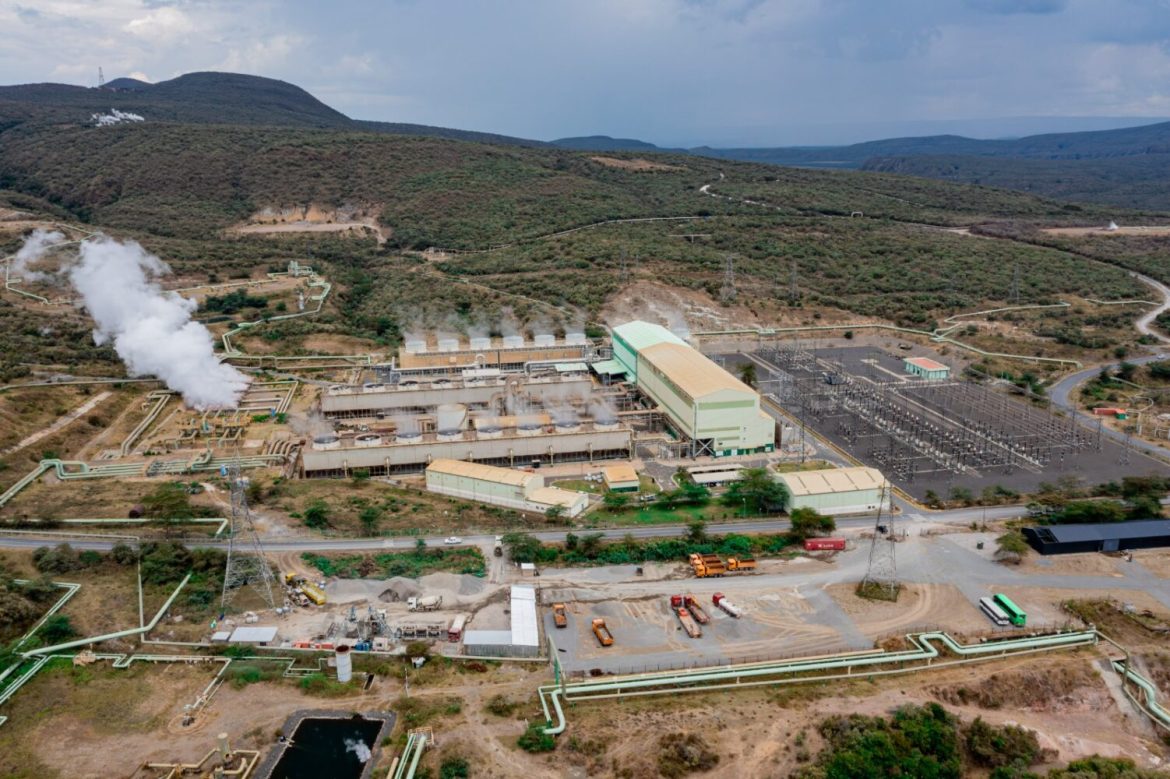
Kenya has taken a significant step in advancing its green industrialisation ambitions after the Kenya Electricity Generating Company (KenGen) secured official Customs Controlled Area status for its Green Energy Park in Olkaria, enabling investors to access a range of tax and customs incentives available under the country’s Special Economic Zone (SEZ) framework. The designation, granted through Kenya Gazette Notice No. 8412 and published on 5 June 2026 by the Commissioner of Customs and Border Control, effectively completes the operationalisation of the geothermal-powered industrial park and strengthens its position as a strategic destination for manufacturing and low-carbon industrial investment.
The development marks a key milestone in Kenya’s efforts to leverage its renewable energy resources to attract industrial activity while supporting broader economic transformation objectives under Vision 2030. Located in Olkaria, Naivasha, the Green Energy Park has been designed as a specialised industrial zone powered primarily by geothermal energy, offering investors access to reliable baseload electricity, industrial land, water infrastructure and streamlined regulatory processes.
 According to KenGen, the Customs Controlled Area designation activates the full package of incentives available under the Special Economic Zones Act, 2015. These include customs duty exemptions on qualifying imports, simplified export procedures, accelerated cargo clearance mechanisms and reduced administrative barriers for companies operating within the zone. The designation also establishes a dedicated customs jurisdiction within the park, bringing all goods movements under a defined regulatory and compliance framework.
The move comes at a time when governments across Africa are seeking to strengthen industrial competitiveness amid growing global demand for low-carbon production systems. Manufacturers increasingly face pressure from international markets, investors and regulators to reduce emissions throughout supply chains, creating new opportunities for countries capable of providing clean and reliable industrial energy.
Speaking following the gazettement, KenGen Managing Director and Chief Executive Officer Peter Njenga said the designation transforms the Green Energy Park from a planned investment platform into a fully operational industrial ecosystem. He noted that the combination of renewable energy, industrial infrastructure and trade facilitation mechanisms creates a unique proposition for investors seeking sustainable production environments.
The project also reflects a broader evolution in the role of state-owned energy companies across Africa. Rather than focusing exclusively on electricity generation, utilities are increasingly being positioned as catalysts for industrial development, helping to create economic value through energy-linked investment zones and industrial clusters.
The Green Energy Park has already attracted five investors operating in sectors that align closely with global decarbonisation and industrial transition trends. These include data centres, green fertiliser production, electric mobility technologies, steel fabrication, logistics and manufacturing. The concentration of such industries within a geothermal-powered environment illustrates the growing importance of energy availability and carbon intensity in industrial location decisions.
For Kenya, the implications extend beyond attracting individual investments. Industrial zones powered by renewable energy can reduce dependence on imported fossil fuels, strengthen export competitiveness and support the development of higher-value manufacturing sectors. They can also contribute to job creation, technology transfer and improved foreign direct investment inflows, all of which remain central priorities within the country’s long-term development strategy.
The initiative arrives as African governments increasingly seek to position themselves within emerging global green value chains. According to international energy and trade analysts, countries with abundant renewable energy resources may gain competitive advantages in attracting industries seeking to comply with tightening environmental standards in export markets, particularly in Europe and parts of Asia.
Geothermal energy is especially significant in this context because it provides stable, continuous power unlike some intermittent renewable sources. Kenya remains Africa’s leading producer of geothermal energy, with Olkaria serving as the centre of the country’s geothermal development programme. The availability of reliable low-carbon electricity has become a strategic asset as industries place greater emphasis on energy security alongside sustainability objectives.
The customs designation also highlights the growing role of Special Economic Zones as policy instruments for economic diversification across Africa. While many SEZs have historically focused on export processing and manufacturing incentives, newer models increasingly incorporate sustainability objectives, clean energy infrastructure and climate resilience considerations into their design.
 From a regional perspective, the Green Energy Park offers a practical example of how renewable energy investments can be integrated with industrial policy to support economic transformation. As African economies seek to expand manufacturing capacity while meeting climate commitments, the convergence of clean energy infrastructure, trade facilitation and investment incentives is likely to become increasingly important.
The successful operationalisation of the Olkaria facility may therefore be viewed not only as a milestone for Kenya’s industrial sector but also as an indication of how renewable energy assets can be leveraged to attract investment, strengthen competitiveness and support sustainable economic growth across the continent.


