


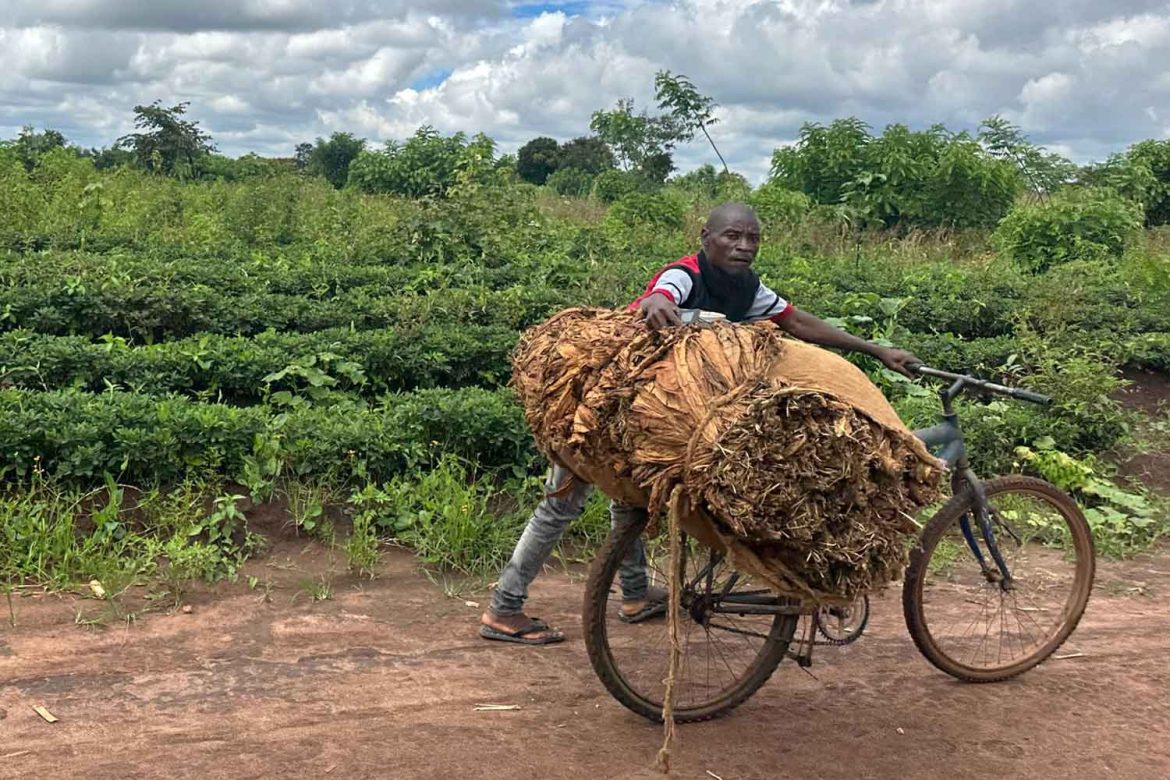
Malawi’s 2026 tobacco marketing season has opened under mounting pressure from excess supply, subdued buyer demand and weakening prices, raising concerns over farmer incomes, export earnings and the long-term sustainability of one of the country’s most important economic sectors.
Trading began at the Lilongwe Auction Floors on 21 April with industry stakeholders confronting a significant market imbalance. According to the Tobacco Commission, national tobacco production is projected to reach 197 million kilogrammes this season, while anticipated buyer demand stands at approximately 170 million kilogrammes, creating an oversupply of around 27 million kilogrammes. The surplus has emerged as an early challenge for growers and regulators seeking to maintain market stability in a sector that remains central to Malawi’s economy.
 The imbalance was evident from the opening days of trading, where only a portion of tobacco delivered to auction floors was offered for sale and buyers adopted a cautious purchasing approach. Market participants reported lower opening prices compared to previous seasons, with contract tobacco attracting a maximum of about US$3 per kilogramme. Buyers also rejected a notable share of the leaf presented for sale, reflecting tighter demand conditions and growing scrutiny of quality standards.
The developments come at a sensitive time for Malawi, where tobacco continues to account for a substantial share of export revenues and foreign exchange earnings. While the crop remains a cornerstone of rural livelihoods and national trade performance, its dominance also exposes the economy to fluctuations in global demand, changing consumer preferences and evolving regulatory pressures in international markets.
Read also: https://tobaccoreporter.com/2026/04/22/malawi-faces-oversupply-as-tobacco-season-opens/
Speaking at the official opening of the marketing season, Minister of Agriculture Roza Fatch Mbilizi acknowledged the challenges posed by excess supply and urged buyers to ensure fair treatment of farmers. She called for responsible pricing practices and encouraged the full uptake of available crop volumes to help stabilise producer incomes during the season.
Farmer organisations, however, argue that the current market conditions reflect broader structural weaknesses within the tobacco value chain. Representatives of Tama Farmers Trust have warned that the oversupply was foreseeable and point to gaps in production planning, delayed pricing guidance and insufficient coordination between growers, buyers and regulators. According to industry stakeholders, stronger market forecasting and improved alignment between production targets and projected demand may be necessary to prevent recurring cycles of oversupply and depressed prices.
The economic implications extend beyond individual farming households. Tobacco remains Malawi’s leading export commodity and a critical source of foreign currency required to finance imports, service external obligations and support macroeconomic stability. Sustained price weakness or reduced buyer uptake could therefore have implications for public finances, foreign exchange reserves and broader economic performance.
The situation also highlights wider challenges facing commodity-dependent economies across Africa. Reliance on a narrow range of primary exports can generate significant vulnerability when global market conditions shift. In Malawi’s case, fluctuations in tobacco demand can rapidly affect rural incomes, government revenues and external trade balances, demonstrating the risks associated with limited economic diversification.
From a sustainability and development perspective, the current season has renewed discussion around the need to strengthen agricultural resilience through diversification, value addition and improved market intelligence. Analysts note that expanding opportunities in higher-value agricultural products and agro-processing industries could help reduce exposure to volatility in a single commodity market while creating additional sources of employment and income.
 The experience mirrors broader continental priorities under the African Union’s Agenda 2063, which emphasises the development of diversified and resilient economies capable of generating inclusive growth. For countries heavily dependent on commodity exports, improving production planning, strengthening value chains and expanding economic opportunities beyond primary commodities remain important components of long-term economic stability.
As the 2026 marketing season progresses, attention will focus on whether market absorption improves sufficiently to reduce the supply surplus and support farmer returns. The outcome will carry significance not only for tobacco growers but also for Malawi’s wider economy, where the performance of a single crop continues to influence foreign exchange earnings, rural livelihoods and national development prospects.


