
The launch of the first large-scale carbon removal projects by the Miombo Restoration Alliance across four African countries marks a rare moment when years of carbon-market design, political negotiation and ecological planning have begun to translate into physical work on the ground.
Announced on January 29, the projects span Mozambique, Zambia, Tanzania and Malawi and are expected to remove more than 50 million tonnes of carbon dioxide equivalent over their 40-year lifetimes. Together they cover roughly 675,000 hectares of Miombo woodland, one of Africa’s most extensive and degraded forest ecosystems. With more than $1 billion in direct investment and expenditure projected over their duration, the programme ranks among the most capital-intensive nature-based carbon removal initiatives globally.

The Alliance was formed at New York Climate Week in 2024 by commodities group Trafigura, a group of non-governmental organisations and 11 governments across central and southern Africa. It is structured as a public-private partnership designed to generate carbon removal credits under Article 6 of the Paris Agreement, which allows countries to cooperate in meeting their climate targets through internationally transferred mitigation outcomes.
While Article 6 has been a central topic in climate diplomacy for nearly a decade, most activity has remained at the level of rules, registries and pilot programmes. Forest-based removals in particular have struggled to move beyond readiness phases.
The Miombo projects are among the first multi-country efforts to push Article 6-linked forest restoration into implementation at scale, offering a test case for whether the framework can mobilise long-term capital while meeting host-country and community expectations.
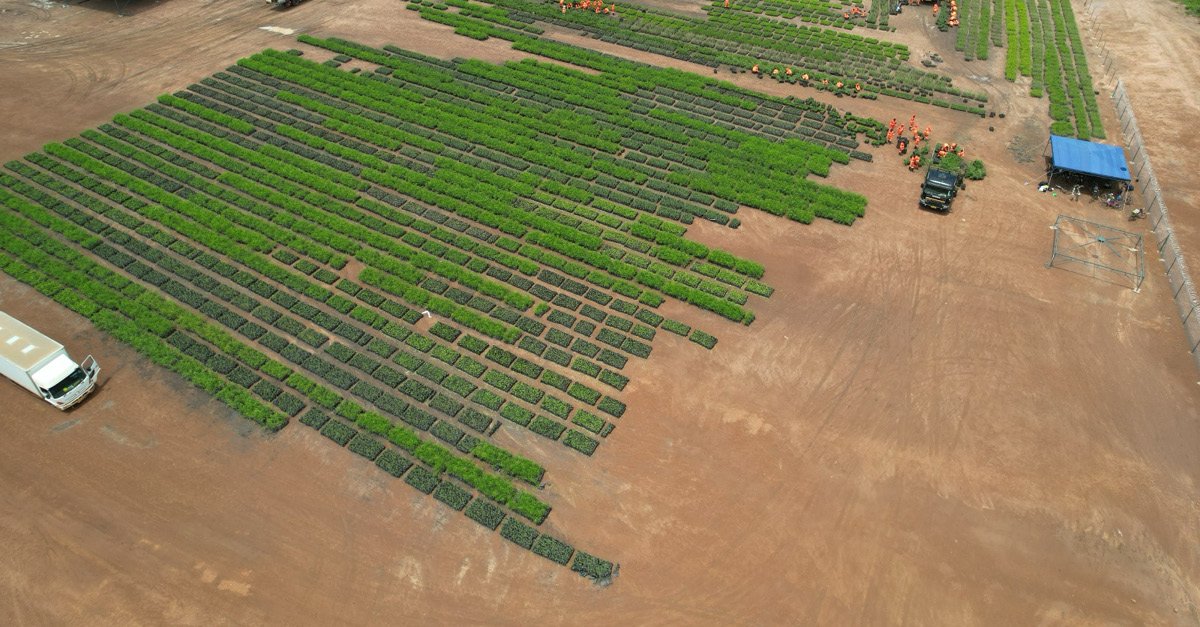
The four projects share a single ecological and governance framework but differ in emphasis, reflecting local conditions. In Malawi, a 550,000-hectare landscape programme combines conservation, restoration and agroforestry, anchored by one of Africa’s largest native-species nurseries, expected to produce up to 11 million seedlings a year. The project includes a designated sustainable timber zone and revenue-sharing arrangements with communities and government, tying carbon finance to rural livelihoods and public revenue.
In Zambia’s Western Province, an agroforestry programme is working with more than 45,000 farmers to rehabilitate degraded land and support a cashew value chain, allowing participating households to earn income from both carbon credits and agricultural outputs. In Mozambique, restoration activities developed with the Gorongosa Restoration Project are expanding across degraded Miombo woodland and Afromontane rainforest in buffer zones surrounding Gorongosa National Park.
Along Lake Victoria in Tanzania, long-running smallholder agroforestry efforts are being scaled using the Forest Garden Approach to restore soils, improve incomes and support biodiversity.
Alliance partners began deploying capital in 2025 and exceeded their initial investment targets for the year. The technical network has also expanded, with Carbon Direct joining as scientific and project-design adviser and Terraspect engaged to support traceable local payments, an area of growing scrutiny in carbon markets.
For buyers, the projects add visibility to long-dated, jurisdiction-aligned removal supply at a time when demand is increasingly shaped by concerns over governance, benefit sharing and host-country authorisation. All four projects are structured around 40-year lifetimes and are expected to generate credits over decades as restoration matures. Timelines for host-country approvals and first credit issuances have not yet been disclosed.
For Africa, the significance lies not only in the volume of carbon targeted, but in whether the programme can demonstrate that Article 6 can finance ecological recovery at scale while delivering durable economic benefits in regions where land degradation, rural poverty and climate vulnerability remain tightly linked.
Engage with us on LinkedIn: Africa Sustainability Matters