


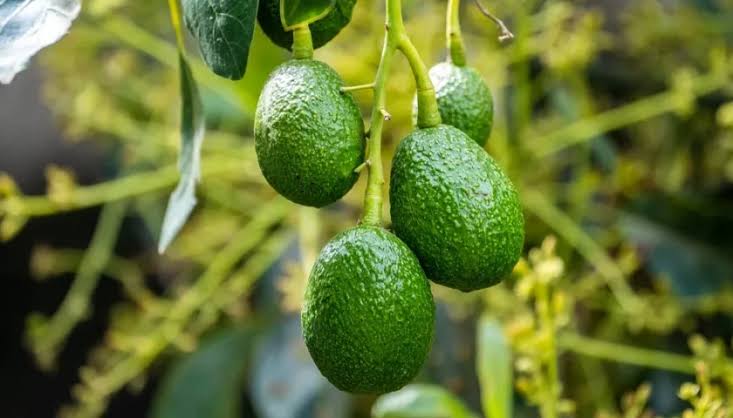
Morocco’s avocado industry is facing a fresh test of its climate resilience after repeated heat shocks reduced production potential and prompted some growers in the Gharb region to consider removing avocado trees, raising questions about the long-term viability of a crop that has become an important agricultural export. The warning comes after national avocado exports fell to 58,000 tonnes in the 2025/2026 marketing season, down more than 48% from the 112,000 tonnes shipped a year earlier, as heat, flooding, strong winds and logistical disruptions compounded pressure on producers.
The immediate concern is concentrated in Gharb, one of Morocco’s principal avocado-growing areas and, according to the Moroccan Avocado Growers Association, accounting for about 90% of national avocado acreage. Abdelkrim Allaoui, president of the Gharb Avocado Growers Association, told FreshPlaza on August 11 that growers in areas including Tiflet, Allal Bahraoui and Sidi Yahya El Gharb were seriously considering removing trees because of worsening climatic conditions.
The prospect of uprooting established orchards illustrates how climate risk is changing the economics of high-value agriculture in Morocco. Avocado trees require several years to reach commercial production and represent significant investment in irrigation, land preparation, seedlings, farm infrastructure and market access. When extreme heat repeatedly damages flowering and fruit formation, growers face the prospect of carrying those costs while receiving lower yields.
The problem has emerged after an unusually difficult 2025/2026 season. Morocco had entered that campaign after recording its strongest avocado export performance on record. In the 2024/2025 season, the country exported about 112,000 tonnes, more than double the previous season’s volume, while export revenues exceeded $300 million for the first time. EastFruit reported that avocado exports had risen for five consecutive marketing seasons, reflecting the crop’s rapid emergence as a major component of Morocco’s fruit-export economy.

That growth has now collided with increasingly volatile weather. According to the Moroccan Avocado Association, heat waves affected production early in the 2025/2026 cycle, while flooding and strong winds later affected orchards in the Loukkos and Gharb production zones. Industry estimates indicated that weather-related damage reduced volumes substantially, with the eventual export figure reaching only 58,000 tonnes. Logistical disruptions, including port closures, transport shortages and delays that affected fruit quality, added pressure to an already weakened campaign.
The latest season has already produced another warning sign. In late June, avocado trees experienced natural flower drop at the same time as a heat wave that pushed temperatures above 36°C for five consecutive days, according to Allaoui. The combination resulted in heavier flower losses than growers would normally expect and reduced the productive potential of orchards before the harvest had fully developed.
The threat is not limited to temperature alone. Morocco’s Chergui, a hot and dry wind that can intensify heat and water stress, remains another source of uncertainty for farmers. Growers are particularly concerned about the possibility of another heat wave before the end of August coinciding with the Chergui, which could further damage fruit development and increase irrigation requirements.
For Morocco, the implications extend beyond individual farms. The avocado sector has become increasingly integrated into the country’s export-oriented agricultural strategy, with Europe representing the principal destination for Moroccan produce. World Trade Integrated Solutions data show Spain, France, the Netherlands and the United Kingdom among Morocco’s principal avocado markets, illustrating the sector’s exposure to European demand and competition.
That dependence creates a second layer of risk. Even when Moroccan growers produce sufficient fruit, they must compete in European markets with suppliers from Spain, Israel, Colombia, the Dominican Republic and other origins. Industry reports during the 2025/2026 campaign pointed to periods of oversupply in European markets, pricing tensions and harvesting decisions influenced by the difficulty of securing commercially attractive returns.
Climate therefore affects the industry on both sides of the farm gate. Extreme heat and water stress can reduce yields, while weaker volumes increase unit production costs. At the same time, international competition and fluctuations in European supply can limit the prices exporters are able to secure. For growers with high irrigation, labour and capital costs, the combination can quickly turn a high-value crop into a more uncertain investment.
Water is central to that calculation. Morocco has experienced prolonged water stress, prompting the government to accelerate investment in dams, desalination, water transfers, irrigation efficiency and groundwater management. Research published in Frontiers in Sustainable Food Systems notes that avocado cultivation can require roughly 6,000 to 12,000 cubic metres of water per hectare annually, depending on soil and climatic conditions. That makes the crop particularly sensitive to the economics and availability of irrigation water in a country where agricultural demand competes with domestic and industrial needs.
The water question is particularly important in Gharb because the region is one of Morocco’s key agricultural production zones. Continued investment in water infrastructure can help buffer farms against seasonal shortages, but infrastructure alone cannot eliminate the biological sensitivity of avocado trees to extreme heat during flowering and fruit formation.
The experience also complicates the narrative around Morocco’s agricultural export expansion. The country has successfully developed export-oriented horticulture, built supply chains into European markets and invested in irrigation and logistics. But climate volatility means that expansion in planted area does not necessarily translate into predictable export growth.
Indeed, the contrast between the 112,000 tonnes exported in 2024/2025 and the 58,000 tonnes recorded in 2025/2026 shows how quickly production gains can be reversed when weather conditions deteriorate. The decline also came after harvested avocado area had expanded significantly in preceding years. A report citing FAO data said Morocco’s harvested avocado area increased by about 40% between 2022 and 2024, while the country emerged as Africa’s leading avocado exporter in 2025.
That trajectory makes the 2026/2027 season particularly important for policymakers and producers. The first crop assessments expected in September should provide a clearer indication of how much damage the latest heat events have caused. A recovery in production would support the view that the previous season was an exceptional setback. Continued losses, however, could strengthen the argument among growers that some production areas are becoming too risky or expensive for avocado cultivation.
For African agricultural economies, Morocco’s experience carries a wider lesson. Export horticulture can generate foreign exchange, employment and investment, but its resilience depends increasingly on whether production systems can withstand higher temperatures, irregular rainfall, water shortages and extreme weather. Similar pressures are being experienced across Africa’s high-value agricultural sectors, including Kenya’s avocado industry, South Africa’s fruit exports and horticultural production in parts of North and East Africa.
The challenge is therefore moving from simply expanding agricultural output to determining where particular crops remain economically and environmentally viable under changing climatic conditions. That requires better climate information, more efficient irrigation, crop diversification, heat-resilient production practices and financial mechanisms that can help farmers absorb temporary production shocks without forcing premature abandonment of productive assets.
Morocco’s government has already placed water security and climate adaptation at the centre of agricultural policy. The Ministry of Agriculture, Fisheries, Rural Development, Water and Forests is overseeing the country’s agricultural strategy, while the Ministry of Equipment and Water is responsible for major water infrastructure and national water management. Minister Nizar Baraka has repeatedly stressed the need to strengthen water security and improve irrigation-water availability as Morocco responds to climate change and prolonged water stress.

For avocado growers in Gharb, however, the issue is more immediate. Decisions on whether to retain or remove trees will be based on expected yields, water costs, market prices and the probability of another damaging season. The September assessment will therefore matter not only for estimating the size of Morocco’s next avocado crop, but also for determining whether recent climate shocks are becoming a temporary interruption or a structural constraint on the country’s avocado expansion.
The sector’s record performance in 2024/2025 demonstrated the commercial opportunity. The subsequent collapse in export volumes demonstrated its exposure to climate and market volatility. If heat events continue to coincide with critical stages of avocado development, the central question for Morocco will increasingly be whether higher-value agriculture can continue to expand in the same locations, or whether production patterns will have to change as climate and water constraints become more binding.
For Gharb’s growers, that calculation is already underway. The possibility of uprooting avocado trees is an early indication that climate change is no longer being assessed only through national production forecasts or long-term adaptation strategies. It is increasingly being reflected in farm-level investment decisions, where the cost of keeping a crop alive must be weighed against the reliability of future harvests.


