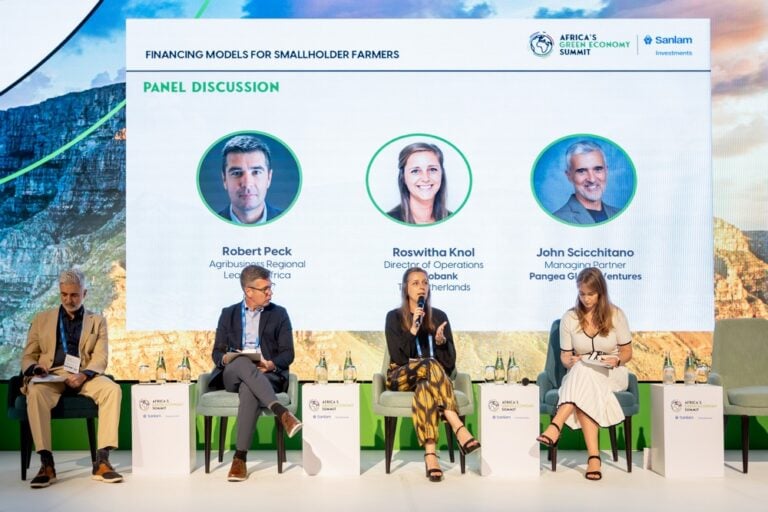

Africa’s Green Economy Summit, set for February 2026, will bring together nearly 30 investment-ready climate and sustainability ventures selected from more than 100 applications across the continent, positioning the gathering as one of the most consequential platforms for green finance and innovation in Africa.
The projects, chosen through a strict investment committee process, will present solutions ranging from renewable energy and climate-smart agriculture to nature finance and carbon markets, offering investors a rare consolidated view of Africa’s emerging green portfolio and how it could shape the continent’s transition in the decade ahead.

The selection comes at a time when African economies are navigating rising climate shocks, widening infrastructure deficits and constrained public budgets. Countries from Kenya to Ghana are contending with intensified floods, persistent drought cycles and fluctuating energy systems that hinder industrial growth.
This year alone, Malawi’s electricity utility reported hydropower losses tied to low water levels; Nigeria’s grid faced repeated collapses due to heat extremes; and southern Africa’s farmers continued to count the cost of El Niño, which wiped out significant portions of regional maize harvests.
The ventures entering the AGES 2026 pipeline are expected to respond to these pressures by offering practical, scalable solutions that can attract private capital and complement stretched government resources.
VUKA Group’s investment lead, Elodie Delagneau, said the volume and quality of submissions reflect a shift in how African innovators are approaching climate challenges, with more founders building commercially viable solutions rather than relying solely on donor-driven pilots.
Investors attending this year’s summit will meet projects that have undergone due diligence, realigned business models to market conditions and demonstrated clear potential for scale. The platform aims to close the gap between promising concepts and bankable investment opportunities, a gap that has long slowed the continent’s progress in renewable energy, water security and sustainable agriculture.

The ventures span eight major sectors that increasingly define Africa’s climate resilience and economic future. Energy remains the backbone of the pipeline, largely because the continent still records the world’s highest electricity access gap, with roughly 600 million people living without power.
Utility-scale solar, wind projects and decentralized mini-grids feature prominently, reflecting trends seen in countries like South Africa and Egypt, where renewable procurement programmes have started to reshape national power mixes.

In Kenya, where geothermal remains a global success story, independent producers continue to push for storage-backed solar hybrid systems that can stabilize rural electricity supply. Several of the projects heading into AGES 2026 draw lessons from these country experiences, especially in structuring tariffs, integrating off-grid users and reducing currency risks that often deter international lenders.
Read also: How EU’s softer pollution rules could hurt Africa’s green exports
Transport and e-mobility ventures are also gaining traction as African cities grapple with congestion, fuel price volatility and air pollution. Lagos, Nairobi and Kigali have each piloted electric buses and two-wheelers over the past three years, showing early signs that electrified urban transport is financially viable when charging infrastructure and reliable grid supply are properly planned.
Some of the 2026 summit’s ventures will build on these experiments, offering solutions tailored to African traffic patterns and fleet operators, while exploring battery-swapping models that reduce upfront costs for commuters.
In waste and circular economy initiatives, applicants demonstrated how cities could recover value from the thousands of tonnes of municipal waste generated daily across the continent. Accra’s metropolitan area alone produces more than 3,000 tonnes every day, much of which goes to landfills that are reaching capacity.
Several selected ventures propose recycling, composting and waste-to-energy solutions that not only reduce pressure on local authorities but also create new revenue streams and jobs in low-income communities. With African cities projected to double in population by 2050, the investor interest in this sector is likely to intensify.

Water security projects also feature strongly, influenced by recent droughts in southern Africa and devastating floods in East Africa. Countries like Zambia and Zimbabwe have faced crop failures and power shortages due to inconsistent rainfall, while Ethiopia, Somalia and Kenya continue to endure alternating cycles of extreme floods and dry spells.
The selected ventures explore groundwater mapping, decentralised water treatment and flood-resilient infrastructure that can support both urban populations and rural communities dependent on agriculture.
Sustainable agriculture projects entering the summit pipeline reflect a sector that employs over 60 percent of Africa’s workforce yet remains highly exposed to shifting weather patterns. Many initiatives combine agritech platforms with climate-smart practices, ranging from biochar fertilisers that restore soil to controlled-environment farming that reduces water use. With Africa’s food import bill expected to reach US$110 billion by 2025, such innovations could play a decisive role in reducing dependency on volatile global markets.
Nature finance and biodiversity ventures respond to wider global attention on conservation financing, particularly as African ecosystems, from the Congo Basin to West African mangroves, play a pivotal role in carbon sequestration and climate regulation. Some initiatives preparing for AGES 2026 aim to monetize ecosystem protection through mechanisms like REDD+ and blue carbon credits, building on models already piloted in Madagascar, Kenya and Mozambique.
Digital climate technologies form another critical layer of the summit’s portfolio. These tools are becoming more relevant as governments and companies seek accurate data for emissions tracking, supply chain monitoring and resource optimisation. Blockchain-enabled carbon accounting and AI-driven irrigation systems, which have shown measurable results in Morocco and Tunisia, demonstrate how digitalisation can make green projects more efficient and investment-ready.
Read also: DRC and Rwanda formalize mineral export oversight with the United States in Strategic Security Pact
Carbon market initiatives complete the pipeline, entering at a time when Africa is working to establish itself as a global hub for high-integrity carbon credits. Kenya and Gabon have recently pursued stronger carbon market frameworks, while several West African nations explore regional carbon registries. The ventures selected for AGES 2026 aim to tap into this momentum through projects that generate verifiable credits backed by strong governance and community benefits.
As AGES 2026 approaches, Cape Town is preparing to welcome investors, policymakers, DFIs and corporate leaders who have become increasingly attentive to Africa’s role in the global climate transition. The summit’s organizers hope the deal flow emerging from the event will accelerate the financing of green ventures that are ready for scale but constrained by capital shortages.
With governments prioritizing just transition strategies and private investors seeking credible impact opportunities, the curated pipeline offers a timely window into the innovations shaping Africa’s path toward a low-carbon, climate-resilient future.
View deal book for SMME’s, here.
View deal book for Expansion and Infrastructure, here.
Engage with us on LinkedIn: Africa Sustainability Matters
Engage with us on LinkedIn: Africa Sustainability Matters