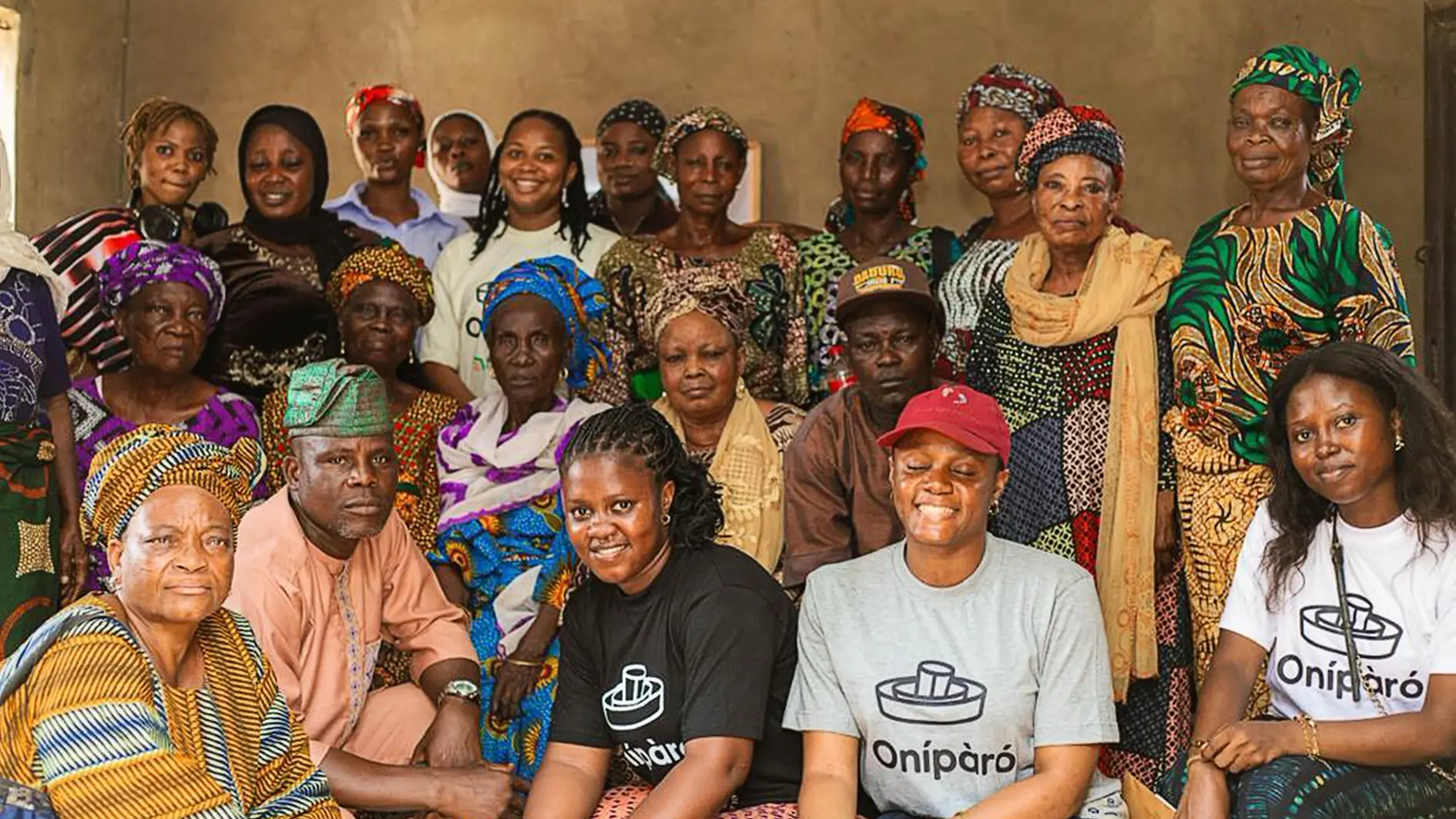

A youth-led climate organisation in Nigeria has launched a nine-month research initiative examining how informal clothing traders in West Africa contribute to reducing textile waste, highlighting a largely undocumented part of the region’s circular economy at a time when global concern over fast fashion and waste is intensifying.
EcoSmart Club, a grassroots environmental group, said the initiative, known as the Oniparo Project, will run from March to October 2026 and focus on women engaged in a traditional barter-based clothing exchange system in parts of western Nigeria. The project seeks to document how these traders collect, redistribute and reuse discarded garments, providing livelihoods while extending the life cycle of clothing that might otherwise become waste.
At the centre of the initiative are the Oniparo women, traders rooted in Yoruba communities whose work dates back generations. The term “Oniparo,” derived from the Yoruba language, broadly refers to people engaged in exchange trade. Historically, these women moved between households in towns and villages collecting used clothing and household textiles, which they exchanged for small sums of money or everyday items such as basins, buckets or kitchenware.
The practice developed as a community-based redistribution system long before the modern second-hand clothing market expanded across West Africa, allowing garments to circulate repeatedly within local economies rather than being discarded.
According to EcoSmart Club, their research will assess both the environmental and economic value of the Oniparo trade, a system in which women move from house to house collecting used clothes in exchange for small payments or household goods such as buckets or basins.
Read also: Africa Energy Indaba 2026: Leaders unite to accelerate continent’s energy access and investment
The practice, rooted in Yoruba communities, has long functioned as an informal mechanism for clothing redistribution across Nigeria and neighbouring West African markets.
Hannah Omokhaye, founder of EcoSmart Club, said the women involved play a critical role in keeping clothing in circulation while supplying affordable garments to low-income households. She said their activities represent a locally embedded circular economy system that operates outside formal waste management structures but nonetheless performs an important environmental function.
“These women are pioneers of the circular economy in Nigeria,” Omokhaye said in a statement. “They help ensure clothing remains accessible for lower-income communities while also reducing the amount of textile waste entering the environment.”
The initiative is being supported by the African Climate Alliance and will combine field research, documentation and community engagement to better understand the environmental impacts of clothing consumption and disposal patterns in Nigeria.
Globally, the fashion industry has come under growing scrutiny for its environmental footprint. According to the United Nations Environment Programme, around 92 million tonnes of textile waste are generated worldwide each year, much of which ends up in landfills or incineration systems. The agency also estimates that the industry accounts for about 10 per cent of global greenhouse gas emissions and roughly 20 per cent of industrial wastewater.
These global pressures increasingly intersect with African markets, which have become major destinations for second-hand clothing trade. While the sector supports large informal economies across the continent, it also raises questions about waste flows, environmental management and the long-term sustainability of textile consumption patterns.

Within that context, the Oniparo trade illustrates how African communities have historically developed informal systems to reuse and redistribute goods long before circular economy frameworks entered mainstream sustainability policy discussions. By extending the lifespan of garments through repair, resale or exchange, traders effectively delay the point at which textiles enter waste streams.
However, participants in the trade say the system is facing mounting pressures. According to Omokhaye, economic changes, shifting consumer preferences and climate-related disruptions are affecting the viability of the practice. Increasing demand for low-cost fast fashion, often imported through global supply chains, has accelerated clothing turnover rates while reducing the perceived value of reused garments.
Weather variability is also emerging as a constraint for traders who rely on mobility to collect and distribute clothing. Heatwaves and erratic weather conditions can affect both the health of traders and the logistics of moving goods between neighbourhoods and markets.
Oluwatoyin Ajao, project manager of the Oniparo Project, said the research will also explore how informal clothing collectors could be recognised within broader policy discussions on waste management and sustainable consumption.
According to Ajao, the initiative aims to document cultural practices that intersect with environmental management while examining how such informal systems could inform future policy approaches to textile waste.
For African policymakers, the issue reflects a broader challenge of integrating informal economic activities into environmental governance frameworks. Informal sectors account for a significant share of employment across African economies, particularly among women, yet they are rarely incorporated into formal sustainability strategies.
As global attention intensifies around the environmental cost of fashion, initiatives such as the Oniparo Project highlight how locally embedded economic practices may offer insight into more resource-efficient consumption systems.
Engage with us on LinkedIn: Africa Sustainability Matters