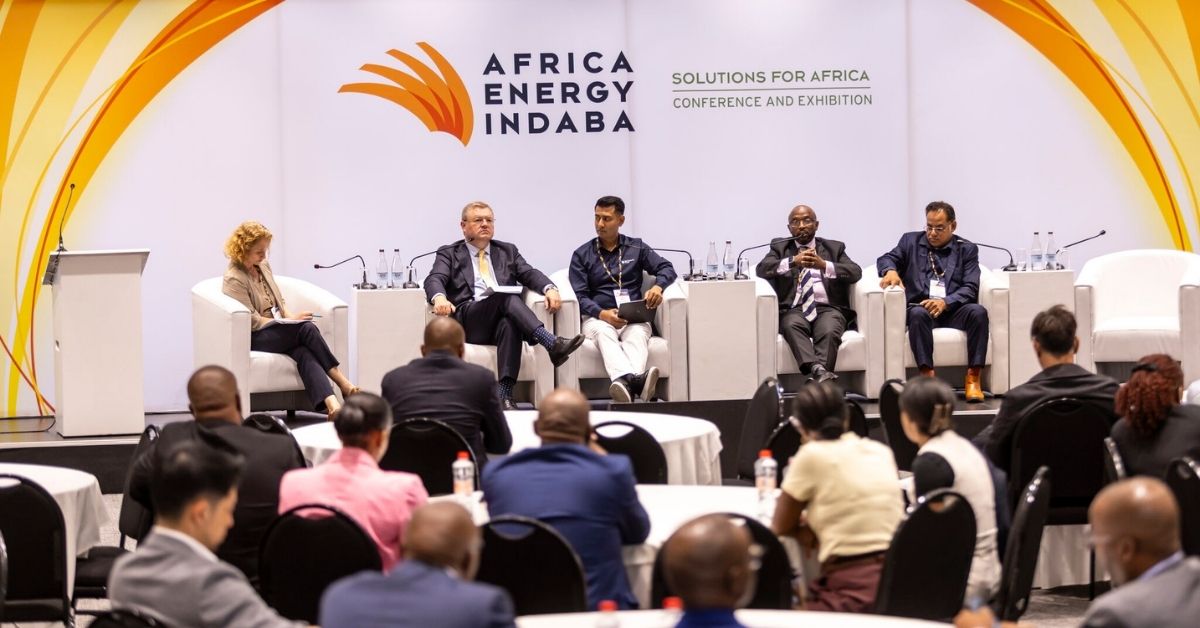

The Rockefeller Foundation has committed an additional US$10 million to accelerate electricity connections across Africa, aligning with a broader effort led by the World Bank Group and the African Development Bank to expand power access to 300 million people on the continent by 2030. The announcement was made on March 5 during Mission 300 Day at the Africa Energy Indaba 2026 in Cape Town, where development financiers, governments and private investors gathered to review progress in addressing Africa’s persistent electricity deficit.
The funding will be channelled through the Global Energy Alliance for People and Planet, a multilateral partnership established to mobilise public, private and philanthropic capital for energy access and clean power transitions in developing markets. The resources are intended to strengthen implementation capacity in at least 15 African countries by supporting technical assistance for national delivery units responsible for coordinating large-scale electrification programmes.
Access to electricity remains one of the most significant infrastructure constraints facing African economies. Globally, more than 730 million people lack basic electricity services, and roughly 600 million of them live in Africa. The gap continues to shape productivity, industrial development and household welfare across the continent. According to the Oxford Poverty and Human Development Initiative, the absence of reliable electricity is one of the strongest predictors of extreme poverty, reflecting the central role energy plays in enabling economic participation.
The new financing is designed to support the implementation of the Mission 300 initiative, a joint programme launched by the World Bank and the African Development Bank to expand electricity access across sub-Saharan Africa. The initiative combines traditional grid expansion with decentralised renewable solutions, including mini-grids and stand-alone solar systems, in an effort to reach remote communities where national grids remain economically difficult to extend.
Since the programme’s launch, approximately 44 million people have gained access to electricity under Mission 300–linked initiatives. However, the scale of the remaining deficit means the pace of connections must accelerate significantly if the 2030 target is to be met. Development finance institutions and philanthropic partners have increasingly focused on the institutional barriers that slow electrification, including weak project coordination, regulatory bottlenecks and limited technical capacity within national utilities and ministries.
The Rockefeller Foundation’s additional contribution is intended to address those structural constraints through support for Compact Delivery and Monitoring Units, specialised teams embedded within government institutions responsible for implementing National Energy Compacts. These compacts, first introduced at the Mission 300 Africa Energy Summit in Dar es Salaam in early 2025, outline policy reforms and investment priorities designed to make national electrification programmes financially viable and operationally scalable.
Technical assistance funded through the initiative is already supporting government teams in Malawi and Liberia, where national authorities are attempting to accelerate connections in both rural and urban areas. Additional support is being provided to delivery units in Nigeria, Côte d’Ivoire and Senegal through the Mission 300 Accelerator, an implementation facility established by the Rockefeller Foundation’s public charity, RF Catalytic Capital.
According to William Asiko, senior vice president and head of Africa at the Rockefeller Foundation, several governments across the continent have already committed to significant reforms through the National Energy Compacts framework. Those reforms range from regulatory adjustments intended to attract private investment to the restructuring of national utilities and the expansion of renewable energy deployment.
For African economies, the implications of large-scale electrification extend beyond household energy access. Electricity availability underpins a wide range of economic activities, including manufacturing, digital services, agricultural processing and the operation of health and education systems. In many rural regions, the absence of power limits the ability of small businesses to scale operations, while forcing households and enterprises to rely on diesel generators, kerosene or charcoal for energy.
These alternatives carry both financial and environmental costs. Diesel generation, widely used across parts of West and East Africa to compensate for unreliable grids, significantly increases operating expenses for businesses while contributing to air pollution and carbon emissions. Development economists argue that expanding reliable electricity access can therefore improve both economic competitiveness and environmental outcomes.
The Mission 300 initiative has increasingly focused on decentralised energy solutions as part of that strategy. Mini-grids powered by solar and battery storage systems are being deployed in rural areas where grid expansion would require substantial public investment. Such systems are also viewed as a way to strengthen energy resilience in countries facing climate-related disruptions to hydropower generation.
Alongside infrastructure investments, a growing share of international funding is being directed toward strengthening the institutions responsible for delivering electrification programmes. The Global Energy Alliance has emphasised the role of national coordination mechanisms in aligning public financing, development finance and private capital, particularly as governments attempt to implement energy sector reforms.
During the Africa Energy Indaba announcement, partners involved in the initiative indicated that additional technical fellowships would be deployed to support national delivery units in at least 18 countries. The first cohort of Mission 300 Fellows is already providing technical support in countries including Burundi, Chad, Lesotho, Madagascar, Mozambique, Niger and Sierra Leone.
As African governments pursue broader industrialisation and climate transition agendas, the ability to expand electricity access at scale remains central to both economic growth and social development.
Engage with us on LinkedIn: Africa Sustainability Matters