


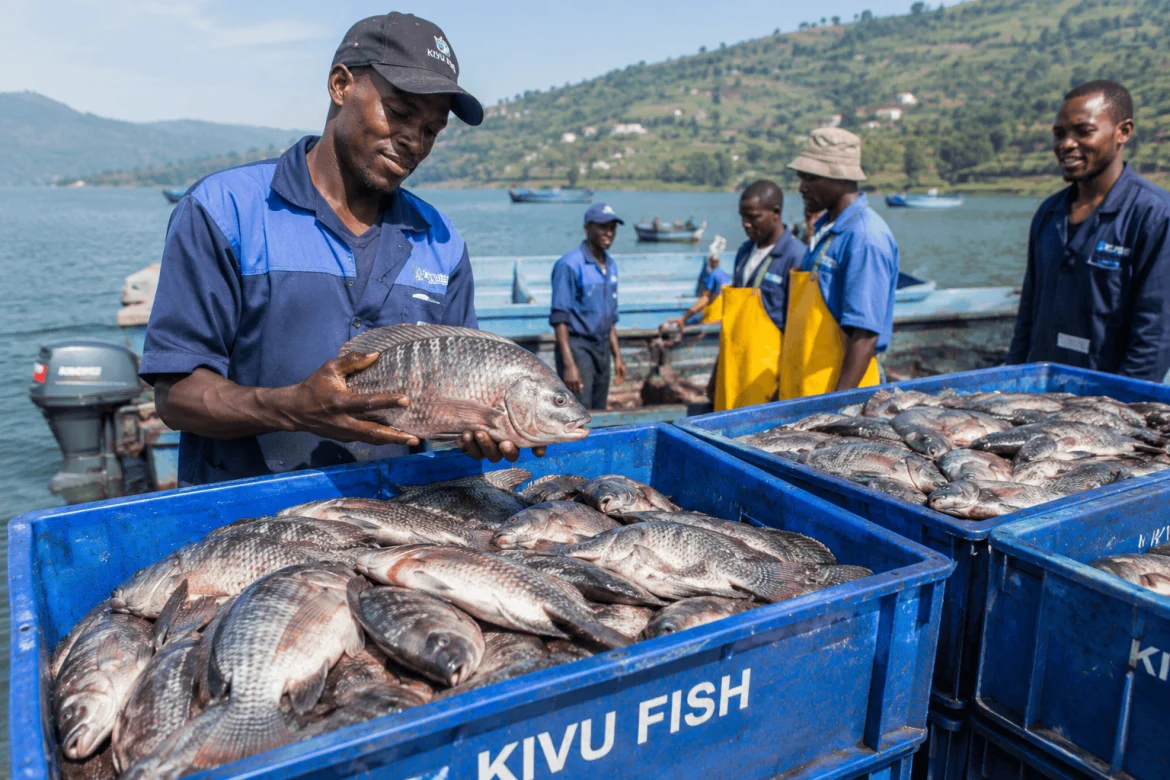
Rwanda is accelerating the growth of its aquaculture industry through rising private investment in tilapia farming, as commercial operators expand production across key freshwater systems including Lake Kivu and Lake Muhazi. The expansion, reported in April 2026, reflects a broader effort by the government and private sector to strengthen domestic food production, reduce reliance on fish imports, and position aquaculture as a strategic component of national food security and economic development.
According to Rwanda’s Ministry of Agriculture and Animal Resources (MINAGRI), national fish production increased from 31,465 metric tonnes in 2019 to 52,439 metric tonnes in 2025, driven largely by investments in cage farming systems, hatchery infrastructure, feed production, and value chain development. The growth marks one of the fastest expansions within Rwanda’s agricultural sector and highlights the increasing importance of aquaculture in meeting rising demand for affordable animal protein.
 The sector’s development is being supported by a combination of public policy interventions and private capital. Government-backed programmes have focused on addressing structural bottlenecks that historically constrained productivity, including limited access to quality fingerlings, inadequate hatchery capacity, and shortages of affordable fish feed. According to MINAGRI spokesperson Eugene Kwibuka, investments under the Kwihaza Project, implemented between 2023 and 2026 with support from the European Union and Luxembourg, have helped strengthen aquaculture value chains through targeted subsidies, hatchery rehabilitation, breeding centre development, and financing support for smallholder producers.
Private companies have emerged as central actors in this transformation. Firms such as Kivu Choice Ltd and Fine Fish Ltd have expanded commercial cage farming operations while investing in vertically integrated business models that combine breeding, feed production, processing, and distribution. Such integration is helping improve production efficiency while reducing supply chain vulnerabilities that have historically limited sector growth.
The scale of expansion is reflected in hatchery output. Rwanda produced approximately 71.6 million certified tilapia fingerlings in 2025, supported by improved biosecurity standards and the certification of multiple private hatcheries. This increase in fingerling availability has expanded production opportunities for both commercial operators and small-scale farmers, helping to raise overall output across the sector.
Regional and international investors are also increasing their involvement. Development finance institution AgDevCo has provided financing to aquaculture ventures operating in Rwanda and neighbouring countries, reflecting growing investor confidence in East Africa’s aquaculture potential. Companies including Victory Group are pursuing ambitious expansion strategies, targeting production increases from approximately 9,000 tonnes to 30,000 tonnes annually by 2029 while simultaneously expanding employment and processing infrastructure.
The sector’s growth carries broader economic implications for Rwanda. Fish imports have historically contributed to pressure on foreign exchange reserves, while domestic supply deficits have limited access to affordable protein for many households. Expanding local production offers an opportunity to strengthen food system resilience, reduce import dependency, and create employment across farming, logistics, feed manufacturing, processing, and distribution networks.
For Africa more broadly, Rwanda’s experience reflects a growing recognition that aquaculture could play an increasingly important role in addressing food security challenges. The continent possesses substantial freshwater resources and growing consumer demand for fish products, yet many countries remain net importers despite significant production potential. According to regional food security analysts, expanding sustainable aquaculture production could help reduce import bills while improving nutritional outcomes and supporting rural economic development.
From a sustainability perspective, tilapia farming presents several advantages. Compared with many terrestrial livestock systems, tilapia production generally requires lower feed inputs and generates lower greenhouse gas emissions per unit of protein produced. Expansion of farmed fish production can also reduce pressure on wild fish stocks, many of which face increasing stress from overfishing, climate variability, and ecosystem degradation.
Nevertheless, challenges remain. Industry participants continue to cite high feed costs, expensive insurance coverage, dependence on imported feed ingredients, and limited technical expertise as significant barriers to long-term competitiveness. These constraints highlight the importance of continued investment in local feed manufacturing, research, skills development, and regulatory oversight to ensure that growth remains economically viable and environmentally sustainable.
 The sector’s expansion aligns with Rwanda’s National Aquaculture Strategy 2023–2035, which targets sustainable production exceeding 80,000 tonnes and seeks to significantly increase per capita fish consumption. It also supports broader continental priorities under the African Union’s Agenda 2063, particularly objectives focused on agricultural transformation, food security, industrial development, and climate-resilient economic growth.
As investment continues to flow into aquaculture infrastructure and value chains, Rwanda’s experience illustrates how coordinated public policy, development finance, and private sector participation can accelerate growth in strategic food production sectors. While future outcomes will depend on the industry’s ability to manage production costs and maintain sustainability standards, the sector is increasingly emerging as a significant contributor to Rwanda’s economic diversification and food system resilience.


