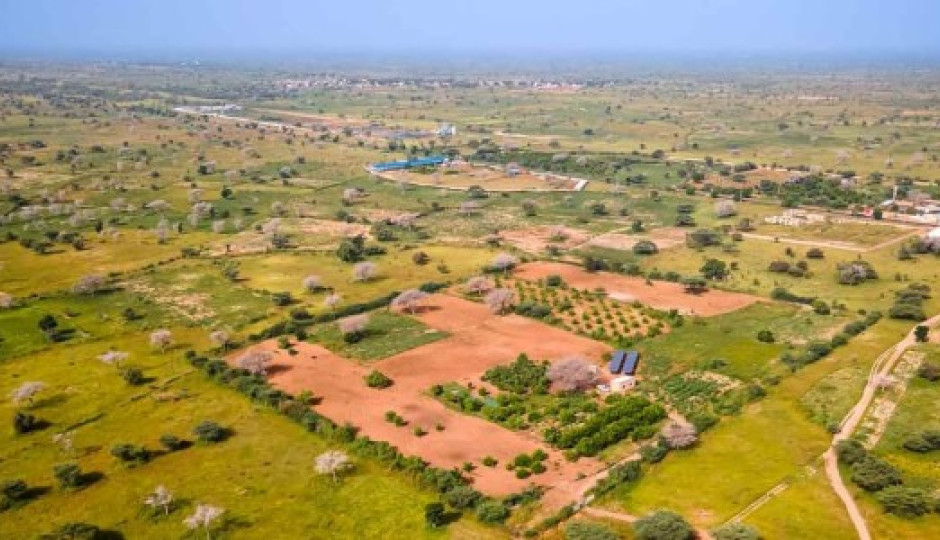

Senegal has launched a $191.7 million agro-industrial processing zone aimed at strengthening food sovereignty, creating jobs and reducing the country’s heavy reliance on food imports. The Agropole Centre, unveiled on December 16 in the central part of the country, is financed by the Senegalese state with support from the African Development Bank, the Islamic Development Bank and Belgium’s Enabel. It targets agricultural value chains that dominate rural livelihoods but have long remained trapped at low levels of processing, limiting incomes and exposing the country to external food shocks.
Read also: Ghana bans mining in forest reserves, testing the future of environmental enforcement
The project is located across the regions of Kaolack, Kaffrine, Fatick and Diourbel, an area often described as Senegal’s agricultural heartland. These regions produce large volumes of peanuts, millet, maize, sorghum and salt, yet most of these products leave farms in raw form. Until now, processing rates have remained modest, with cereals processed locally at about 6 percent and peanuts at roughly 15 percent. Under the Agropole Centre plan, authorities say cereal processing should rise to 30 percent, peanuts to 50 percent and salt to 30 percent once facilities are fully operational.
The scale of the ambition reflects pressures Senegal has faced in recent years. Rising global food prices following the COVID-19 pandemic and the war in Ukraine exposed how dependent the country remains on imported staples. Between 2021 and 2023, Senegal imported food worth an average of $1.88 billion annually, according to UNCTAD figures, making it the second-largest food importer in the West African Economic and Monetary Union.

Rice, wheat, maize, palm oil, sugar and dairy products dominate the import bill, draining foreign exchange and leaving domestic markets vulnerable to currency fluctuations and global supply disruptions.
By concentrating processing infrastructure close to production zones, the Agropole Centre is intended to change how agricultural value is captured. Storage facilities, industrial processing units, logistics platforms and support services are expected to anchor 37 priority projects across targeted value chains. For smallholder farmers, the promise lies in more stable demand and higher farm-gate prices as raw produce is absorbed by nearby processors rather than transported long distances or sold at harvest-time discounts.
Read also: New policy playbook guides African countries as Kampala Agriculture Declaration takes effect in 2026
Authorities estimate the project could generate close to 130,000 direct jobs and more than 200,000 indirect jobs, many of them for young people and women in rural areas where employment options are limited. While such projections remain subject to how quickly private operators invest and facilities reach capacity, similar agro-industrial zones across Africa suggest employment multipliers can be significant when processing, transport and ancillary services develop together.
The Agropole Centre is not a standalone initiative but part of Senegal’s broader National Programme for the Development of Agropoles, which seeks to reorganize agricultural production around regional strengths. Under this model, each zone specializes based on climate, crops and market access. Northern regions focus on rice, horticulture and livestock, while the south emphasizes cashew, mango and maize. The central agropole’s focus on cereals, peanuts and salt reflects both historical production patterns and domestic consumption needs.
This approach mirrors trends across Africa, where governments are investing in agro-industrial parks to retain more value domestically. Ethiopia’s Integrated Agro-Industrial Parks, Côte d’Ivoire’s processing push in cocoa and cashew, and Nigeria’s Staple Crop Processing Zones all stem from a shared calculation: exporting raw commodities while importing processed food leaves countries exposed and limits rural development.
The African Development Bank estimates that Africa spends more than $75 billion annually on food imports, a figure expected to rise without significant investment in processing and logistics.

For Senegal, the challenge will lie in execution. Reliable electricity, water supply, transport links and access to finance for small and medium-sized processors will determine whether the Agropole Centre delivers on its promise. Coordination between the Ministry of Industry and Trade, responsible for industrial infrastructure, and the Ministry of Agriculture, which oversees raw material supply, will be critical to avoid bottlenecks.
If successful, the central agropole could help shift Senegal’s food system from one shaped by imports and raw exports to one anchored in local value addition. Beyond national borders, it offers a practical example of how African countries are attempting to turn food sovereignty from a policy slogan into an industrial strategy grounded in infrastructure, finance and regional planning.
Engage with us on LinkedIn: Africa Sustainability Matters
Engage with us on LinkedIn: Africa Sustainability Matters