


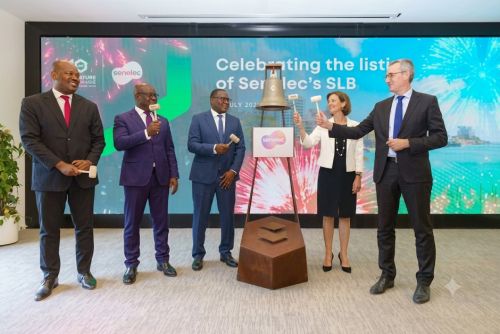
Senegal’s state-owned electricity utility Senelec has raised CFA108 billion ($187 million) through a sustainability-linked bond listing on the Luxembourg Stock Exchange, marking its first international bond admission and creating a new financing pathway for Africa’s energy transition. The transaction combines green financing with sustainability performance targets and represents Africa’s first securitisation by a public utility backed by electricity receivables.
The bond listing, announced on July 13, provides Senelec with access to a wider pool of international investors through Luxembourg’s financial market while strengthening the utility’s ability to mobilise long-term capital for electricity infrastructure, renewable energy development and efficiency improvements. The transaction was admitted to the Securities Official List of the Luxembourg Stock Exchange and referenced on the Luxembourg Green Exchange (LGX), a platform dedicated to environmental, social and governance (ESG) securities. The dual listing reflects growing interest among global investors in sustainable infrastructure opportunities in emerging markets.
For Senegal, the financing comes as the country advances efforts to transform its energy sector, improve electricity reliability and increase the role of renewable energy in its power mix. The government has set a target of increasing renewable energy’s contribution to electricity generation to 40% by 2030.
Senelec Chief Executive Officer Papa Toby Gaye said the transaction would help diversify the utility’s funding sources, strengthen financial management and expand access to medium- and long-term financing. The company said the bond issuance would support its broader strategy of accelerating Senegal’s energy transition while improving electricity access. Approximately 52.5% of the bond proceeds will be allocated to renewable energy and energy efficiency projects under Senelec’s sustainability framework. These investments are expected to support improvements in electricity system performance while contributing to Senegal’s broader climate and development objectives.
The remaining portion of the financing is linked to measurable sustainability commitments, including reducing transmission network losses and expanding electricity access. This structure connects financial performance with environmental and operational outcomes, reflecting the growing use of sustainability-linked finance in global capital markets. The bond structure is particularly significant because it combines two financing approaches: green bond principles and sustainability-linked targets. Green financing typically supports specific environmentally beneficial projects, while sustainability-linked bonds connect financing conditions to improvements in predefined sustainability indicators.
This blended approach provides African utilities with additional options for accessing capital markets while aligning investment decisions with energy transition goals. The issuance is also notable for its securitisation structure. Senelec used unpaid electricity receivables as the underlying assets for the bond, allowing future customer payments to support investor repayment. Through this mechanism, the utility converted existing receivables into an investment instrument capable of attracting new financing. Adji Sokhna M’Baye, Chief Executive Officer of BOAD Titrisation, which arranged and managed the transaction, said the issuance demonstrates the ability of African financial markets to develop sophisticated local-currency financing solutions aligned with sustainability objectives.
The transaction highlights the evolving role of African capital markets in supporting infrastructure development. Historically, many energy projects across the continent have relied heavily on public funding, concessional finance or international development assistance. However, growing demand for infrastructure investment is increasing the importance of domestic and regional financial instruments. Africa faces significant infrastructure financing needs, particularly in the energy sector. Expanding electricity access, improving grid reliability and integrating renewable energy sources require substantial capital investment at a time when many governments face fiscal pressures. For utilities, access to innovative financing mechanisms can help bridge the gap between infrastructure ambitions and available public resources. Senelec’s bond issuance provides an example of how public utilities can leverage financial markets to support strategic investments.
The transaction also reflects broader developments in sustainable finance across Africa. Governments, financial institutions and companies are increasingly exploring green bonds, sustainability-linked loans and other ESG-focused instruments to attract investment for climate-related projects. Senegal has been among the African countries actively expanding renewable energy capacity, particularly through solar and wind projects. The country’s energy strategy has focused on reducing dependence on imported fuels, improving affordability and strengthening energy security. However, achieving a more sustainable electricity system will require investment across the entire value chain, including generation capacity, transmission networks, distribution infrastructure and operational efficiency. The Senelec transaction demonstrates the potential for sustainable finance to support these objectives while creating new connections between African infrastructure needs and international capital markets.
https://www.aecweek-registration.com/2026/
As global investors increasingly focus on climate-aligned opportunities, African utilities and governments are seeking ways to demonstrate financial discipline, sustainability performance and investment readiness. The success of Senelec’s bond issuance could encourage similar approaches across other African energy markets. For Senegal, the challenge now will be ensuring that the capital raised translates into measurable improvements in renewable energy capacity, electricity reliability and access for households and businesses. The transaction represents an important financing milestone, but its long-term impact will depend on effective implementation and continued progress towards a more resilient energy system.


