


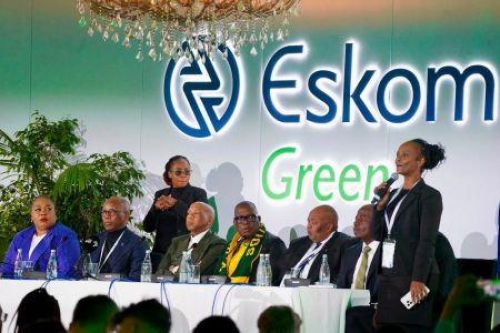
South Africa has approved the establishment of Eskom Green, a wholly owned renewable energy subsidiary of state-owned utility Eskom, in a move that is expected to expand clean power generation, attract private investment and reinforce the country’s long-term energy transition strategy. The approvals, announced by Eskom on July 16, were granted under the Public Finance Management Act (PFMA) and align with conditions attached to the government’s debt relief package, enabling the utility to proceed with the remaining administrative steps required to operationalise the new company.
The decision represents one of the most significant institutional reforms within South Africa’s electricity sector since Eskom began restructuring its operations. While the country has made substantial progress in opening its electricity market to independent power producers and private investment, the creation of Eskom Green introduces a dedicated state-owned platform focused exclusively on renewable energy development, financing and operations.
According to Eskom, the new subsidiary will have the authority to develop, finance and operate renewable energy projects through special-purpose vehicles while partnering with private investors to mobilise capital and technical expertise. The company also plans to initiate a competitive process to identify strategic investment partners, although it has yet to announce funding targets or a detailed implementation timetable.
The establishment of Eskom Green comes at a pivotal moment for South Africa’s electricity sector, which continues to face the dual challenge of improving energy security while reducing dependence on coal-fired generation. Years of electricity shortages, ageing infrastructure and operational constraints have underscored the need for accelerated investment in diversified energy sources capable of supporting economic growth and industrial competitiveness.
According to Rivoningo Mnisi, Eskom’s Group Executive for Renewables, the subsidiary will enable the utility to mobilise external financing and specialist expertise that would otherwise be difficult to access under its traditional operating structure. This reflects a growing recognition that the scale of investment required for the energy transition cannot be financed solely through public resources.
Eskom Green has set an ambitious objective of developing up to 32 gigawatts of renewable energy capacity by 2040. Much of this generation is expected to supply competitively priced electricity to large industrial customers seeking reliable power while pursuing corporate decarbonisation targets driven by increasingly stringent international market requirements.
The strategy aligns with broader global trends in which major electricity utilities are separating renewable energy businesses from conventional generation assets to improve investment flexibility, strengthen governance and create clearer financing structures for institutional investors.
For South Africa, the timing is particularly significant. The country remains Africa’s most industrialised economy but also one of the continent’s largest carbon emitters due to its historic dependence on coal. The transition towards cleaner electricity therefore carries implications that extend well beyond environmental policy, influencing industrial productivity, export competitiveness, fiscal sustainability and long-term investment attractiveness.
According to the International Renewable Energy Agency (IRENA), South Africa had installed renewable energy capacity of 16,598 megawatts by the end of 2025, maintaining its position as Africa’s largest renewable energy market. This leadership has been supported by successive Renewable Energy Independent Power Producer Procurement Programme (REIPPPP) bidding rounds, growing corporate power purchase agreements and increased private sector participation in electricity generation.
The emergence of Eskom Green adds another dimension to this evolving market structure. Rather than competing directly with private developers, the subsidiary is expected to complement existing investment channels by leveraging Eskom’s extensive transmission infrastructure, engineering capabilities and established customer relationships.
This institutional model could reduce some of the barriers that have historically slowed renewable energy deployment, including project financing challenges, grid integration constraints and lengthy development timelines. By creating a specialised renewable energy entity with greater operational flexibility, the government is seeking to accelerate project delivery while preserving Eskom’s central role in managing the country’s electricity system.
The initiative also reflects broader reforms underway within Eskom itself. The utility has been implementing a long-term unbundling programme designed to separate its generation, transmission and distribution functions into distinct operational entities. These reforms aim to improve transparency, strengthen governance and encourage greater competition within South Africa’s electricity market.
The approval of Eskom Green therefore represents not only a renewable energy initiative but also another milestone in the restructuring of one of Africa’s largest state-owned enterprises.
For investors, the creation of a dedicated renewable subsidiary may provide greater confidence by establishing clearer governance arrangements and financing mechanisms tailored specifically to clean energy projects. International climate finance institutions, commercial lenders and infrastructure investors have increasingly prioritised investment vehicles with transparent governance structures capable of managing long-term infrastructure assets.
The move may also strengthen South Africa’s ability to attract additional climate finance linked to its Just Energy Transition Partnership (JETP), under which international partners have committed financing to support the country’s transition away from coal. While Eskom Green has not been directly linked to JETP financing, the subsidiary could provide another institutional platform through which concessional finance and blended capital structures may be deployed in future renewable energy investments.
The broader implications extend across Africa, where many state-owned utilities continue to face financial pressures, ageing infrastructure and rising electricity demand. Several governments are seeking models that combine public ownership of strategic infrastructure with increased private sector participation in energy investment.
According to energy analysts, Eskom Green could offer an example of how public utilities can reposition themselves within increasingly liberalised electricity markets without relinquishing their strategic role in national energy systems. Success, however, will depend on the subsidiary’s ability to secure financing, execute projects efficiently and integrate new renewable capacity into South Africa’s evolving electricity network.
The expansion of renewable energy is becoming an increasingly important economic issue across the continent as governments seek to improve energy reliability, reduce fuel import costs and support industrial development. Affordable and dependable electricity remains one of the most significant constraints on manufacturing, mining, agriculture and digital industries in many African economies.
South Africa’s decision to establish Eskom Green therefore carries significance beyond its national borders. As Africa’s largest electricity market and one of its most developed financial systems, policy innovations implemented in South Africa are often closely observed by governments, utilities and investors elsewhere on the continent.
If successfully implemented, the new subsidiary could demonstrate how institutional reform, private capital mobilisation and renewable energy deployment can be combined to strengthen energy security while supporting broader economic development objectives. In a region where electricity demand continues to outpace supply, the effectiveness of such models may increasingly shape how African countries finance and manage the next generation of power infrastructure.


