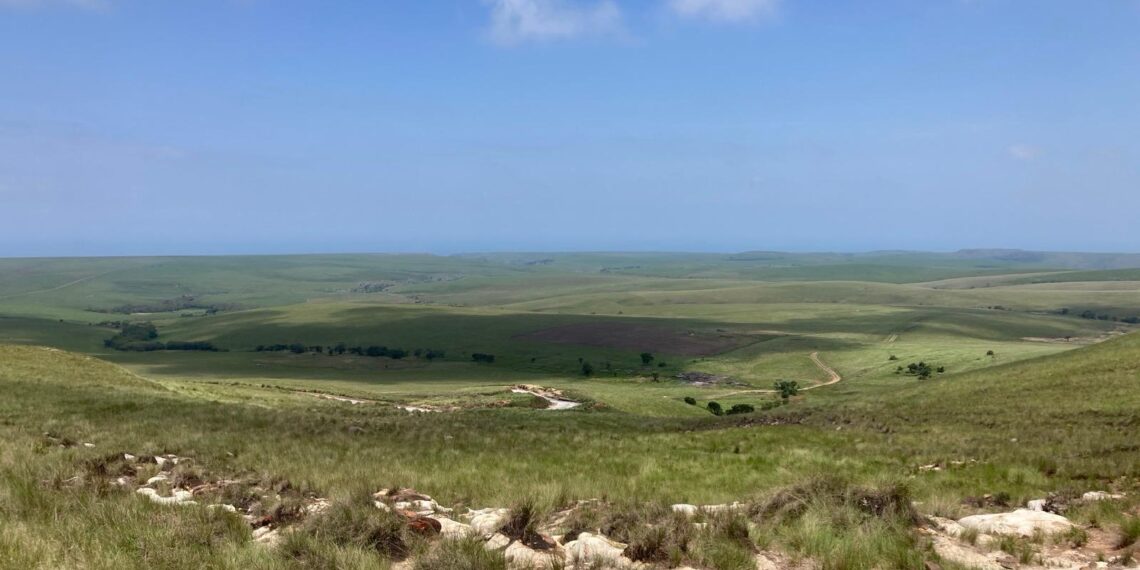

In Cape Town, South Africa, a carbon credit issuance from degraded grasslands managed largely by rural communities has set a first-of-its-kind benchmark in global carbon markets, with implications far beyond South Africa’s borders. The Grassland Restoration and Stewardship in South Africa project, developed by carbon firm TASC, has issued 266,255 verified carbon units under Verra’s updated VM0042 methodology, becoming the first project worldwide to receive the Climate, Community and Biodiversity label under the new standard. The credits were generated from restored rangelands during the project’s initial monitoring period, covering more than 95,000 hectares and involving thousands of small-scale livestock farmers.
The issuance comes at a time when voluntary carbon markets are under intense scrutiny over credibility, social impact and long-term climate value. In Africa, land-based carbon projects are expanding rapidly but unevenly; the South African example offers a rare, data-backed case of how carbon finance can intersect with rural livelihoods at scale rather than remain a narrow financial instrument.

South Africa’s grasslands underpin one of the continent’s largest livestock economies. Roughly 34 million hectares are used for grazing, yet decades of overgrazing, unmanaged fires and weak institutional support have left about a third of these landscapes severely degraded. Climate variability has intensified pressure on soils and vegetation, reducing productivity and increasing vulnerability to drought. Communal farmers, who collectively own about half of the country’s livestock, remain marginalised in formal markets, supplying only around 9 percent of national meat output. The gap reflects limited access to training, veterinary services, finance and consistent routes to market rather than a lack of land or labour.
The GRASS project was designed to work within these constraints rather than around them. It focuses on improving grazing practices, restoring soil carbon and rebuilding grass cover through regenerative land management, while linking farmers to income streams that make those changes economically viable. The project began on communal land, where tenure systems are complex and collective decision-making is essential, before expanding to include commercial farms. Today it spans 950,000 hectares of communal and private rangeland, placing it among the largest grassland restoration initiatives globally.
During the first monitoring period alone, around 4,000 communal farmers participated in the project, managing land that generated the initial 266,255 credits. Nearly 300 people were employed through activities such as ecological monitoring, grazing support and fire management, providing formal work in areas where employment opportunities are scarce. Carbon revenues are channelled through a community trust structure, designed to ensure that income from credit sales flows back to participating communities rather than being captured entirely by developers or intermediaries.
Beyond carbon finance, access to markets has been a central driver of impact. Through a partnership with Meat Naturally Africa, farmers have been trained in livestock production, business record-keeping and land stewardship, while gaining access to mobile auctions and abattoirs. These linkages have already generated about ZAR56.4 million, approximately $3.35 million, in additional revenue from livestock and wool sales. For many households, this income diversification has helped stabilise earnings in the face of increasingly unpredictable weather patterns.

Employment outcomes have been equally significant. Across the communal rangelands involved to date, the project has supported roughly 900 jobs, with close to one-third held by women. Roles range from ecological rangers to grazing coordinators and data collectors, embedding technical skills within rural communities and reducing reliance on external contractors. Training in fire management and invasive species control has also addressed long-standing environmental risks that extend beyond the boundaries of carbon accounting.
What sets this issuance apart in the global market is the standard under which it was certified. Verra’s VM0042 methodology is designed specifically for improved grassland management, requiring detailed measurement of soil carbon changes and safeguards against emissions leakage. The Climate, Community and Biodiversity label adds another layer, independently verifying that climate mitigation is accompanied by measurable social and ecological benefits. At a time when buyers are increasingly wary of low-quality credits, this combination addresses some of the most persistent criticisms of nature-based solutions.
The project’s long-term ambitions are substantial. TASC plans to scale GRASS to two million hectares by 2030, a footprint expected to sequester or avoid nearly two million tonnes of carbon dioxide equivalent each year. Over a 100-year commitment period, the project targets mitigation of 14 million tonnes within its first 30 years. While these figures are modest relative to national emissions, they highlight the cumulative potential of land-use interventions when applied consistently and at scale.
Many African countries are looking to carbon markets as a source of climate finance, yet concerns over land rights, benefit sharing and long-term stewardship have slowed progress. The South African grasslands project demonstrates that community-managed landscapes can meet rigorous global standards while delivering tangible economic returns locally. As scrutiny of carbon markets intensifies, such examples may shape how future African projects are designed, financed and judged, not by promises, but by measurable outcomes on the ground.
Engage with us on LinkedIn: Africa Sustainability Matters