


Tanzania has committed $2 million in grants to 49 civil society organisations across mainland Tanzania and Zanzibar to support community-led environmental conservation and sustainable development, as the government and development partners seek to address biodiversity loss, climate vulnerability and pressure on rural livelihoods through locally driven initiatives.
The funding, equivalent to approximately 5.2 billion Tanzanian shillings, was announced on November 6, 2026, by the United Nations Development Programme (UNDP) and the Government of Tanzania under the eighth operational phase of the Global Environment Facility’s Small Grants Programme. The 49 organisations will implement projects over 20 months, targeting environmental restoration, climate-smart agriculture, coastal management, clean energy and waste management.

The initiative is expected to benefit approximately 6,000 people in rural communities, with activities concentrated in the Serengeti ecosystem, Central Tanzania’s Dodoma region, and Zanzibar’s Unguja and Pemba islands. According to UNDP, 30% of programme resources will be allocated to projects outside these priority landscapes, extending support to communities beyond the principal intervention areas.
The grants come as Tanzania faces the economic and environmental pressures associated with land degradation, biodiversity loss and climate variability. For rural communities, these challenges affect agricultural productivity, access to water, natural resource-dependent incomes and the resilience of local economies. The funding is intended to support initiatives that connect environmental protection with livelihood opportunities, including sustainable livestock management, beekeeping, value chain development and ecotourism.
The programme will also support tree planting, forest restoration and water source conservation, alongside beach and wetland restoration. Other projects will focus on waste management and expanding access to clean energy, areas that have implications for local infrastructure, resource efficiency and the environmental costs of economic activity.
The grants are being implemented through UNDP’s Global Environment Facility Small Grants Programme, which provides financial and technical support to civil society and community-based organisations working on environmental and sustainable development priorities. The programme is designed to support locally identified projects while strengthening the capacity of organisations to mobilise additional resources and expand successful approaches.
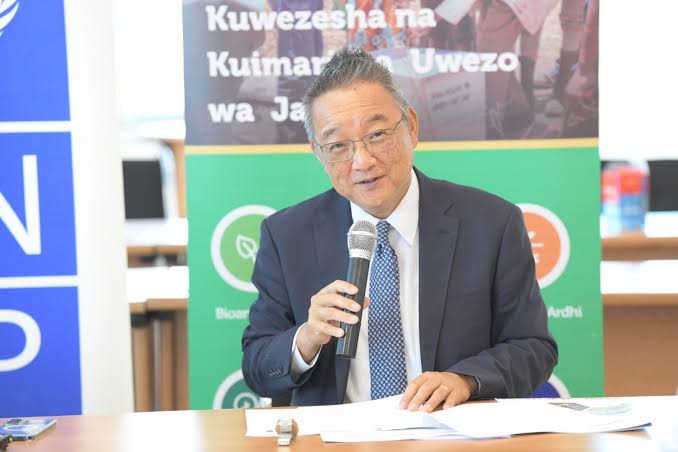
At the grant agreement signing ceremony in Dar es Salaam, UNDP Resident Representative Shigeki Komatsubara said community participation and ownership were central to conservation efforts. He said the grants could help organisations mobilise communities and attract additional partners, potentially allowing initiatives to expand beyond their initial funding.
The government said the programme was intended to align environmental protection with national development priorities, including Tanzania’s Development Vision 2050. Richard Muyungi, Permanent Secretary in the Vice President’s Office, urged the selected organisations to work closely with communities and ensure effective use of resources.
The programme’s financial scale remains modest relative to the environmental and development challenges facing Tanzania, but its structure places emphasis on local implementation and the potential to attract additional financing. UNDP said the grants were expected to create opportunities for co-financing from development partners, although the announcement did not specify how much additional funding the projects would seek to mobilise.
The latest funding cycle builds on nearly three decades of programme activity in Tanzania. Since its establishment in the country in 1997, the Small Grants Programme has committed more than $13 million from the Global Environment Facility and other partners, supporting over 440 projects.
That record provides a basis for assessing how small scale environmental funding can contribute to broader development outcomes. However, the impact of the new grants will depend on the capacity of participating organisations to manage projects, maintain activities beyond the funding period and demonstrate measurable environmental and livelihood benefits.
The geographic distribution of funding also has implications for how environmental finance reaches communities. By allocating a share of resources outside the three priority landscapes, the programme seeks to extend support beyond selected conservation areas, although the announcement did not provide a breakdown of grant amounts by region or organisation.
For Tanzania, the economic relevance of community-led conservation extends beyond biodiversity protection. Forests, wetlands, coastal ecosystems and water sources support livelihoods and local economic activity, while degradation can increase pressure on agricultural land, water access and household incomes. Projects that combine restoration with income-generating activities could help communities reduce dependence on vulnerable natural resources, provided the initiatives are financially and operationally sustainable.
The programme also reflects a wider development challenge across Africa: ensuring that environmental finance reaches local institutions and communities that manage ecosystems but often have limited access to funding. Small grants can support locally tailored interventions, but their contribution to national environmental goals depends on coordination with public institutions, long-term financing and the ability to scale effective approaches.

As the 49 organisations begin implementation, the programme’s outcomes will be measured not only by the number of projects funded, but also by whether they restore ecosystems, strengthen local livelihoods and attract resources that can sustain conservation beyond the initial 20-month period.


