


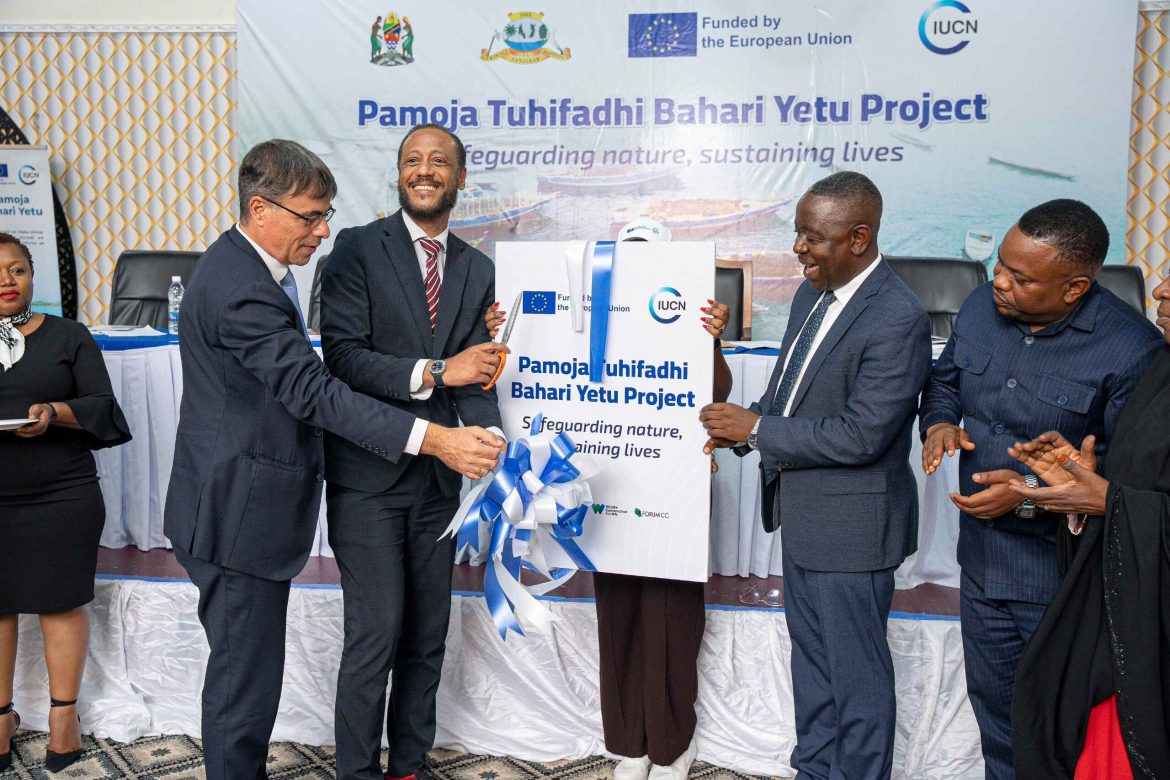
Tanzania has launched the Mtwara Seascape Multi-Stakeholder Forum, establishing a new governance platform aimed at improving coordination in the management of marine and coastal resources while supporting the country’s expanding blue economy strategy. The initiative, officially launched in Mtwara on 30 June 2026, brings together government institutions, coastal communities, research organisations, civil society and private sector actors to address growing environmental pressures on one of Tanzania’s most ecologically and economically significant coastal regions.
The Forum was inaugurated on behalf of the Mtwara Regional Commissioner by District Commissioner Abdalla Mwaipaya, who described the platform as a practical response to increasingly complex governance challenges affecting marine ecosystems. He said Mtwara’s coastline remains central to regional livelihoods, fisheries, food security and employment but faces mounting pressures from fragmented resource management, outdated planning systems, institutional overlap and environmental degradation.
 According to Mwaipaya, effective stewardship of marine resources requires coordinated action rather than isolated institutional interventions. He noted that the Forum is designed to strengthen collaboration among agencies responsible for fisheries, marine protected areas, forestry, water resources and local government without replacing their existing mandates.
The launch reflects Tanzania’s broader effort to strengthen governance frameworks underpinning its blue economy agenda, which seeks to expand sustainable economic opportunities linked to marine and coastal resources while safeguarding biodiversity and ecosystem services. As many African coastal states seek to unlock economic value from fisheries, tourism, shipping, marine biotechnology and offshore resources, improving governance has become increasingly important for balancing conservation with long-term development objectives.
According to regional development assessments, Africa’s blue economy has the potential to contribute significantly to economic diversification, employment creation and foreign exchange earnings. However, weak institutional coordination, illegal fishing, habitat degradation, climate change and unsustainable coastal development continue to constrain the sector’s contribution across much of the continent.
Representing the International Union for Conservation of Nature (IUCN) Tanzania office, Bahari Yetu Project Chief of Party Dr Mathias Igulu said the Forum emerged from an extensive consultative process involving national and local government agencies, Beach Management Units (BMUs), Collaborative Fisheries Management Areas, researchers, academic institutions, non-governmental organisations, private sector representatives, women, youth and coastal communities.
According to Dr. Igulu, consultations demonstrated that while stakeholders shared similar conservation objectives, their activities frequently operated independently, reducing the overall effectiveness of marine resource management. The Forum seeks to provide an institutional mechanism through which planning, implementation and monitoring can be undertaken collectively, improving accountability and reducing duplication.
The initiative also reflects growing recognition that sustainable marine governance depends not only on environmental regulation but also on inclusive participation by communities whose livelihoods are directly linked to coastal ecosystems. Across East Africa, locally managed fisheries and community conservation initiatives have increasingly been recognised as important complements to formal government regulation, particularly where coastal populations depend heavily on marine resources for income and food security.
For Tanzania, strengthening marine governance carries broader economic significance. The country’s Indian Ocean coastline supports commercial fisheries, artisanal fishing communities, maritime transport, tourism and coastal agriculture while contributing to national food systems and export earnings. Healthy marine ecosystems also provide natural protection against coastal erosion and extreme weather events that are becoming more frequent as climate change intensifies.
The establishment of the Mtwara Seascape Multi-Stakeholder Forum is therefore expected to contribute not only to biodiversity conservation but also to economic resilience by supporting more sustainable management of fisheries, coastal habitats and marine resources. Improved coordination may also enhance investor confidence in sectors linked to the blue economy by creating clearer governance arrangements and reducing institutional fragmentation.
Nature-based approaches are becoming increasingly central to African coastal development strategies as governments seek cost-effective methods of strengthening climate resilience. Mangroves, coral reefs and seagrass ecosystems provide valuable ecosystem services, including carbon sequestration, shoreline protection, fisheries productivity and biodiversity conservation, while generating long-term economic benefits that often exceed the costs of restoration and protection.
 The Mtwara initiative aligns with broader continental efforts to integrate environmental governance into economic planning under the African Union’s blue economy framework and the Sustainable Development Goals. International development partners have increasingly emphasised multi-stakeholder governance as a critical factor for improving natural resource management, particularly where environmental degradation crosses institutional and administrative boundaries.
For Tanzania, the Forum represents an evolution in coastal governance that recognises the interconnected nature of marine ecosystems, local livelihoods and economic development. As pressure on coastal resources continues to increase across Africa, collaborative governance models such as the Mtwara Seascape Multi-Stakeholder Forum may provide an important institutional framework for balancing conservation objectives with the sustainable expansion of the continent’s blue economy.


