


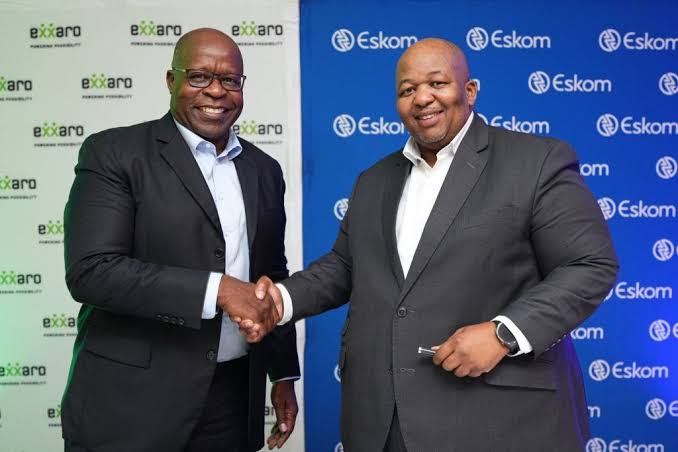
Exxaro Resources has expanded its leadership development strategy through partnerships with leading South African business schools, seeking to strengthen management capabilities at a time when the mining industry is facing simultaneous pressures around energy transition, operational resilience, technological change and sustainability. The initiative reflects a broader shift in South Africa’s mining sector, where developing executives capable of managing environmental, social and governance risks alongside commercial performance is becoming increasingly important to the industry’s long-term competitiveness.
The partnerships bring together Exxaro and business education institutions to provide structured development opportunities for employees and emerging leaders. Rather than treating leadership training as a conventional human-resources function, the approach places management capability within the wider question of how South Africa’s mining companies adapt to changing commodity markets, regulatory expectations and the country’s transition towards a lower-carbon economy.
Mining remains central to South Africa’s economy, supporting exports, fiscal revenues, industrial activity and employment while providing inputs to the country’s electricity and manufacturing systems. The sector is nevertheless under pressure to improve productivity, address ageing infrastructure, manage environmental liabilities and respond to changing expectations from investors, regulators, employees and communities.
For companies such as Exxaro, these pressures are particularly relevant because the energy transition is reshaping the commercial environment in which traditional mining businesses operate. Coal remains an important component of South Africa’s electricity system, while demand for minerals associated with renewable energy, electrification and advanced technologies is creating new opportunities elsewhere in the mining value chain. Managing that transition requires executives who can assess investment decisions across financial, environmental and social dimensions rather than viewing sustainability as a separate corporate function.
The business-school partnerships therefore have implications beyond individual employee development. South Africa’s mining industry faces a shortage of specialised skills in areas ranging from digital technology and data analysis to engineering, energy management, environmental management and complex project execution. Building these capabilities internally can reduce dependence on external expertise while creating a stronger pool of South African professionals able to manage increasingly complex mining operations.
Leadership development is also becoming more important as mining companies navigate relationships with host communities and local governments. Mining projects can generate employment, procurement opportunities and infrastructure investment, but they can also create disputes over land, environmental impacts, water resources and the distribution of economic benefits. Executives working in this environment require an understanding of stakeholder management and governance alongside technical and financial expertise.
The role of business schools is significant because the challenges facing modern mining companies increasingly cut across traditional disciplines. Financial management must be considered alongside climate risk, supply-chain resilience, technological investment, workforce transformation and regulatory compliance. Executive education can provide a structured environment in which these issues are considered together, exposing managers to perspectives from sectors beyond mining.
This is particularly relevant to South Africa’s efforts to maintain a competitive mining investment environment. The country has extensive mineral reserves and an established industrial base, but investors have increasingly focused on infrastructure reliability, regulatory certainty, electricity availability, logistics performance and the ability of companies to manage environmental and social risks. Leadership capability alone cannot resolve these structural constraints, but weak management can make them more difficult to address.
The partnerships also come as South African companies face growing pressure to demonstrate that transformation commitments translate into measurable economic participation. Skills development, employment equity, supplier development and the participation of historically disadvantaged South Africans remain important components of the country’s mining policy environment. Leadership programmes that broaden access to senior management capabilities can therefore intersect with wider economic transformation objectives.
For the African mining industry more broadly, the issue is increasingly relevant. Countries across the continent are seeking to capture greater value from their mineral resources as demand rises for copper, lithium, graphite, manganese, cobalt and other minerals associated with the energy transition. Yet attracting investment is only one part of the equation. Governments and companies also need engineers, project managers, financial specialists, environmental professionals and executives capable of overseeing complex operations and ensuring that mineral development generates wider economic benefits.
Africa’s mineral wealth has historically generated substantial export revenues without always producing comparable levels of downstream industrialisation or skills development. Strengthening local management and technical capabilities could help address part of that gap, particularly where countries seek to establish processing, refining and manufacturing industries around their mineral resources.
The emphasis on future leadership also reflects a changing definition of corporate sustainability. Environmental performance increasingly affects access to capital, insurance, market opportunities and regulatory approvals, while social performance can influence a company’s ability to maintain its licence to operate. Governance failures, meanwhile, can translate into financial losses, legal exposure and reputational damage. Executives therefore increasingly need to understand sustainability as a component of enterprise risk and value creation rather than simply a reporting requirement.
For Exxaro, developing leaders capable of operating within this environment is likely to remain relevant as the company manages its own strategic transition. The challenge for mining businesses is to maintain financial performance while preparing for changes in energy demand, technology and commodity markets. That requires decisions on capital allocation, workforce skills and asset management that may have consequences extending well beyond individual reporting cycles.
 The wider lesson for South Africa is that the country’s mining transition will depend not only on new technologies and infrastructure but also on the quality of the people managing them. Business schools can contribute by connecting academic research with practical management challenges, while mining companies can provide the operational context in which those skills are applied.
For an industry whose future increasingly depends on navigating competing demands for profitability, energy security, environmental protection and inclusive economic development, leadership capability is becoming part of the infrastructure of competitiveness. The effectiveness of such partnerships will ultimately be measured not by the number of executives trained, but by whether the resulting capabilities translate into better decisions, stronger institutions and more resilient mining operations across South Africa.


