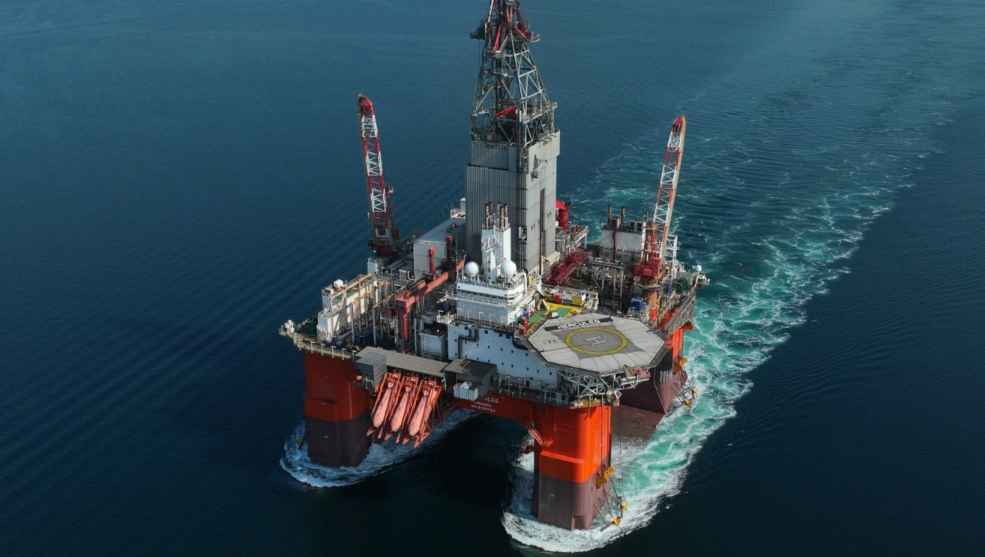

TotalEnergies has taken over operatorship of Namibia’s PEL 83 license block following a December 2025 agreement with Galp, giving the French major a 40 percent operated stake in an area that includes the Mopane oil discovery.
The deal, which awaits standard third-party approvals before closing in 2026, sets in motion a multi-year appraisal program that could reshape Namibia’s emergence as one of Africa’s most closely watched frontier oil provinces.
The partnership reconfigures ownership across several Namibian blocks at a time when early discoveries are beginning to attract coordinated development planning. TotalEnergies will fund half of Galp’s capital expenditure for exploration and appraisal activities in PEL 83, which will include a three-well drilling program over the next three years.
The first well is scheduled for next year, marking a shift from initial discovery to more detailed resource definition. For Namibia, which has recorded a series of high-impact finds since 2022, the appraisal stage matters because it determines whether early optimism translates into commercial production.
The agreement extends beyond PEL 83. Galp will acquire a 10 percent stake in TotalEnergies-operated PEL 56, the block that hosts the Venus discovery, one of the most significant offshore finds in southern Africa. Galp will also take a 9.39 percent participating interest in PEL 91. The cross-asset structure indicates a strategy to align interests and spread risk across multiple prospects as operators refine reservoir estimates and plan future development concepts.

TotalEnergies’ leadership has framed the deal as a step toward establishing a long-term production hub in Namibia. Patrick Pouyanné, the company’s chairman and chief executive, said the operator intends to draw on its track record to advance both the Venus and Mopane discoveries toward profitable and sustainable development.
In Namibia, sustainability in hydrocarbons is increasingly discussed in terms of how early projects can integrate lower-carbon designs, support domestic industrialization and avoid the boom-and-bust cycles seen in other resource-dependent states. While the commercial details of the hub concept remain under study, the consolidation of operatorship suggests that TotalEnergies wants to control the pace, sequencing and technical approach of the region’s next phase of appraisal.
The broader context is that Namibia’s offshore basin has become one of Africa’s most active exploration frontiers. The Venus discovery in PEL 56 and Shell’s Graff find in an adjacent block sparked renewed investor attention, particularly because of the basin’s geological similarities to major South American oil provinces.
Mopane’s emergence fits into this pattern. Appraisal drilling will determine whether the reservoir can support long-term production volumes and how the field might be tied back to shared infrastructure if multiple blocks advance toward development simultaneously.
The capital expenditure commitments attached to the new structure point to a multi-year cycle of offshore activity. With three Mopane appraisal wells planned over a three-year period and further decisions pending for Venus, Namibia is entering a stage where reliable timelines, contractor mobilisation and environmental approvals will shape investor confidence.
TotalEnergies is already preparing for a final investment decision on Venus in 2026, a milestone that would give the country its first clear view of how fast it might move from discovery to commercial development.
Read also: TotalEnergies Energy Outlook 2025 maps three global pathways to a lower-carbon future
For Namibia, the progression of both Mopane and Venus carries economic and institutional implications. Large offshore developments require long-term policies for fiscal terms, environmental oversight and local content. They also shape energy planning, particularly in a region where power imports and infrastructure gaps affect industrial growth.
If the basin proves commercially scalable, Namibia could attract associated investments in gas handling, port upgrades and maritime services. That prospect explains why the government and operators have been closely coordinating technical and regulatory workstreams to keep exploration on schedule.
As TotalEnergies assumes formal operatorship of PEL 83 next year, the country’s offshore sector enters a more decisive chapter. The next wells will not only test the subsurface but also Namibia’s readiness to manage the complex transition from discovery excitement to the long horizon of field development.
The outcomes will influence how the country positions itself within Africa’s evolving energy landscape, where new producers must balance economic opportunity with rising expectations for responsible resource management.
Engage with us on LinkedIn: Africa Sustainability Matters
Engage with us on LinkedIn: Africa Sustainability Matters