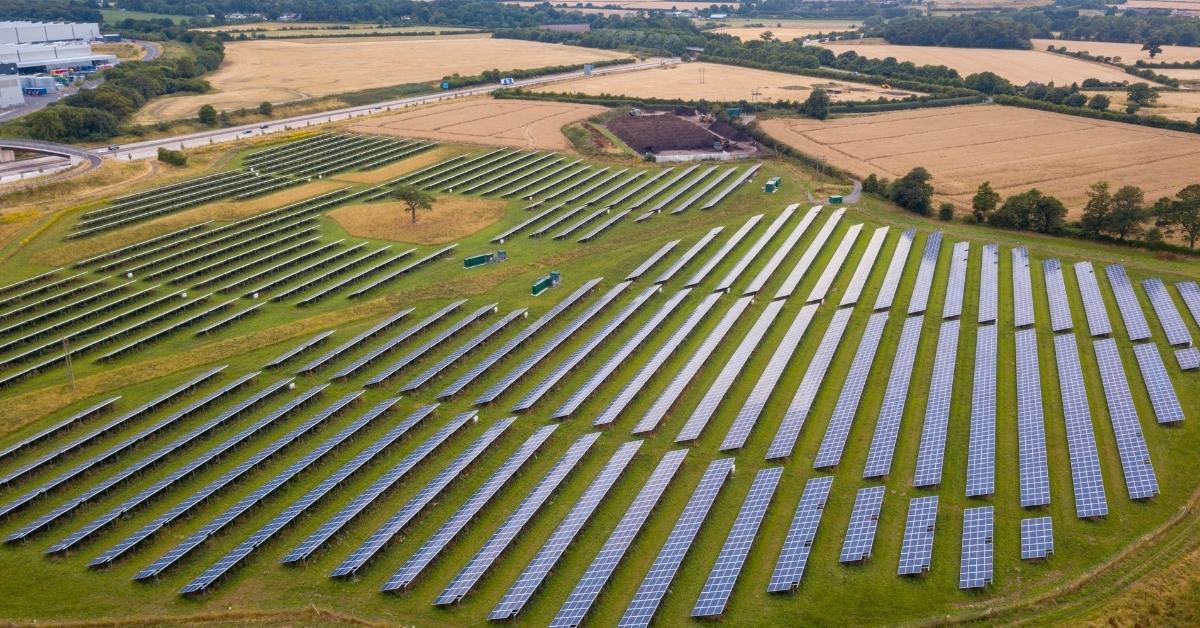

On 16 December 2025, in the central Tunisian governorate of Kairouan, a 120-megawatt solar power plant was officially commissioned, marking the country’s largest operational solar photovoltaic facility and a notable shift in how Tunisia is reshaping its energy system.
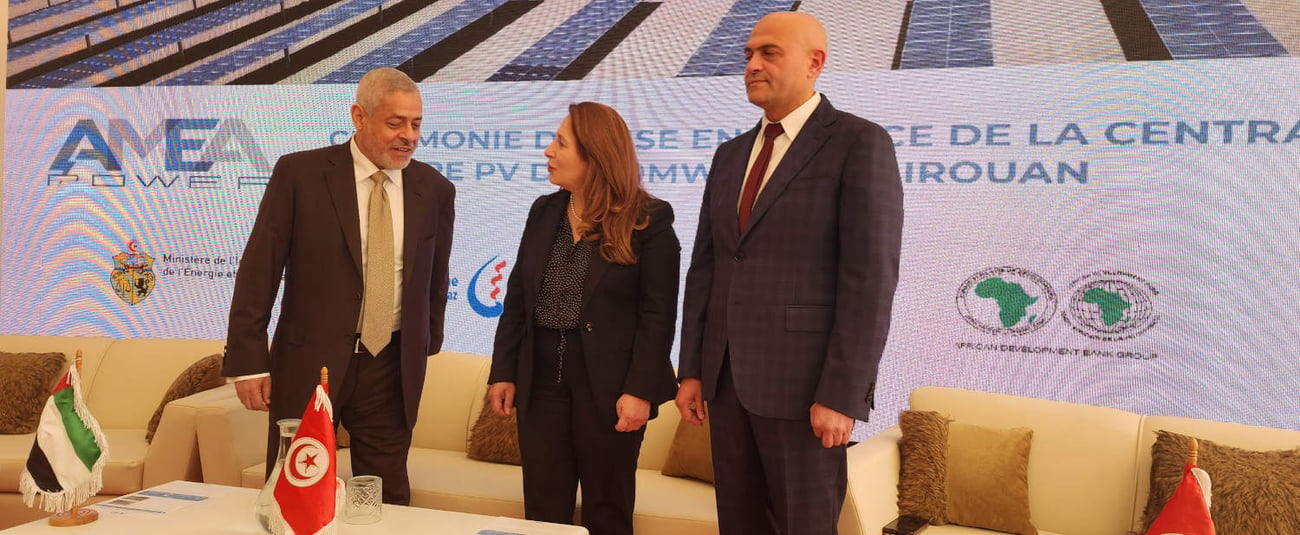
Developed by AMEA Power in partnership with the Tunisian government and backed by international financiers including the African Development Bank, the project connects renewable electricity directly into the national high-voltage grid, a first for a solar plant of this scale in the country. The question it seeks to answer is straightforward: how Tunisia can reduce its dependence on imported fuels while meeting rising electricity demand in a volatile global energy market.
Tunisia’s energy balance has been under strain for years. Domestic production of oil and gas has declined steadily, while demand for electricity continues to grow with urbanization, industrial activity and rising temperatures that push up cooling needs. More than half of the country’s primary energy supply is imported, exposing public finances to swings in international prices.

In 2022 and 2023, high global fuel costs added pressure to state utility finances and widened budget deficits. Against that backdrop, the Kairouan solar plant represents not just an environmental project, but a fiscal and energy security intervention.
The facility is the first solar project in Tunisia to exceed 100 megawatts of installed capacity and the first to feed renewable power into the 225-kilovolt transmission network operated by the national utility, STEG. Once fully operational, it is expected to generate about 222 gigawatt-hours of electricity each year, enough to supply nearly 43,000 households. That output will displace power that would otherwise be generated from gas-fired plants, avoiding an estimated 117,000 tonnes of carbon dioxide emissions annually.
For a country whose total emissions are modest by global standards but rising steadily, the savings are meaningful.
The African Development Bank’s involvement was central to bringing the project to financial close. The Bank provided roughly $25 million, combining its own resources with financing from the Sustainable Energy Fund for Africa. That support helped de-risk private investment in a market where large-scale renewable projects have historically struggled to move from planning to construction.
For AMEA Power, the project demonstrates how private developers can work with public utilities and multilateral lenders to deliver infrastructure that aligns commercial returns with national policy goals.

Tunisia’s national energy strategy sets a target of sourcing 35 percent of installed power capacity from renewables by 2030. As of 2024, renewables accounted for less than 10 percent, most of it from wind. Solar capacity has grown slowly, held back by regulatory bottlenecks, grid constraints and financing hurdles. The commissioning of the Kairouan plant shows that those barriers are not insurmountable, particularly when projects are large enough to justify grid upgrades and attract international capital.
The implications extend beyond Tunisia. Across North Africa, countries face similar challenges: declining domestic fossil fuel output, rising demand and increasing exposure to climate impacts. Morocco has moved aggressively into solar and wind, while Egypt has expanded utility-scale renewables alongside gas. Tunisia’s experience sits somewhere in between, constrained by fiscal pressures but rich in solar potential. The Kairouan project signals that even in tighter financial conditions, renewable energy can be scaled when policy clarity and institutional support align.
Read also: Somalia’s Bosaso City to receive $23 million Solar power investment from African Development Fund
There are also local economic effects that are often overlooked. During construction, the project created jobs and demand for local services in a region where employment opportunities are limited. Over its lifetime, it will contribute to grid stability and reduce the need for fuel imports, freeing up public resources for other priorities. While solar plants do not employ large numbers of people once built, their indirect impact on energy costs and reliability can influence broader economic activity.
The African Development Bank framed the commissioning as part of its wider push to support resilient infrastructure and private-sector-led climate investments. For Tunisia, the measure of success will be whether projects like Kairouan become the norm rather than the exception. If replicated at scale, solar developments could help stabilize the energy system, reduce exposure to external shocks and put the country on a more predictable path toward its climate and development goals.
In practical terms, the Kairouan plant is a reminder that energy transitions in Africa are not abstract ambitions. They are built megawatt by megawatt, through financing structures that work, grids that can absorb new power and policies that give investors confidence. Tunisia’s largest solar plant now feeds electricity into the grid each day, quietly shifting the balance of how the country powers its homes and industries.
Engage with us on LinkedIn: Africa Sustainability Matters
Engage with us on LinkedIn: Africa Sustainability Matters