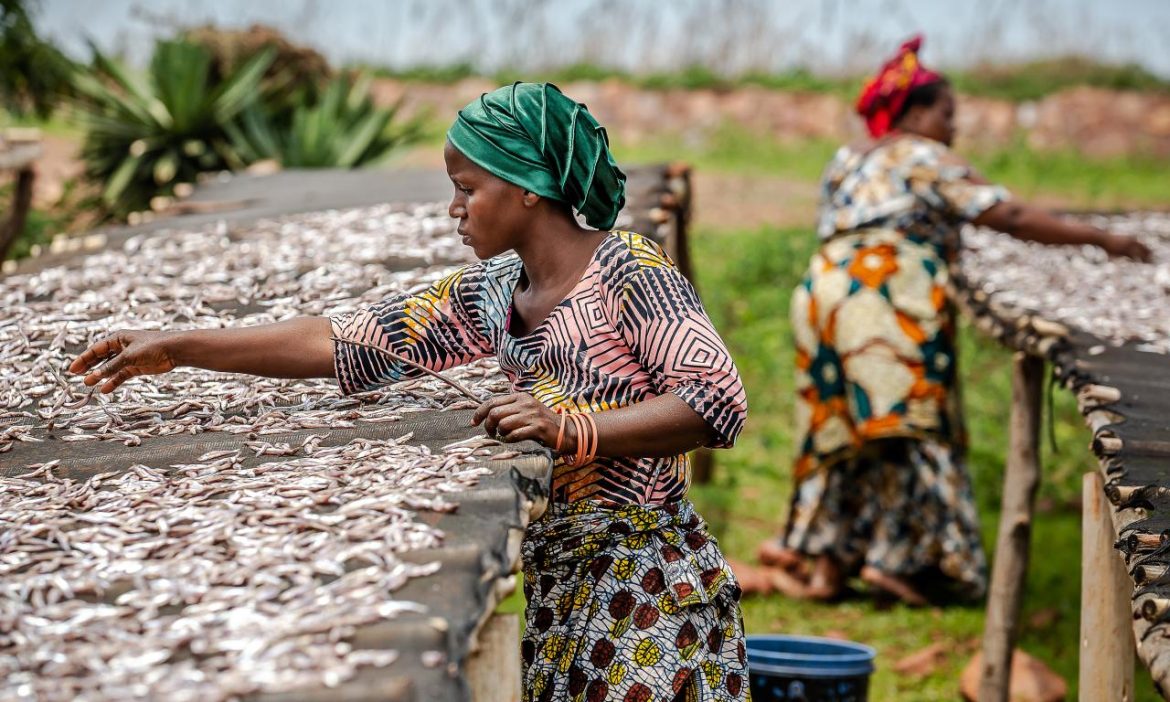
The United Kingdom has committed an additional £2.2 million through its Blue Planet Fund to accelerate the deployment of innovative ocean finance and insurance solutions across developing countries, as governments and development partners seek new ways to strengthen the resilience of climate-vulnerable coastal communities and unlock investment in marine conservation.
The funding, announced during the 11th Our Ocean Conference in Mombasa, Kenya, will be channelled through the Ocean Risk and Resilience Action Alliance (ORRAA) to expand six pioneering projects that have already demonstrated success through pilot programmes. The initiatives span Africa, Asia, Latin America and the Caribbean, focusing on innovative mechanisms including blue carbon credits, biodiversity credits, impact bonds and climate insurance products designed to support coastal livelihoods while protecting critical marine ecosystems. The latest commitment increases the UK government’s total support for ORRAA to £15.5 million and reinforces growing international recognition that traditional development financing alone will be insufficient to address the mounting climate risks facing coastal regions. The selected projects are expected to play a key role in advancing ORRAA’s broader objective of mobilising at least $500 million in finance and insurance products to strengthen the resilience of 250 million climate-vulnerable coastal residents across the Global South by 2030.
Since its establishment, ORRAA has supported 36 projects across 19 countries, with initiatives already benefiting more than 250,000 people through investments aimed at improving climate adaptation, strengthening livelihoods and safeguarding marine ecosystems. The announcement comes as coastal communities worldwide face increasing threats from rising sea levels, extreme weather events, declining fish stocks and ecosystem degradation. For many developing economies, particularly in Africa, these challenges carry significant implications for food security, employment and economic stability. Speaking at the conference, UK Marine Minister Emma Hardy said
innovative financing mechanisms are becoming increasingly important in helping vulnerable communities adapt to climate impacts while creating new economic opportunities.
She noted that projects supported through ORRAA are delivering tangible benefits for coastal populations, from protecting fishing communities against climate-related shocks to supporting ecosystem restoration initiatives capable of generating carbon revenues. Karen Sack, Executive Director of ORRAA, said the latest funding would help accelerate the development and scaling of financial and insurance products capable of delivering both environmental and socioeconomic outcomes. According to Sack, the new funding will strengthen efforts to build an investable pipeline of projects that improve resilience while supporting the long-term health of ocean ecosystems and the communities that depend on them.
Among the projects receiving support is the expansion of what is described as the world’s first impact bond for small-scale fishers. Developed by conservation organisation Rare in Indonesia, the initiative will extend to 15 additional sites across North Sulawesi, Maluku and North Maluku, providing new financing mechanisms to support sustainable fisheries management and community resilience. Rare will also lead the development of a weather-indexed parametric insurance product in Kenya aimed at protecting small-scale fishers against climate-related income losses. The model builds on an existing programme in the Philippines and seeks to provide faster and more predictable financial support following extreme weather events.

In Tanzania, Action For Ocean (AFO) will advance the country’s first fully community-led mangrove blue carbon initiative toward credit-ready status. The project is expected to generate carbon credits linked to mangrove conservation while creating new revenue streams for local communities engaged in ecosystem protection. Kenya will also feature prominently through the Vanga Seagrass Project, led by the Association for Coastal Ecosystem Services (ACES). The initiative aims to become the first seagrass conservation programme certified under the Plan Vivo Nature standard, enabling the generation of both carbon and biodiversity credits.
Elsewhere, environmental organisation MarViva will replicate its community-based microinsurance model in Colombia, providing financial protection tools for small-scale fishing communities, while CI-Atabey will advance a mangrove carbon credit project in the Dominican Republic toward investment readiness. The projects reflect a broader shift within climate and conservation finance toward mechanisms that seek to generate environmental benefits while creating sustainable economic opportunities for local communities. For African countries in particular, innovative instruments such as blue carbon credits, biodiversity credits and climate-risk insurance are increasingly being viewed as important tools for financing adaptation and conservation efforts amid constrained public budgets and growing climate pressures.
https://www.aecweek-registration.com/2026/
The funding announcement also aligns with wider international efforts to achieve global biodiversity and climate goals, including commitments to protect and sustainably manage marine ecosystems under the Kunming-Montreal Global Biodiversity Framework and the Paris Agreement. As governments, investors and conservation organisations gather in Mombasa to discuss the future of ocean sustainability, the latest investment signals growing confidence that innovative finance can play a central role in bridging the gap between climate ambition and practical action on the ground. With coastal populations expected to face increasing climate risks over the coming decades, scaling solutions that combine conservation outcomes with economic resilience is emerging as a critical priority for both development and environmental agendas worldwide.