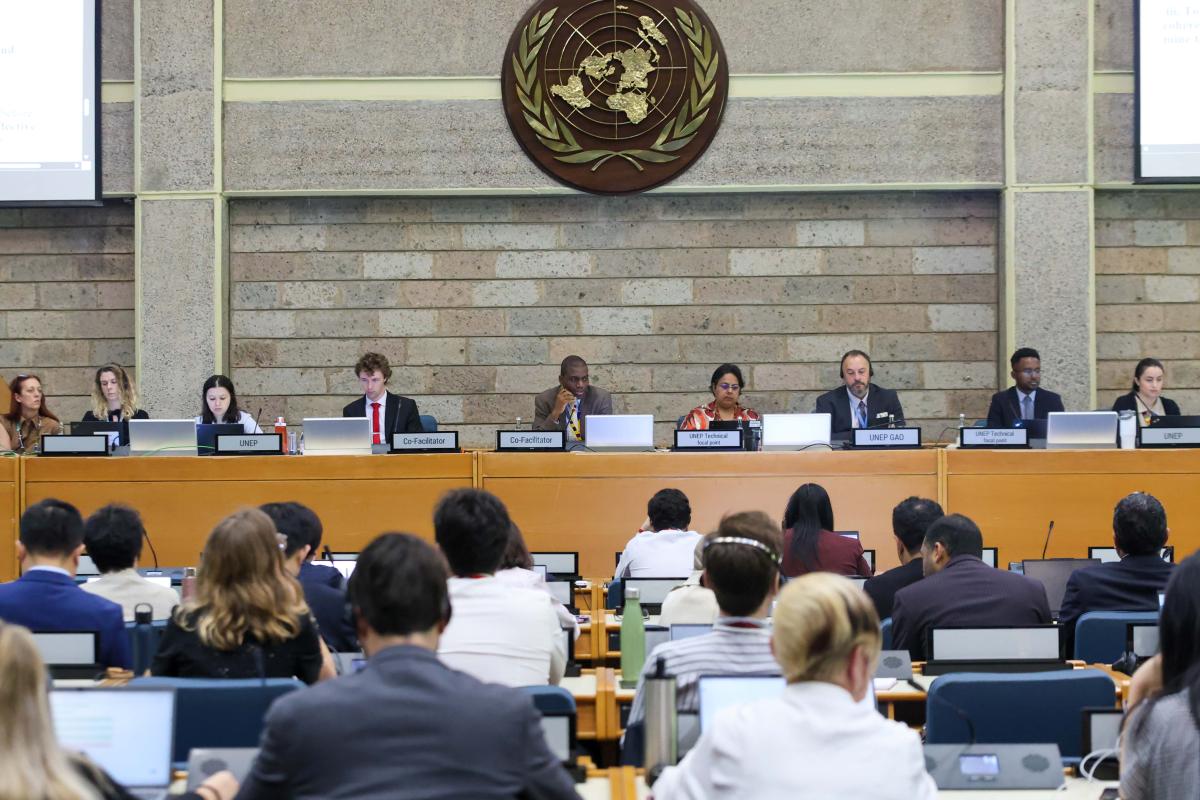

After a week of tense negotiations in Nairobi, the Open-Ended Committee of Permanent Representatives (OECPR-7) wrapped up, leaving the seventh session of the United Nations Environment Assembly (UNEA-7), which starts tomorrow, facing an uncertain path.
Delegates were unable to finalize key environmental resolutions, and the delays could have serious consequences for global sustainable development, particularly in Africa, where climate vulnerability, biodiversity loss, and resource exploitation are already urgent concerns.
The disagreements that stalled progress revolved around fundamental issues; funding, national sovereignty, and the scope of the UN Environment Programme’s (UNEP) mandate, leaving the international environmental community hoping that UNEA-7 can offer a fresh start.

The backlog of unresolved issues is significant. Discussions ranged from protecting fragile coral reefs and karst landscapes to tackling environmental crimes and managing mineral resources. The Center for International Environmental Law (CIEL) warned that some countries used familiar tactics to block progress, a sentiment echoed in the UN corridors, where one delegate described the atmosphere as “certainly tense.”
For African nations and other developing economies, the delay is more than procedural, it has real-world consequences. Without agreements, financial resources, technology, and capacity-building support for climate resilience and environmental protection are delayed.
When negotiations stalled over funding for coral reefs, the debate was not just academic. Delegates argued over whether money should come from “all sources,” flow from developed to developing countries, or be limited to nations capable of contributing. The inability to resolve this question directly affects coastal communities whose livelihoods depend on these ecosystems.
The negotiations revealed deep divisions in two areas: governance and finance.
On governance, talks over a resolution addressing environmental crimes hit a deadlock. One regional group, backed by others, wanted the resolution withdrawn, arguing it strayed beyond UNEP’s mandate. African and other developing nations countered that environmental crimes, ranging from illegal logging to mineral smuggling, have transnational effects, harm biodiversity, and require urgent international support.
Even finding a softer term than “crimes,” like “activities” or “issues,” proved impossible, highlighting fundamental disagreements about the link between environment, security, and human rights. Iran, in its closing remarks, argued that UNEP should not venture into security or human rights matters.
Finance and strategy were equally contentious. Negotiations over UNEP’s Medium-Term Strategy (MTS) for 2026-2029, along with its budget and Programme of Work, exposed key disagreements. Some delegations opposed UNEP’s Executive Director engaging with the UN Security Council or Human Rights Council on environmental issues, framing it as a jurisdictional overreach.
A proposal asking developed countries to take full responsibility for hazardous chemicals and waste exported to or generated in developing countries also faced resistance, illustrating the ongoing struggle over who should bear the costs of global pollution.

The week also highlighted tensions between collective action and national sovereignty. India and the Arab Group stressed that decisions should respect equity, national priorities, and the principle of Common But Differentiated Responsibilities (CBDR). These concerns informed resistance to prescriptive language, such as deadlines for updating national action plans on Antimicrobial Resistance (AMR), which many developing countries argued they lacked the capacity to meet.
The Democratic Republic of Congo (DRC), a major mining country, added another layer to the discussions on minerals and metals. While the draft resolution remained contentious, the DRC’s willingness to support it reflected Africa’s dual role as both a resource supplier and a victim of unsustainable exploitation.
When OECPR-7 concluded at 8:52 pm on Friday, all draft resolutions and decisions were forwarded to UNEA-7. A delegate, stepping out into the Nairobi night, captured the mood succinctly: “The future of our planet depends on taking these decisions.”
Read also: The wins and loses for Africa at COP30 from its conclusion
Zambia’s closing statement reflected Africa’s perspective, noting that the week’s “limited and uneven progress indicates the complexity of the issues at hand” and urging negotiators to bring “renewed political will, deeper cooperation, and shared responsibility” to the Assembly.
The stakes are high; vulnerable nations rely on UNEA-7 to advance sustainable development. Ministers now face the challenge of translating stalled negotiations into actionable solutions. The chance for a reset is real, but it will take political courage to turn the stalemate into meaningful progress for Africa and the wider world.
Engage with us on LinkedIn: Africa Sustainability Matters
Engage with us on LinkedIn: Africa Sustainability Matters