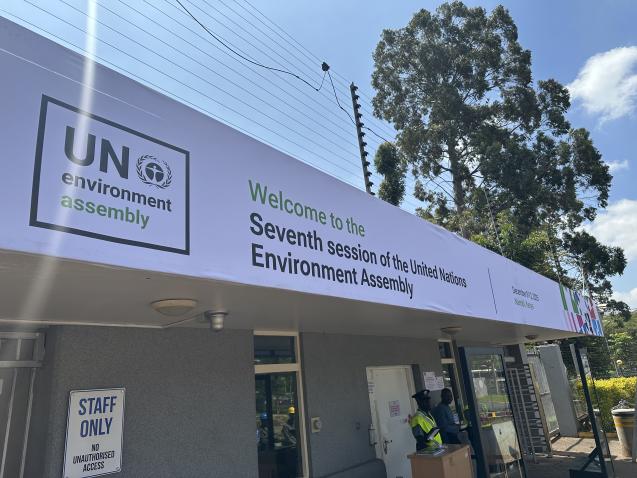

Governments, youth representatives and environmental agencies are set to meet in Nairobi this week (8-12 December 2025) for the seventh UN Environment Assembly to decide how countries will confront rising climate, pollution and biodiversity threats, as a new Global Youth Declaration urges UNEA-7 to overhaul environmental governance, financing and accountability frameworks. The gathering, hosted by the UN Environment Programme, comes as African nations face escalating losses from extreme weather and environmental degradation, adding urgency to the negotiations.

UNEP’s latest assessments show that Africa now loses between five and fifteen percent of GDP annually to climate-related shocks, pollution burdens and ecosystem decline. These impacts are visible across the continent: prolonged droughts in the Horn of Africa, destructive floods from Nigeria to Libya, declining hydropower generation in southern Africa, and coastal erosion that is steadily reshaping West African settlements. As UNEA-7 begins, African negotiators are entering talks with a clear message that global environmental decisions must reflect the real economic pressures unfolding across the continent.
Against this backdrop, children and youth from more than 2,000 organizations have submitted a comprehensive Global Youth Declaration calling for UNEA-7 to address fragmentation in environmental governance, strengthen scientific integration in decision-making and reform financing structures that currently limit the ability of developing countries to respond to the planetary crisis.
The declaration reflects a coordinated effort from regional youth consultations held across all six UNEP regions, including Africa, and positions young people as direct contributors to policy rather than observers on the sidelines.
A key concern raised in the document is the proliferation of disconnected environmental agreements and reporting processes that strain countries with limited administrative capacity. This challenge is particularly evident in Africa, where governments often manage separate systems for climate plans, biodiversity reporting and pollution control frameworks.
Negotiators from Kenya, Rwanda, Morocco and several other states have emphasized that UNEA-7 must streamline these processes and strengthen UNEP’s authority to ensure consistency across multilateral environmental commitments.
Scientific guidance is also expected to become a focal point of the Assembly. African governments have repeatedly highlighted the need for faster integration of environmental data into national planning, especially as climate impacts intensify.
The youth declaration reinforces this by urging UNEP to ensure its assessments directly inform international negotiations, while also calling for young scientists to participate in producing the evidence that shapes global decisions. This push for stronger science-policy mechanisms reflects the growing recognition that outdated or fragmented data slows the ability of countries to respond to rapidly changing climate and biodiversity realities.
Read also: African Cities Innovation Fund launches to drive smart, climate-resilient urban solutions
Financing remains one of the biggest hurdles. UNEP estimates that Africa’s adaptation needs will exceed USD 50 billion annually by 2050, yet current flows are far below what is required to protect infrastructure, food systems and water resources. Many African nations spend more on external debt servicing than on environmental protection or climate resilience.
The youth declaration echoes long-standing African calls for reforms to the international financial system, including expanded concessional finance, revised debt frameworks and a stronger mandate for institutions to account for environmental risk. As UNEA-7 discussions unfold, African negotiators are expected to push for clearer commitments that match both the scale and urgency of the continent’s needs.
Several contentious policy issues will test the Assembly’s ability to produce meaningful outcomes. The plastics treaty negotiations, stalled in previous rounds, remain a priority for African countries grappling with rising waste volumes and insufficient recycling capacity.
The youth declaration calls for a legally binding agreement that caps virgin plastic production and strengthens global monitoring systems. African coastal cities, where plastic waste clogs drainage systems and pollutes fisheries, are watching the negotiations closely for signs of progress.
Nature loss and ecosystem protection are equally prominent. The Congo Basin, often described as the world’s second-largest lung, continues to face pressure from logging, mining and agricultural expansion. East African coral reefs are experiencing rising temperatures and acidification. Communities along the Sahel face land degradation that reduces grazing land and intensifies conflict risks.

Youth representatives have urged UNEA-7 to legally prioritise the protection of intact ecosystems and strengthen the role of Indigenous Peoples and local communities in environmental decision-making. Several African states have already begun incorporating such approaches into national conservation strategies, signalling a shift toward more locally rooted management.
What distinguishes UNEA-7 is the scale of youth engagement shaping its agenda. In Nairobi, young Africans highlighted concerns ranging from the safety of environmental defenders to the governance of critical minerals as the continent expands renewable energy and electric-mobility sectors. They emphasize that environmental decisions should reflect lived realities, not only diplomatic negotiations, particularly as Africa’s young population becomes the world’s fastest-growing labor force.
Read also: New Kenya youth environmental awards open to support grassroots climate solutions
As delegates negotiate resolutions over the coming days, the outcome of UNEA-7 will be judged on whether decisions lead to measurable environmental action rather than broad commitments.
For African nations already balancing development priorities with escalating ecological pressures, the Assembly represents a critical opportunity to secure a stronger multilateral system capable of responding to the continent’s needs.
For the young people who contributed to the declaration, the meeting is a test of whether global cooperation can still deliver meaningful progress in a world where environmental threats are no longer abstract but daily realities.
Engage with us on LinkedIn: Africa Sustainability Matters
Engage with us on LinkedIn: Africa Sustainability Matters