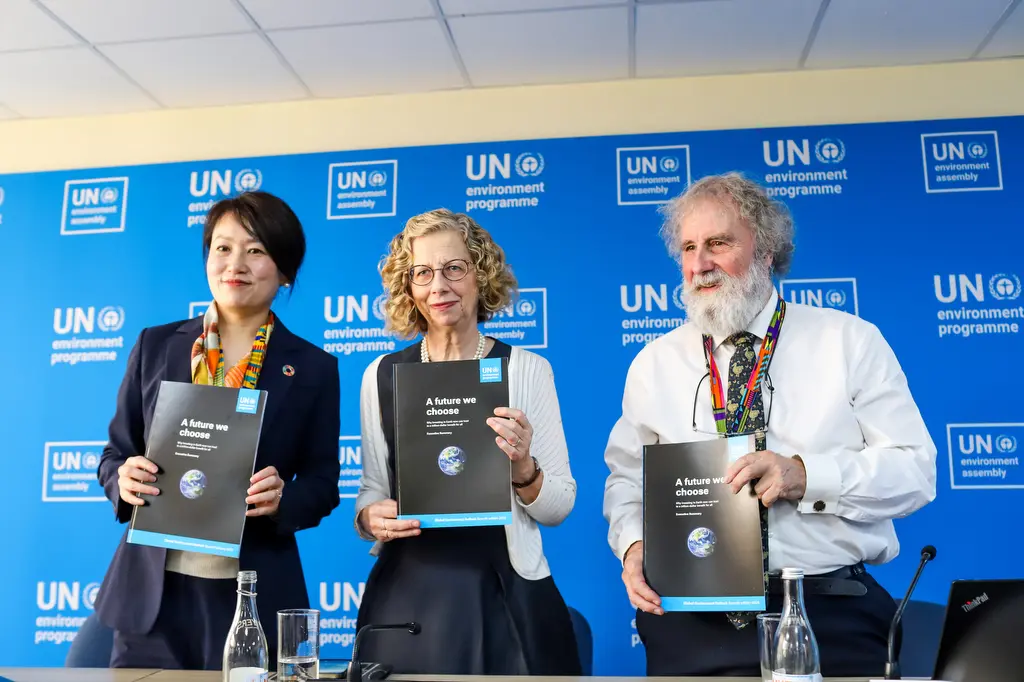

The United Nations Environment Programme released the seventh Global Environment Outlook in Nairobi on 9 December 2025, issuing a clear warning that the world is moving toward a far more dangerous climate and environmental future. The assessment, compiled by 287 scientists from 82 countries, outlines the consequences of inaction and the potential economic gains of a global shift to sustainable development. For Africa, the findings land with particular weight, as the continent continues to experience the earliest and most severe impacts of environmental decline.

The report outlines how current development patterns are driving rising temperatures, shrinking biodiversity and worsening land degradation. These trends are already visible across many African regions. Longer drought spells in the Horn, soil erosion in the highlands of East Africa and rapid coastal erosion along West Africa’s shoreline show that the crisis is not a future scenario but a present condition.

UNEP’s analysis suggests that without changes in policy and investment, these impacts will intensify over the next two decades, affecting agriculture, health, infrastructure and economic stability.
GEO-7 also presents a different scenario, one in which sustained investment in climate resilience, restoration and cleaner production systems alters the continent’s economic trajectory. According to the report’s modelling, global efforts to repair ecosystems and cut emissions could begin generating significant economic returns from around 2050. It projects a possible US$20 trillion global economic dividend by 2070 if governments and financial institutions commit to the scale of investment required.
This projection raises practical questions for Africa. Many countries face high debt-servicing costs, limited fiscal room and challenges in attracting long-term private capital. The report acknowledges this context, noting that the up-front cost of system-wide environmental transformation will be substantial. It also states that the cost of inaction is likely to be far higher, as climate impacts continue to disrupt food systems, damage public infrastructure and reduce productivity.
African officials and analysts at the Nairobi launch pointed to the report’s emphasis on financing responsibility. While the modelling shows long-term global benefits, the immediate burden of adaptation and restoration falls on countries that contributed least to historical emissions.
Several African delegates highlighted that wealthy nations will need to increase their climate finance commitments, provide more concessional loans and expand technology transfer if the transition is to be achievable for developing economies. The report’s language supports this position, noting that transforming global systems will require a redistribution of financial effort.
In addition to finance, GEO-7 highlights the value of local knowledge and community-led environmental management. It recognizes Indigenous and local knowledge systems as essential components of successful climate and land restoration projects.
The report references philosophies such as Ubuntu to illustrate how collective decision-making and shared responsibility shape resource management in many African communities. This acknowledgement gives weight to approaches already in use in parts of the continent, where community-managed forests, rangelands and watersheds have shown more consistent results than externally imposed interventions.

The state of Africa’s land and resource systems receives considerable attention in the report. Large areas of farmland continue to lose fertility, and degraded rangelands are reducing the resilience of pastoral households.
Urban waste systems in fast-growing cities are also struggling, with plastic pollution increasing in rivers and coastal waters. GEO-7 notes that while new technologies can help improve waste management and agricultural productivity, success will depend on parallel changes in policy, governance and consumer behaviour.
Several examples demonstrate how targeted investments can shift outcomes. Wetland restoration in Rwanda has created buffers against flooding and supported agriculture on surrounding lands.
In Kenya, expanding off-grid solar systems has reduced energy costs for small businesses, particularly in agro-processing.
In Senegal, coastal restoration projects have helped stabilise fish stocks and protected communities from storm surges. These cases reflect the kind of integrated action the report argues is necessary: a combination of public investment, local engagement and long-term planning.
As African governments review the findings, the central challenge remains how to balance immediate development goals with long-term environmental stability. Climate adaptation often requires upfront spending, yet many of its benefits emerge slowly and may not align with short-term budget cycles. However, the losses from climate-related disasters are rising each year, adding pressure on finance ministries and planning departments to integrate resilience across sectors.
UNEP’s executive team stressed at the launch that the report is meant to guide decision-making rather than sit on a shelf. It urges governments to use environmental data in national development plans, reform subsidy structures that encourage resource depletion and strengthen institutions that manage land, water and waste.
For international partners, the report calls for financing structures that match the long timelines of resilience projects, including longer loan maturities, lower interest rates and risk-sharing mechanisms that attract private investors.
The GEO-7 findings place Africa at a decisive moment. The continent is experiencing the harshest effects of global environmental decline, yet it also holds significant potential for restoration-driven growth.
The report’s authors argue that the steps taken over the next decade will determine whether Africa continues to absorb growing losses or becomes a key driver of global sustainability gains. The launch in Nairobi at UNEA-7 underscored that the decisions are now in motion, and the cost of delay is rising.
This sounds like, and indeed is, a massive undertaking. But there is no technical reason why it cannot be done. And let us remember that the world has already made so much progress: from the booming renewables industry to global coverage of protected areas to the recovery of the ozone player and phasing out of toxic chemicals and more. I call on all nations to build on this progress, follow the transformation pathways laid out in GEO-7 report, and drive their economies towards a thriving, sustainable future. ~ Inger Andersen, unep executive director
Engage with us on LinkedIn: Africa Sustainability Matters
Engage with us on LinkedIn: Africa Sustainability Matters