


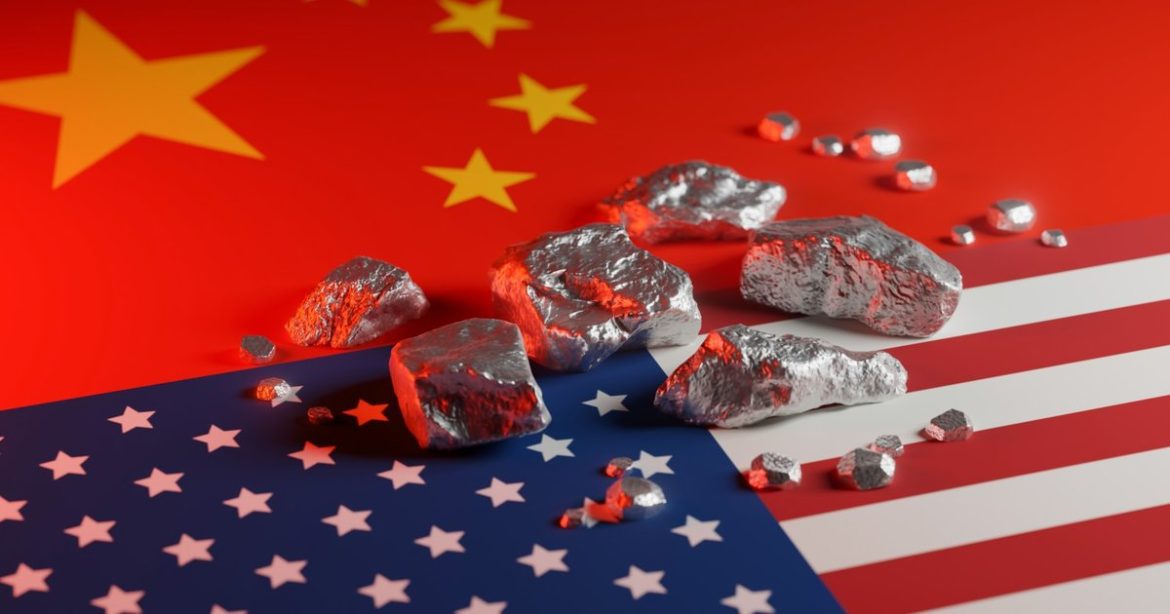
The United States has significantly expanded its strategic engagement with Africa’s critical minerals sector through a combination of diplomatic agreements, infrastructure financing, development finance and private-sector investment, signalling a broader effort to diversify global supply chains for minerals essential to electric vehicles, renewable energy technologies and advanced manufacturing. The initiative seeks to strengthen access to Africa’s growing reserves of battery minerals while reducing dependence on supply networks currently dominated by China.
Washington’s approach reflects a wider geopolitical competition over critical minerals that underpin the global energy transition. As demand for lithium, cobalt, graphite, copper and rare earth elements accelerates, governments are increasingly seeking secure and resilient supply chains capable of supporting industrial decarbonisation, clean energy deployment and advanced manufacturing.
 Africa has emerged as a central player in this transition. The continent possesses substantial reserves of critical minerals required for battery production, renewable energy systems and digital technologies. However, despite its resource endowment, much of the economic value generated from these minerals continues to accrue outside Africa through overseas refining, component manufacturing and battery production.
China has spent more than two decades building integrated mining, processing and logistics networks across several African mineral-producing countries. Chinese companies have established significant operations in Zambia’s Copperbelt, the Democratic Republic of Congo’s cobalt industry, Zimbabwe’s lithium sector and other resource-rich jurisdictions, combining geological exploration, mine development, mineral processing and transport infrastructure into vertically integrated supply chains. This model has enabled long-term access to strategic minerals while delivering infrastructure investment and export revenues to host countries.
The United States is now pursuing an alternative model centred on diversified investment partnerships. At the diplomatic level, Washington has signed strategic agreements with the Democratic Republic of Congo and Rwanda while establishing memorandums of understanding with Zambia, Botswana, Mozambique and Angola. These agreements focus on cooperation across mineral production, processing, infrastructure development, investment and trade, providing a framework for deeper commercial engagement.
Development finance institutions have become central to this strategy. According to the US International Development Finance Corporation (DFC) and the US Trade and Development Agency (USTDA), support is being directed toward projects capable of expanding non-Chinese mineral supply chains while encouraging greater local processing capacity across Africa.
Recent investments include a US$50 million equity commitment to South Africa’s Phalaborwa rare earths project, a US$150 million loan supporting the Balama graphite project in Mozambique and a US$4.6 million loan for Malawi’s Songwe Hill rare earths project. These investments target upstream extraction alongside midstream processing, reflecting growing recognition that mineral beneficiation represents an increasingly important component of industrial development.
Infrastructure development forms another pillar of Washington’s engagement. The Lobito Corridor, extending approximately 1,300 kilometres from the Copperbelt region of Northern Zambia and Southern Democratic Republic of Congo to Angola’s Atlantic port of Lobito, has emerged as one of Africa’s most strategically important transport projects. Backed by a US$553 million DFC loan, the initiative includes railway rehabilitation, road improvements and port modernisation designed to strengthen export logistics for copper, cobalt and other battery minerals.
For producers in Zambia and the DRC, improved transport infrastructure has the potential to reduce export costs, improve delivery reliability and enhance supply chain resilience by providing an alternative to existing transport corridors. According to infrastructure analysts, logistics efficiency remains one of the principal constraints limiting competitiveness across Africa’s mining sector.
Alongside public financing, Washington is mobilising private capital through strategic commercial partnerships. Project Vault, a US$12 billion initiative supported by the Export-Import Bank of the United States, works with international commodities trading firms including Traxys, Mercuria and Hartree Partners to strengthen critical mineral supply for US industry.
Recent commercial agreements include Mercuria’s US$200 million pre-payment arrangement for copper production from Zambia’s Mopani Mines and Traxys’ memorandum of understanding supporting graphite marketing from Malawi’s Kasiya rutile-graphite project. These agreements illustrate how private capital is increasingly complementing public investment in securing strategic mineral supply.
Another major initiative is the Orion Critical Mineral Consortium, led by Orion Resource Partners in partnership with the DFC and Abu Dhabi investment company ADQ. The consortium seeks to develop secure mineral supply chains for US and allied markets. In early 2025, Orion announced a memorandum of understanding to acquire a 40 per cent interest in Glencore’s mining operations in the Democratic Republic of Congo, including Mutanda Mining and Kamoto Copper Company, in a transaction valued at approximately US$9 billion.
For African governments, growing competition between global powers presents both opportunities and policy challenges. Increased international interest creates potential to attract investment, improve infrastructure, expand mineral processing and strengthen domestic industrialisation. However, analysts caution that long-term development gains will depend on governments securing greater participation across higher-value segments of the supply chain, including refining, battery manufacturing, engineering services, research and workforce development.
According to the International Energy Agency, the concentration of global critical mineral refining has continued to increase despite rising demand for diversified supply. The agency reports that between 2020 and 2024, the combined market share of the three largest refining countries rose from approximately 82 per cent to 86 per cent across key energy transition minerals, with China remaining the dominant processor of cobalt, graphite and rare earth elements.
This concentration illustrates that ownership of mineral resources alone does not automatically translate into industrial competitiveness. While extraction remains essential, value increasingly resides in processing technology, manufacturing capability, logistics networks, intellectual property and access to global markets.
Commodity markets continue to reflect robust demand for critical minerals. Recent assessments indicate relatively stable pricing across battery-grade lithium carbonate, lithium hydroxide, cobalt, copper and nickel sulphate, while certain rare earth materials, including terbium oxide, have experienced price increases driven by tightening supply and sustained demand from advanced manufacturing industries.
 For Africa, the evolving geopolitical contest over critical minerals represents more than a competition between major powers. It presents an opportunity to reposition the continent within global industrial value chains at a time when demand for strategic minerals is expected to expand rapidly over the coming decade. Success, however, will depend on policies that move beyond extraction to encourage local processing, technology transfer, skills development and stronger regional manufacturing ecosystems.
The United States’ expanding engagement therefore reflects not only a shift in global resource diplomacy but also growing recognition that Africa’s mineral wealth will play a decisive role in shaping the future of clean energy, industrial competitiveness and economic security. How African governments negotiate this renewed international interest may determine whether the continent captures a greater share of the economic value generated by the global energy transition or continues to serve primarily as a supplier of raw materials.


