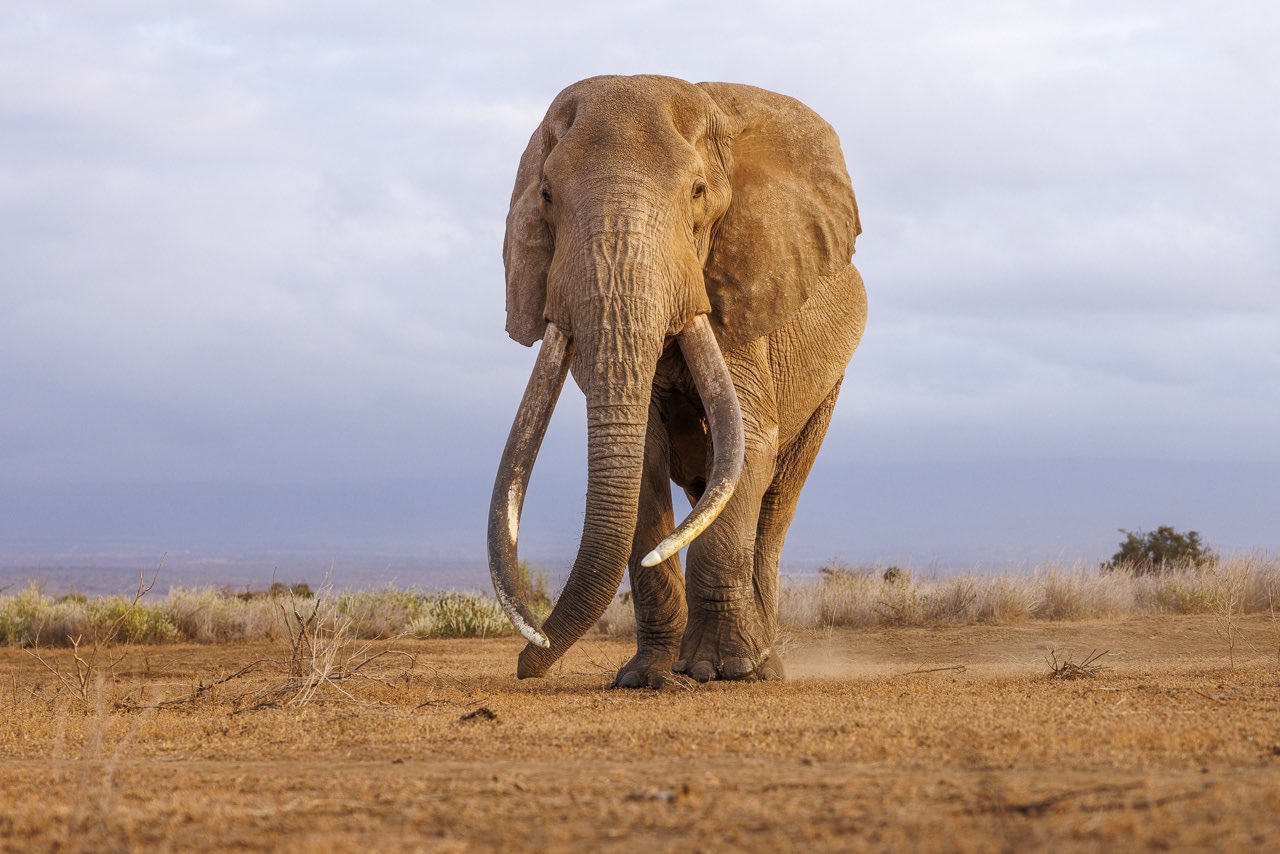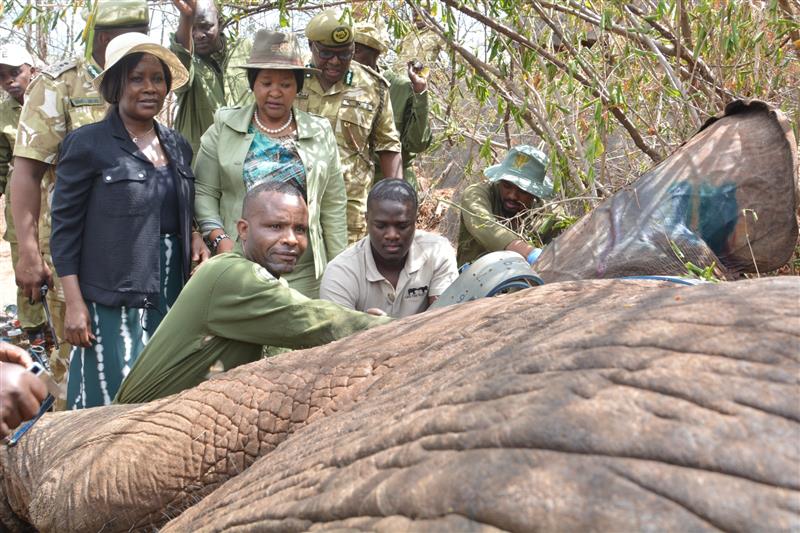

Kenya Wildlife Service has begun an unprecedented conservation initiative to preserve the body of Craig, one of Africa’s most iconic elephants, through professional taxidermy. Craig died on January 3 at Amboseli National Park at around 54 years old, leaving behind a legacy that conservationists say symbolizes both decades of wildlife protection work and the challenges facing elephant populations across the continent.
Kenya’s wildlife authorities announced on January 13 that the painstaking process of conserving Craig’s skin and physical form has started with the intention of creating a lifelike mount for public exhibition and scientific education.
Read also: Legendary Amboseli Super Tusker Craig dies at 54: Kenya and Africa mourn iconic Elephant
Born in 1972 into the famous CB elephant family in Amboseli, Craig was distinguished by his massive tusks, each around 45 kilograms, marking him as a rare super tusker. Once common across East Africa, only a few remain today, making Craig’s survival into his fifties a testament to effective conservation in the park.
Craig was more than a spectacle; he was a living archive of ecological history. Researchers logged his movements, social behaviour, breeding patterns, and familial ties over decades, data that contribute to understanding elephant social structures, genetics, and responses to environmental pressures.
In his lifetime, he sired numerous calves, reinforcing genetic resilience in Amboseli’s elephant population. Officials at Kenya Wildlife Service say embedding Craig’s physical presence into a public space will give students, scientists, and ordinary citizens a rare chance to engage with a species increasingly under threat.

Taxidermy, the scientific art of preserving an animal’s body for study or display, is rare at the scale proposed for Craig. The technique has a long history in scientific institutions: natural history museums from the American Museum of Natural History in New York to the Amathole Museum in South Africa house taxidermied mammals that have educated generations about biodiversity far removed from their visitors’ daily realities.
In the U.S., exhibits such as the famed elephant group in the Akeley Hall of African Mammals originated in early 20th-century efforts to document species before industrial-era declines.
Historical precedents for preserving iconic individual animals exist globally, though not always without controversy. Museums around the world display taxidermied specimens, from elephants to tribal game trophies, as tools for education, research, and heritage conservation. These collections help contextualize biodiversity within broader narratives of environmental change and human impact.
However, they also raise complex ethical questions about representation, colonial legacies, and how best to honour animal lives while teaching about conservation imperatives. Craig’s preservation is positioned squarely within that debate, with Kenya opting to foreground conservation value over spectacle.
Throughout Africa, individual animals have rarely been preserved in this way, especially as educational exhibits rather than trophies. South Africa’s museums include historic taxidermy collections that tell stories of both natural heritage and colonial scientific practice.
The move in Kenya thus places Craig in a lineage of preserved specimens that serve public education. It also signals an evolving understanding among conservation agencies of how physical specimens can amplify wildlife narratives in an era where habitat loss, poaching, and climate change continue to erode animal populations across the continent.

The broader implications for sustainability are significant. Elephants are keystone species, their foraging patterns shape savannah ecology, their movements disperse seeds over kilometres, and their social systems reflect deep evolutionary adaptations to environmental variability.
Scientist projections show sub-Saharan elephant numbers have faced steep declines over recent decades, with poaching peaking in the early 2010s and habitat fragmentation intensifying. While Kenya has seen relative success in stabilizing or increasing some elephant populations, challenges remain. Craig’s story thus becomes a tangible anchor for conversations about conservation finance, community engagement, anti-poaching efforts, and ecological monitoring.
Read also: Cape Town’s Baboons: New action plan balances urban safety and Wildlife conservation
For millions of Africans and global wildlife enthusiasts, Craig became a symbol of long-term commitment to wildlife stewardship. His preserved body will likely draw visitors, educators, and researchers alike when it is eventually displayed at a yet-to-be-announced facility.
The Kenya Wildlife Service has made clear that the initiative is not about immortalising an individual for vanity, but about forging a bridge between current and future generations, a physical reminder of what sustained conservation can achieve and what remains at stake.
The decision resonates beyond Kenya’s borders. Across Africa, nations are searching for sustainable models that integrate economic development with wildlife preservation. Tourism revenues linked to charismatic megafauna like elephants and lions contribute billions of dollars to regional economies, yet those same species are vulnerable to the decline of the very natural systems they depend on.
Craig’s life and now his preserved form underscore the urgency of holistic approaches: one that blends science, education, and community-led conservation as pillars of sustainable environmental futures.
Engage with us on LinkedIn: Africa Sustainability Matters