


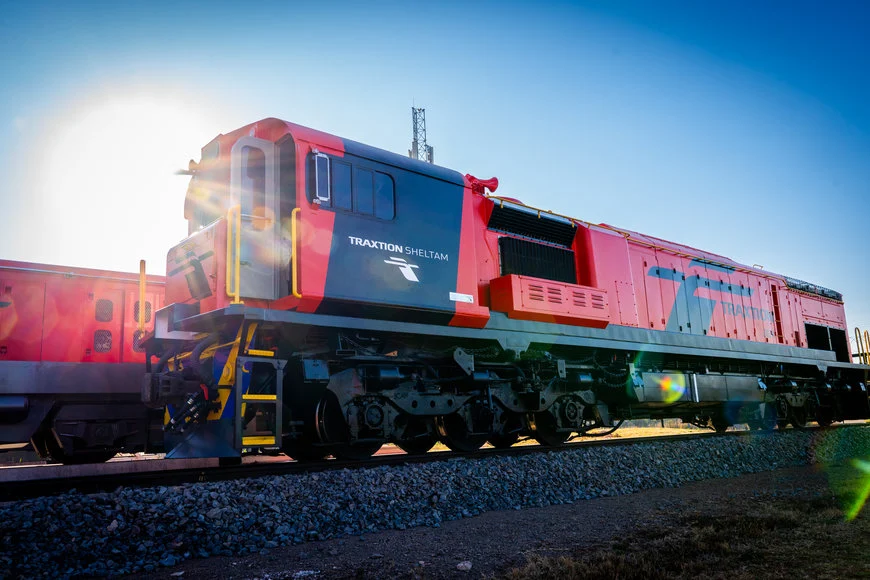
South Africa has secured its largest private freight rail investment to date, with Traxtion committing R3.4 billion, just over $200 million, to expand the country’s freight rail capacity. The agreement includes the acquisition of 46 diesel-electric locomotives from New Zealand’s KiwiRail, which are being retired from KiwiRail’s fleet.
Traxtion will upgrade these locomotives in partnership with Wabtec to meet southern African standards. The first six locomotives are expected to arrive in South Africa in May 2026, and the full fleet is scheduled to be operational by 2028.
The investment is being implemented through Traxtion’s Rail Services Hub in Rosslyn, with R1.8 billion allocated to the locomotives and R1.6 billion to wagons. A minimum of 60 percent local content will be used during the build and deployment, with 662 direct jobs expected to be created.
In addition, 79 percent of the contract value will support South African suppliers providing steel, components, engineering services, and logistics. Traxtion, which has operated in ten African countries for nearly four decades, brings experience with locomotive operations and maintenance across the continent, which officials say will facilitate integration into South Africa’s rail network.
Read also: Nigeria’s $50 billion Ondo Refinery secures major breakthrough as joint venture is finalised
South Africa’s railway system, stretching 20,986 kilometres, is the largest on the continent, yet freight volumes have consistently fallen below national demand.
Currently, Transnet moves between 160 and 165 million tonnes of freight annually, against a demand of more than 250 million tonnes. Industries including mining, agriculture, and manufacturing have faced repeated delays and higher costs due to ageing locomotives, inadequate rolling stock, and infrastructure bottlenecks.
Coal and iron ore shipments, agricultural exports, and manufactured goods have been particularly affected. The entry of a private operator such as Traxtion is expected to complement government efforts to improve efficiency and reliability in the sector.
The deal represents a major vote of confidence in ongoing rail reforms. The South African government has opened parts of the national network to private operators, aiming to increase capacity, reduce congestion, and improve service reliability.
Traxtion’s locomotives will be upgraded to the C30MEI specification with fuel-efficient engines and advanced control systems. This approach will ensure compatibility with Transnet operations while providing modern, higher-capacity units. By 2028, the new fleet is expected to significantly increase available rail capacity for freight transport, while also enhancing operational reliability.
Beyond South Africa, the investment reflects a regional trend toward liberalizing rail sectors. Countries including Kenya, Tanzania, and Botswana have revised rail access policies to attract private operators, aiming to revive freight corridors long dominated by state monopolies.
South Africa’s investment could influence regional trade flows to ports such as Durban, Ngqura, and Cape Town, as well as improve connections to neighboring countries that rely on South African infrastructure for imports and exports.
Freight rail also offers environmental benefits compared with road transport. Rail moves bulk cargo more efficiently, with lower fuel consumption and fewer emissions per tonne-kilometre than trucks. For industries such as mining and agriculture, a strengthened rail network can reduce road congestion and contribute to broader decarbonisation objectives.
The success of the investment will depend on how effectively Traxtion integrates its locomotives with the existing network, and on coordination with Transnet to manage access and scheduling. If implemented as planned, the project could mark a structural shift in South Africa’s freight logistics, increasing efficiency, supporting industrial supply chains, and creating jobs in both construction and maintenance.
The R3.4 billion investment is the largest private freight rail deal in South Africa’s history in terms of fleet size and value. With locomotives expected to start arriving within 18 months and the full fleet operational by 2028, the agreement represents a substantial step in addressing long-standing infrastructure gaps. It also signals growing private-sector confidence in South Africa’s rail reforms and the potential for regional expansion.
Engage with us on LinkedIn: Africa Sustainability Matters


