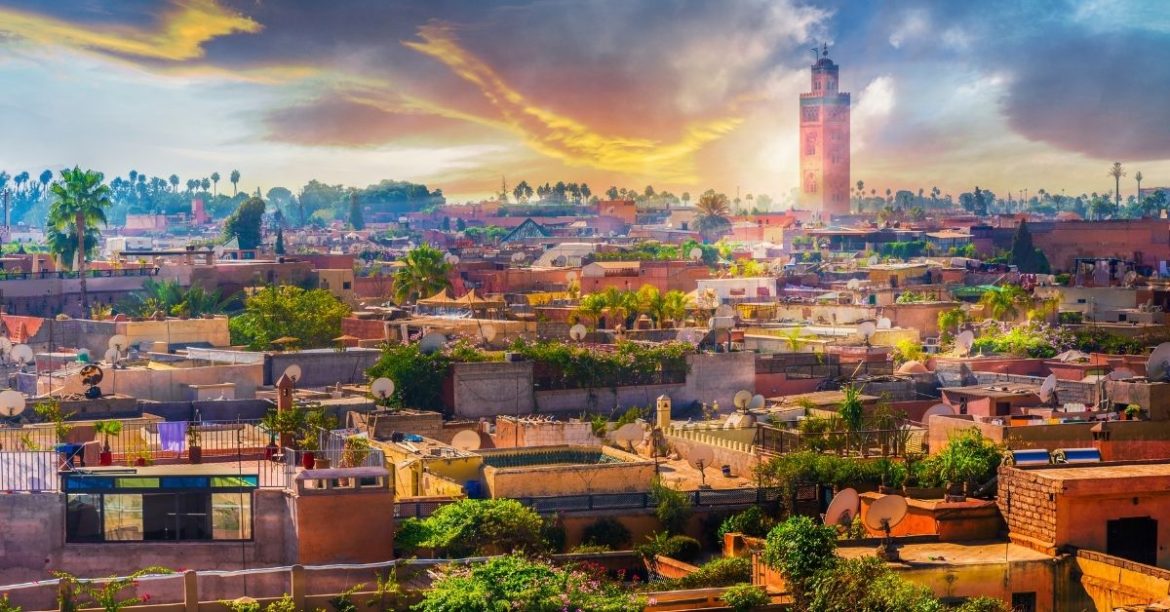
On December 10, 2025, City Authorities, in collaboration with the United Nations Development Programme (UNDP) and Morocco’s Department of Sustainable Development, launched a call for tenders to develop a comprehensive master plan for the sustainable management of green waste in the city. The initiative seeks to tackle the growing environmental and operational challenges posed by urban organic waste, integrating long-term solutions into Marrakech’s broader urban planning and environmental governance framework.
The city produces between 800 and 900 tones of municipal waste daily, with studies indicating that organic materials account for nearly 70 percent of this total. Much of this comes from public parks, gardens, and landscaping activities, resources often overlooked in traditional waste systems despite their environmental and economic significance. Nationally, municipal waste generation in Morocco reaches roughly 7.4 million tones per year, with urban centers contributing the bulk.

The concentration of organic and green waste in cities like Marrakech not only strains collection and disposal systems but also contributes to greenhouse gas emissions, soil and water pollution, and lost opportunities for composting and material recovery.
City officials and UNDP partners emphasized that the tender process would follow strict procurement standards, including transparency, fairness, and international competition. The selected Technical Design Office will be tasked with producing a master plan that addresses collection, sorting, treatment, and valorization of green waste, while identifying infrastructure requirements and governance mechanisms.
This approach is intended to move Marrakech beyond temporary, fragmented solutions toward a system that is environmentally sound, economically viable, and aligned with global sustainability standards.
Read also: How Tanzania is using Nature-Based Solutions to secure the future of its Tourism industry
The push comes as Marrakech faces mounting pressures from urban expansion, population growth, and climate change. Public green spaces and landscaped areas, which contribute to the city’s tourism appeal and residents’ quality of life, generate significant volumes of organic waste that have historically been underutilized.
By creating a structured framework, the city aims to transform these materials into resources through composting, energy recovery, and circular economy initiatives. This shift is expected to reduce environmental impact, improve operational efficiency in waste management, and potentially generate new economic opportunities within the city.
Experts involved in the initiative note that green waste management is not merely a technical challenge but a policy and governance question. Fragmentation in responsibilities, informal collection networks, and the absence of dedicated strategies have historically limited Marrakech’s ability to recover value from organic materials.
The new master plan seeks to integrate sustainable waste practices into municipal planning, creating clear roles for local authorities, service providers, and community actors, while fostering compliance with environmental regulations.
The UNDP’s support in Marrakech is part of a wider “Marrakech, Sustainable City” programme, which includes capacity-building for rural cooperatives, urban rehabilitation projects, and consultations on climate-resilient planning. These complementary initiatives aim to strengthen institutional planning, improve environmental resilience, and encourage innovative approaches to resource management across Morocco.

By embedding sustainable practices into city governance, the programme seeks to demonstrate how urban management can address both climate responsibility and social priorities.
In practical terms, the master plan will offer recommendations on collection routes, seasonal variations in green waste volumes, processing technologies, and logistics. It will also explore the potential for compost production to support municipal landscaping and local agriculture, while identifying investment needs to modernize existing infrastructure. These measures are designed to reduce greenhouse gas emissions, conserve soil and water resources, and foster local economic opportunities, aligning Marrakech with international best practices for urban sustainability.
For Marrakech, this tender represents a strategic pivot. Green waste management moves from a peripheral operational concern to a central element of urban development. By treating organic materials as valuable inputs rather than refuse, the city is embracing a model that balances environmental stewardship, economic pragmatism, and social benefit.
The success of this initiative could set a precedent for other African and Arab cities grappling with similar waste challenges, showing how integrated planning and international support can translate into tangible improvements in urban resilience and sustainability.
As the master plan is developed and implemented, Marrakech’s experience will likely provide lessons for other fast-growing urban centers across Africa, where organic waste constitutes a large share of municipal waste streams and where climate pressures increasingly demand resource-efficient, nature-positive urban solutions.
The UNDP-backed initiative underscores the importance of combining technical expertise, strategic planning, and institutional coordination to address one of the most persistent environmental challenges in modern cities.
Engage with us on LinkedIn: Africa Sustainability Matters