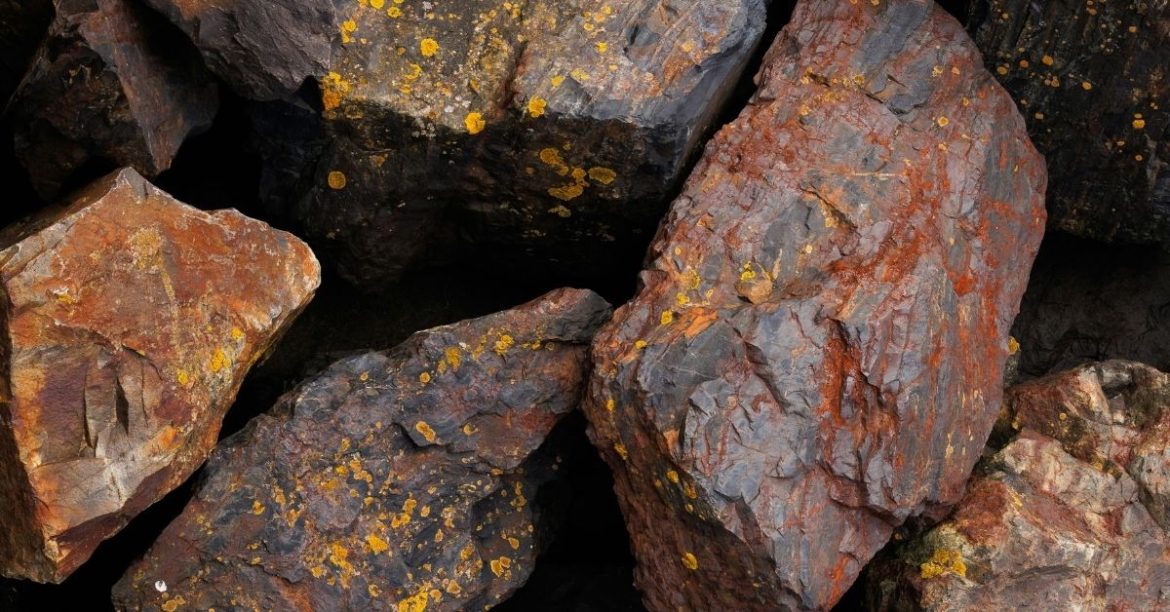
Africa’s iron ore reserves in southeastern Guinea are at the center of a renewed global contest over strategic minerals, as a new $1.8 billion high-grade project emerges to rival China’s $24 billion Simandou mine. The Kon Kweni deposit, operated by the U.S.-based Ivanhoe Atlantic, aims to supply iron ore to Western markets, bypassing Chinese-built infrastructure and signaling a shift in the geopolitics of African mining.

An Aerial shot of the Simandou mine, one of the largest high-grade iron ore deposits in the Nzerekore Region, Guinea
Read also: Africa secures energy link as Israel approves $35bn gas export deal with Egypt
The Simandou project, led by Rio Tinto and backed by Chinese partners, recently shipped its first cargo of about 200,000 tonnes of high-grade ore to China, marking a milestone in a long-delayed $23 billion development. The project is part of Beijing’s broader strategy to secure critical resources and dominate supply chains for steelmaking inputs in Africa.
By contrast, the Kon Kweni deposit, located roughly 160 kilometres from Simandou in the forested Nimba Mountains, positions the United States as a counterbalance, with Ivanhoe Atlantic branding its initiative the “Liberty Corridor.”
Ivanhoe Atlantic, founded by American-Canadian mining entrepreneur Robert Friedland, plans to transport iron ore with 66.5 percent purity through neighbouring Liberia to avoid using the Chinese railway connecting Simandou to Guinean ports and mills.
The company has emphasized that production will be directed exclusively to U.S. and allied supply chains, reinforcing the project’s strategic purpose amid rising global demand for premium iron ore.

Bronwyn Barnes, president and CEO of Ivanhoe Atlantic, described the project as “helping counter China’s tightening grip over critical minerals.” The first shipments are expected in the first half of 2027, contingent on Liberia ratifying agreements allowing use of existing rail infrastructure that serves other regional steel producers, including ArcelorMittal.
The Kon Kweni project illustrates how Africa’s mineral wealth is driving renewed attention from global powers. For Guinea, and the broader West African region, these developments carry both opportunity and risk.
Large-scale investment promises jobs, infrastructure development, and revenue, yet strategic competition may influence pricing, supply allocation, and governance structures. African governments must navigate the ambitions of multiple international partners to secure the greatest economic and developmental returns.
Read also: Morocco champions Africa-Centric ESG standards to unlock sustainable mining investment
Analysts highlight the broader context of strategic competition. China has invested heavily in mines, ports, and rail networks over the last 15 years, giving it a dominant position in African supply chains. U.S. companies, while historically less entrenched, are increasingly mobilizing capital and partnerships to access critical minerals essential for global industry and technological development.
Ivanhoe’s project reflects this recalibration, targeting high-grade ore markets in the U.S. and allied economies while avoiding Chinese-controlled infrastructure corridors.
For the mining sector, Kon Kweni represents a potential benchmark in efficiency and supply chain autonomy. The high purity of the ore, combined with independent transport routes, allows investors to bypass existing bottlenecks and mitigate geopolitical risk. It also signals to African policymakers the importance of negotiating infrastructure access, regulatory frameworks, and export arrangements to ensure strategic projects serve national interests while accommodating multiple international stakeholders.

Beyond Guinea, the competition over iron ore mirrors broader trends across the continent, where U.S. and Chinese firms are vying for access to critical minerals including copper, cobalt, and rare earth elements. Projects like the Lobito Corridor, linking copper production in Zambia and the Democratic Republic of Congo to Angola’s Atlantic coast, underscore the strategic value of integrated mining and transport infrastructure.
For African leaders, these developments reinforce the need to manage relationships carefully, ensuring that foreign investment delivers tangible industrial, fiscal, and social benefits.
Kon Kweni’s emergence alongside Simandou also has implications for global steel markets. Premium iron ore production in West Africa strengthens supply diversification, reduces overreliance on single-country exports, and potentially reshapes trade flows.
As Ivanhoe moves toward its first shipment, the project will test how African mineral governance, infrastructure investment, and geopolitical strategy can converge to meet both local and global industrial demand.
Engage with us on LinkedIn: Africa Sustainability Matters