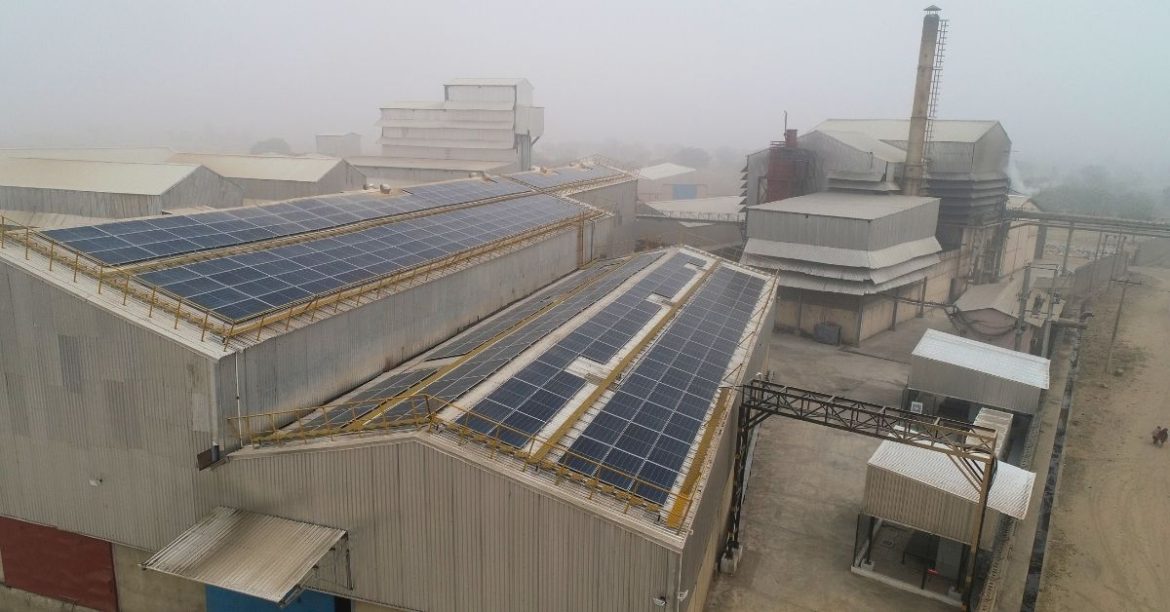
This week, a partnership between renewable energy financier Empower New Energy, technology company Huawei and Nigerian engineering firm Paras Energy delivered a 1-megawatt rooftop solar plant and 2.15-megawatt-hour battery system to UMZA Rice and Oil Mill in Kano, northern Nigeria, reducing the factory’s dependence on diesel generators and unstable grid power while signalling a shift in how major agro-processing businesses in the region are securing electricity.
The installation, located on the roof of one of Kano’s largest rice and oil processing facilities, was officially opened in the presence of more than 30 local business leaders, representatives of the Norwegian Embassy and officials from the Kano Electricity Distribution Company. Hosted by UMZA’s chairman and president of the Kano Rice Mills Organization, Mohammed Abubakar, the event highlighted how energy infrastructure has become central to industrial survival in northern Nigeria.

UMZA processes rice and agricultural by-products at commercial scale, supplying markets across Kano State and beyond. Before the solar system was installed, the company experienced several hours of power outages each day. These were often accompanied by fluctuations in voltage and frequency that disrupted machinery, damaged equipment and forced production stoppages. To keep operations running, the company relied heavily on diesel generators, increasing operating costs and complicating production planning.
The new hybrid system integrates solar panels, battery storage and grid electricity. During daylight hours, most of the plant’s power demand is met by solar generation. Excess energy is stored in batteries and used when sunlight is unavailable or when grid supply fails. The result is a more stable electricity supply that reduces generator use and limits exposure to fuel shortages.
Read also: Nigeria moves to open Ogun Coast to oil drilling and deep seaport development
The project was completed less than a year after a 10-year contract was signed between Empower New Energy and UMZA. Under the agreement, Empower financed, built and now operates the system, while Paras Energy handled engineering, design, construction and operations. Huawei supplied the photovoltaic and battery technologies. This structure allowed UMZA to access modern energy infrastructure without committing large upfront capital.
Empower New Energy’s chief executive, Terje Osmundsen, said the investment was the company’s first solar and battery project in Kano and described it as significant for Nigeria’s second-largest industrial hub. He said the project was designed not only to improve UMZA’s performance but also to demonstrate how renewable energy could support economic activity in the region.
For Kano’s manufacturing and agro-processing sector, electricity reliability remains a major constraint. Nigeria’s national grid struggles to meet demand, and supply interruptions are common. According to the World Bank, about 61 per cent of Nigerians had access to electricity in 2023, with many connected users experiencing frequent outages. For industrial firms, this has translated into heavy reliance on self-generation.
Federal government data indicates that Nigerians spent trillions of naira annually on generators and fuel in recent years, reflecting the scale of private power generation. At factory level, these costs affect pricing, wages and competitiveness. For rice processors like UMZA, energy expenses influence the affordability of staple food products in local markets.
UMZA’s management says the new system has improved operational efficiency by reducing downtime and stabilising production cycles. Workers now face fewer unexpected stoppages, and maintenance teams spend less time repairing damage caused by power surges. Abubakar said the company hopes the project will encourage other businesses in Kano to invest in renewable energy.

The project also carries implications for employment and local supply chains. UMZA is a major buyer of paddy rice from farmers in the region. More reliable processing capacity allows the company to absorb larger volumes during harvest periods, supporting farm incomes and reducing post-harvest losses. Improved energy stability also supports downstream activities, including transport and packaging.
Empower New Energy, established in 2017, focuses on financing and co-developing renewable energy projects for commercial, industrial and agricultural users across Africa. Its model reflects a broader trend in which specialised financiers are bridging the gap between African businesses and clean energy infrastructure.
At UMZA’s site, the transition from diesel-heavy power to a solar-battery hybrid is already reshaping daily operations. Machines now run according to production schedules rather than outage forecasts. Fuel deliveries are less critical. Managers can plan output with greater confidence.
As energy demand in African agro-processing continues to grow, projects like this one in Kano illustrate how private-sector partnerships are filling gaps left by weak public infrastructure. For UMZA, the solar installation is not a symbolic gesture but a practical investment in continuity, cost control and long-term competitiveness.