



African insurers are beginning to reposition themselves at the centre of the continent’s climate and development challenges, with US$52 billion of insurance assets now linked to climate action and social inclusion, according to a new industry-wide assessment released in Cape Town this week.
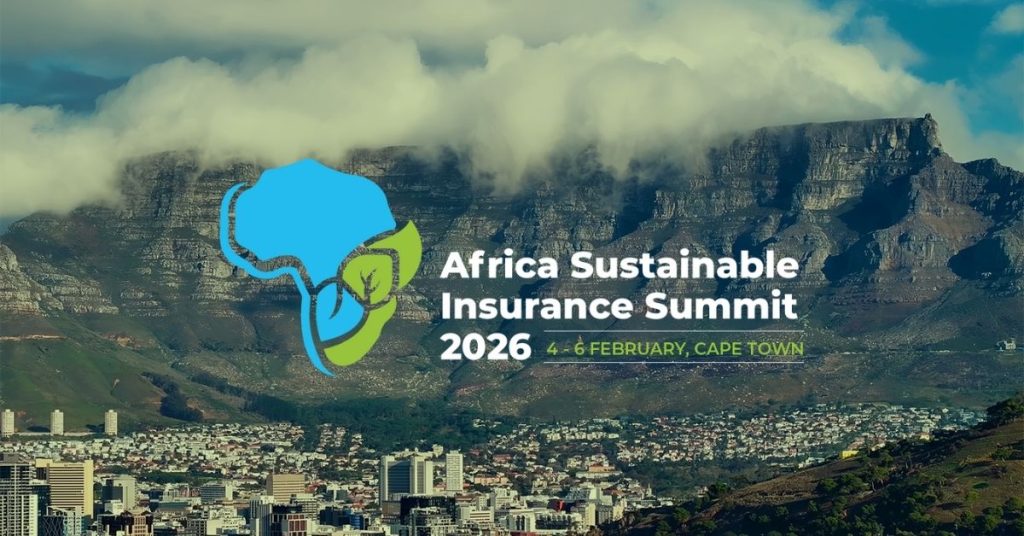
The data are drawn from the Current State Report 2025 of the Nairobi Declaration on Sustainable Insurance, the first attempt to establish a continent-level baseline of how African insurers are integrating environmental, social and governance considerations into their core business. The report was launched during the Africa Sustainable Insurance Summit II, held from 4 to 6 February, at a time when climate-related losses are rising faster than insurance coverage across much of the continent.
From an African perspective, the headline figure signals both progress and constraint. While US$52 billion represents a growing pool of capital aligned with sustainability goals, it sits within a sector that manages an estimated US$342 billion in total assets and operates in economies where climate risk, food insecurity and infrastructure deficits remain acute. In 2022 alone, Africa recorded more than US$14 billion in natural catastrophe losses, yet insurance penetration remains among the lowest globally. For farmers in Sub-Saharan Africa, the protection gap is particularly stark, with 97 percent still uninsured.
The NDSI network, which spans 275 insurers, reinsurers and ecosystem actors across 38 African countries and is supported by FSD Africa, reflects the diversity of markets grappling with these challenges. From drought-prone pastoral regions in the Horn of Africa to flood-exposed river basins in East and Southern Africa, insurers are under pressure to adapt products and investment strategies to risks that are increasingly systemic rather than episodic.
The report shows that parts of the industry are responding. Just over half of NDSI members surveyed have begun integrating ESG considerations into investment decisions, while a similar share is applying ESG criteria in product development, including pricing. Around US$1.2 billion of insurance portfolios are now allocated to environmental risks, and US$2.9 billion is targeted at low-income and vulnerable populations.
These shifts are beginning to materialise in country-level products. In Kenya, for example, Britam has launched East Africa’s first flood insurance product in Tana River County, an area repeatedly affected by riverine flooding that disrupts agriculture, housing and local infrastructure. In the Horn of Africa, Zep-Re’s climate-smart livestock insurance bundles reinsurance with financial services for pastoralist communities whose livelihoods are increasingly exposed to prolonged droughts and rangeland degradation. Elsewhere, microinsurance products aimed at informal workers are being rolled out to address gaps in health, income and disaster protection in economies where informality dominates employment.
Such examples underline a broader recalibration underway within African insurance markets, where sustainability is no longer framed solely as corporate responsibility but as a question of market relevance and resilience. As climate volatility intensifies, insurers face rising claims, asset exposure and reputational risk if coverage fails to reach those most affected.
Yet the report is equally clear about the limits of current progress. ESG-linked assets account for just over 15 percent of total assets under management among surveyed NDSI members, leaving the majority of insurance capital still detached from climate and inclusion objectives. Nearly 45 percent of insurers surveyed do not yet consider ESG factors at all, suggesting a widening gap between early adopters and the rest of the market.
The depth of integration also remains shallow. ESG-linked underwriting represents only 6.4 percent of portfolios on average, largely driven by reinsurers rather than primary insurers closer to households and small businesses. Coverage explicitly targeting vulnerable groups accounts for just 5.6 percent of portfolios. At the governance level, only 4 percent of NDSI members have embedded ESG considerations into board decision-making, while almost half have trained fewer than five staff on sustainability issues, raising questions about institutional capacity to sustain change.

Structural challenges further complicate the picture. Fragmentation across regulatory frameworks and markets continues to slow momentum, with Francophone and Lusophone countries underrepresented in regional sustainability conversations. For regulators, this uneven landscape makes it harder to align supervision, capital requirements and disclosure standards around climate risk.
Industry leaders speaking at the summit framed the moment as a transition from intent to execution. Philip Lopokoiyit, Chair of NDSI, pointed to growing collaboration across value chains and technical assistance programmes as signs that insurers are beginning to move sustainability into day-to-day operations. From the perspective of development finance, Kelvin Massingham of FSD Africa argued that success should be measured by tangible outcomes: capital redirected, products redesigned and resilience built on the ground.
Regulatory voices echoed the need for coordination. Jonathan Dixon, Secretary General of the International Association of Insurance Supervisors, emphasised that effective supervision is essential if insurance markets are to close protection gaps and support recovery and growth in climate-vulnerable economies. In South Africa, Viviene Pearson of the South African Insurance Association highlighted how insurance now sits at the intersection of climate change, infrastructure development and social inclusion, extending far beyond traditional risk transfer.
Read also: FSD Africa, CIFF and UNECA launch debt programme to link fiscal stability with climate action
To address capacity gaps, the summit also marked the launch of the NDSI Academy, a hybrid training platform aimed at embedding sustainability into underwriting, investment and regulatory practice. The initiative reflects a recognition that Africa’s insurance transition will be shaped as much by skills and governance as by capital allocation.
For African markets, the report offers a measured signal. Momentum is building, but the scale of climate risk and exclusion means incremental change will not be enough. Whether insurance can meaningfully support Africa’s adaptation and development pathways will depend on how quickly sustainability moves from a minority practice to a market norm, and whether products reach those for whom risk is no longer abstract, but lived reality.


