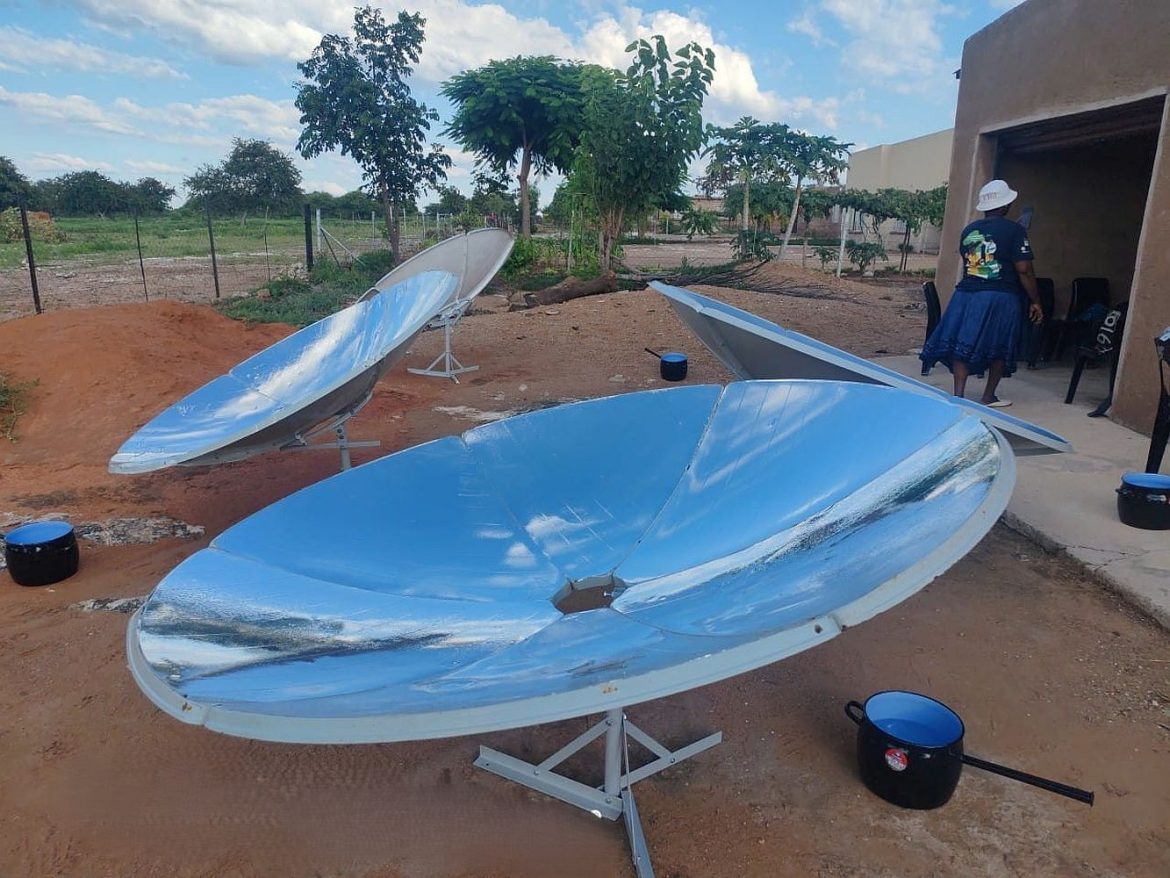
In early February, Earthlife Africa Johannesburg distributed solar cookers to 20 rural households in Lephalale, Limpopo, expanding a community-led clean energy initiative aimed at reducing energy poverty and supporting South Africa’s just transition in one of its key coal-producing regions. The roll-out, carried out on 3 and 4 February in Mothlasedi and Shongoane Bangalong villages, forms part of a broader programme launched in October 2025 to provide low-cost, low-carbon cooking alternatives to vulnerable communities.
Lephalale sits at the centre of South Africa’s coal belt, home to major power stations and mining operations that underpin the national grid and local employment. Yet in surrounding rural settlements, access to affordable and reliable household energy remains uneven. Many residents continue to rely on firewood for cooking, exposing households to indoor air pollution and the physical risks associated with collecting fuel.
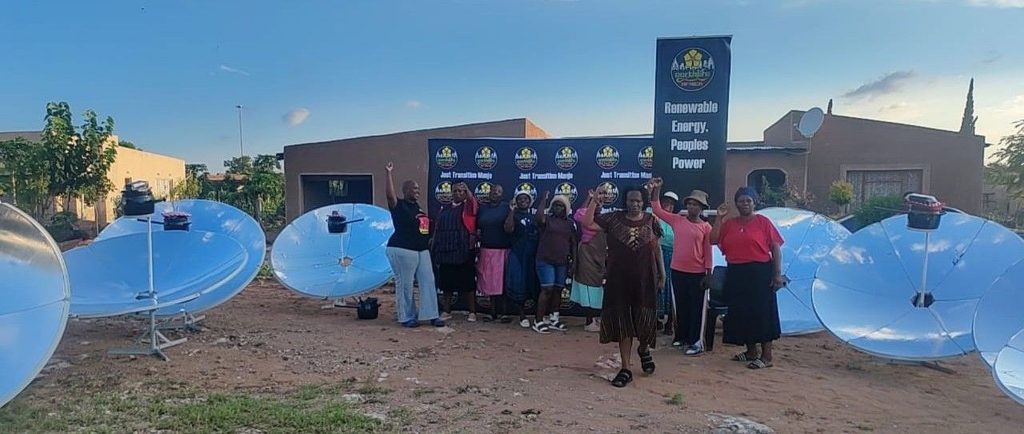
According to Earthlife Africa Johannesburg, the solar cookers were distributed alongside hands-on training in assembly, use and maintenance, with support from local partners Ithuteng Community Organisation and Bopanang Women’s Organisation. The model emphasises community participation, with residents assembling the units collectively before taking them home.

Makoma Lekalakala, director of the organisation, said the project is designed to reduce the time and risk associated with firewood collection, a task that in many rural areas falls primarily to women and girls. Dependence on biomass contributes to deforestation and environmental degradation, while also exposing women to potential violence and health hazards linked to smoke inhalation. By shifting to solar cooking, households are expected to lower fuel costs and reduce exposure to those risks.
Limpopo province benefits from high solar irradiation levels, making decentralised solar technologies technically viable. According to energy analysts, distributed renewable solutions such as solar home systems and clean cooking technologies can complement grid-based electrification, particularly where infrastructure backlogs or affordability constraints persist.
While South Africa has expanded electricity access significantly since 1994, rising tariffs and load-shedding have increased pressure on low-income households.
For residents in Shongoane Bangalong and Mothlasedi, the immediate concern is practical. Community members said solar cookers could ease the burden of sourcing fuel and reduce monthly electricity expenditure. Some also pointed to the benefits for elderly residents who struggle to collect wood. These localised gains reflect a broader development question: how national energy transition policies translate into household-level outcomes.
South Africa has committed to a gradual shift away from coal under its climate obligations and the Just Energy Transition framework, which has attracted international financing pledges. However, much of the policy focus has centred on large-scale generation projects, grid reform and industrial decarbonisation.
Civil society groups argue that a just transition must also address everyday energy needs in coal-affected provinces, where communities face both environmental impacts and economic uncertainty.
Read also: South Africa’s small-scale fishers urge SAHRC to tackle food system inequality
Clean cooking remains a significant development challenge across sub-Saharan Africa. According to international energy data, hundreds of millions of people on the continent still rely on biomass fuels, with associated health and environmental costs. The World Health Organization has linked indoor air pollution from solid fuels to respiratory illnesses, disproportionately affecting women and children. In this context, small-scale solar interventions, though limited in scope, illustrate the potential of targeted technologies to deliver health, safety and cost benefits.
The Lephalale initiative follows an earlier distribution of solar cookers in Tshikuwi Village in Venda in October 2025. Earthlife Africa Johannesburg says the programme will continue to expand, subject to funding and local partnerships.
Limpopo, a province central to South Africa’s coal economy, will be directly affected by the pace and design of the country’s energy transition. Community-level renewable projects, while modest compared with utility-scale investments, form part of a wider debate over how transition financing is allocated and who benefits.
The rollout in Lephalale therefore reflects a micro-level intervention within a macro-level transition. As South Africa navigates fiscal constraints, infrastructure reform and climate commitments, the integration of decentralised, community-driven solutions may influence how equitably the transition unfolds across regions and income groups.