


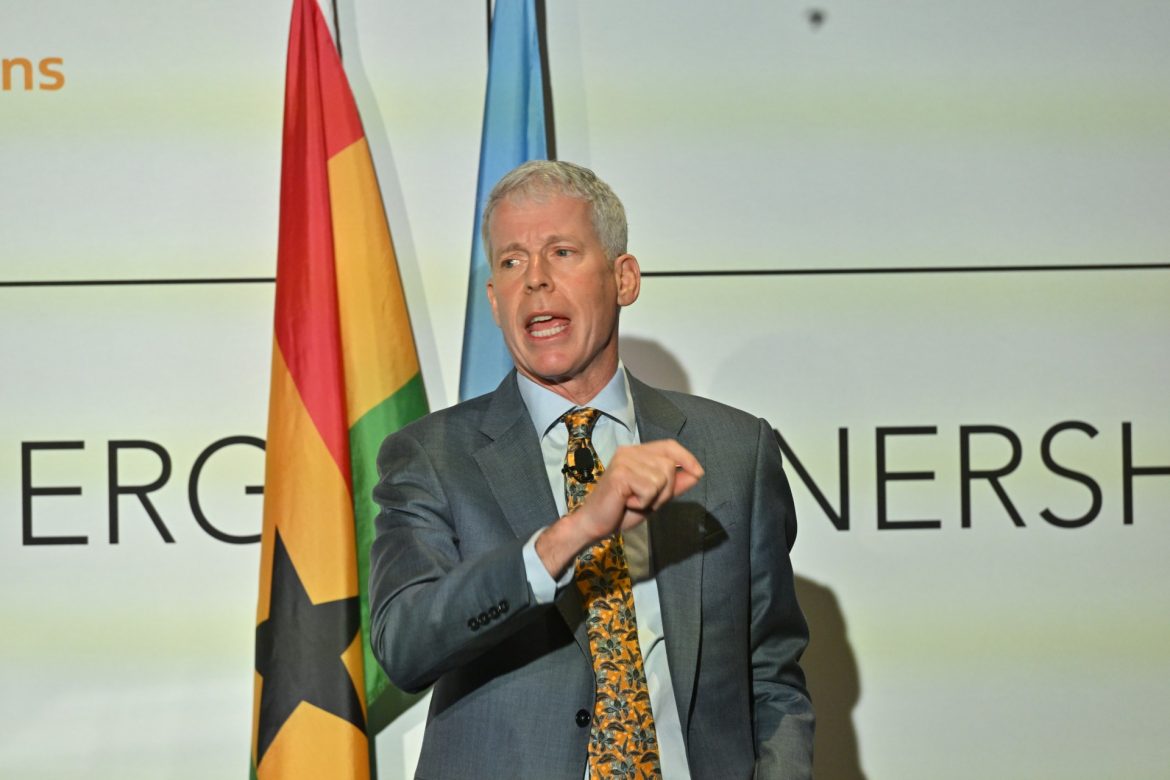
Secretary of Energy Chris Wright will join African heads of state and development finance leaders in Washington on March 19 to address systemic energy deficits and clean cooking infrastructure, marking a critical juncture for U.S.-Africa commercial diplomacy under the current administration. The 11th Powering Africa Summit (PAS) arrives as Washington recalibrates its foreign policy toward investment-led engagement, focusing on critical minerals and large-scale energy infrastructure to counter shifting global trade alliances.
According to organizers, the two-day summit will prioritize the implementation of reciprocal agreements intended to secure supply chains for transition minerals while expanding African energy access. For African economies, the stakes of these negotiations are tied directly to fiscal stability and industrial growth. Sub-Saharan Africa continues to face a significant primary energy gap, with nearly 600 million people lacking reliable electricity, a deficit that hampers manufacturing and increases the sovereign risk profiles of emerging markets.
The presence of senior figures from the U.S. Export-Import Bank (EXIM), the International Finance Corporation (IFC), and the Development Finance Corporation (DFC) indicates a strategic shift toward “all-of-government” financing solutions. These institutions are increasingly utilizing guarantees and blended finance to mitigate the high cost of capital that has historically deterred private investment in African grid stabilization.
According to industry analysts, the emphasis on gas strategies and infrastructure investment suggests a pragmatic approach to energy security, treating natural gas as a bridge fuel essential for baseload power in rapidly urbanizing nations like Ethiopia, Ghana, and Liberia.
The dialogue regarding clean cooking is particularly salient for regional health and environmental governance. Traditional biomass cooking remains a leading cause of respiratory illness and localized deforestation across the continent. Transitioning to cleaner alternatives requires not only technology but also the midstream infrastructure and retail financing mechanisms that this summit aims to facilitate through bilateral trade.
Furthermore, the focus on critical minerals such as cobalt, lithium, and copper, represents a move toward integrating African nations more deeply into the global technology value chain. According to the U.S. Department of State, the administration’s policy aims to foster transparency and value addition within Africa, rather than purely extractive models. For African finance ministries, the success of these commercial ties is vital for diversifying revenue streams and reducing dependence on volatile commodity exports.
As delegates from the Millennium Challenge Corporation (MCC) and various private energy developers meet, the overarching expectation is a shift toward “win-win” profitability. This framework treats African sustainability not as a philanthropic goal, but as a market reality where infrastructure reliability is the primary prerequisite for debt sustainability and long-term economic resilience.


