Suriname’s Minister of Oil, Gas, and Environment, Patrick Brunings, is set to outline the nation’s offshore energy strategy and regional integration plans at the Caribbean Energy Week (CEW) in Paramaribo on March 30, providing a critical blueprint for how frontier markets navigate the transition from resource discovery to large-scale production.
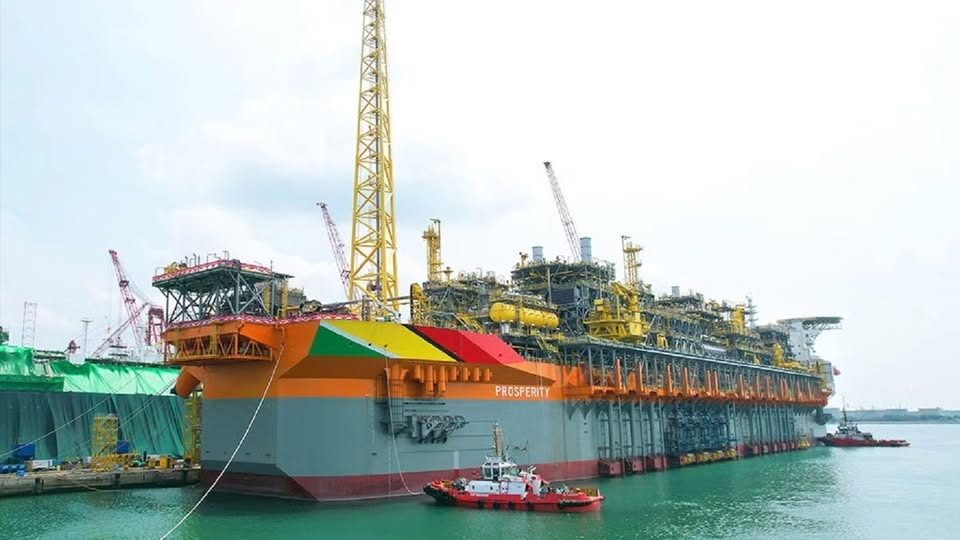
The keynote address comes as the Guyana–Suriname basin emerges as a global focal point for deepwater exploration, with TotalEnergies and its partners advancing the GranMorgu project in Block 58 toward an expected first oil date in 2028.
This development, centered on an estimated 750 million barrels of recoverable reserves, mirrors the high-stakes upstream expansions currently managed by African petrostates such as Namibia and Senegal, where the management of “first oil” expectations has become a central pillar of national economic planning.
The trajectory of Suriname offers a significant comparative case study for African oil and gas producers, particularly regarding the fiscal governance of windfall revenues and the technical challenges of developing offshore gas infrastructure. According to ministry data, at least ten additional offshore wells are scheduled for drilling between 2025 and 2027, a capital-intensive phase that necessitates a robust regulatory framework to prevent the “Dutch Disease” that has historically hampered commodity-dependent economies.
Minister Brunings has indicated a shift toward “Suriname 3.0,” a policy framework designed to ensure that multi-billion-dollar capital commitments translate into structural economic transformation rather than localized enclave growth.
For African energy ministers, the Surinamese model of establishing a joint technical team with neighboring Guyana to evaluate combined gas resources represents an increasingly relevant strategy for regional resource optimization, similar to the cross-border cooperation seen between Senegal and Mauritania on the Greater Tortue Ahmeyim gas project.+1
The broader implications for African markets lie in the competition for global energy capital. As Suriname seeks to attract foreign direct investment through new licensing rounds and refined environmental social and governance (ESG) standards, it competes directly with African frontier basins for the limited pool of exploration and production (E&P) funding held by international oil companies.
The emphasis on “responsible growth” and “local capacity,” as highlighted by the CEW organizers, reflects a global shift where the social license to operate is now tied to a business’s ability to integrate into the domestic value chain. This evolution suggests that for African nations to remain competitive, they must demonstrate not only geological potential but also institutional stability and a clear pathway toward decarbonizing traditional upstream activities.
Furthermore, the Surinamese approach to natural gas as a bridge for regional energy security provides a pragmatic template for African economies facing chronic power deficits. By prioritizing gas-to-power infrastructure and cross-border pipelines, Suriname is attempting to decouple its energy security from global price volatility while funding its long-term energy transition.
As global markets monitor the outcomes of the March summit, the ability of a small, resource-rich nation to balance rapid industrialization with climate commitments will provide essential data points for African policymakers managing their own sovereign wealth funds and energy transition pathways.