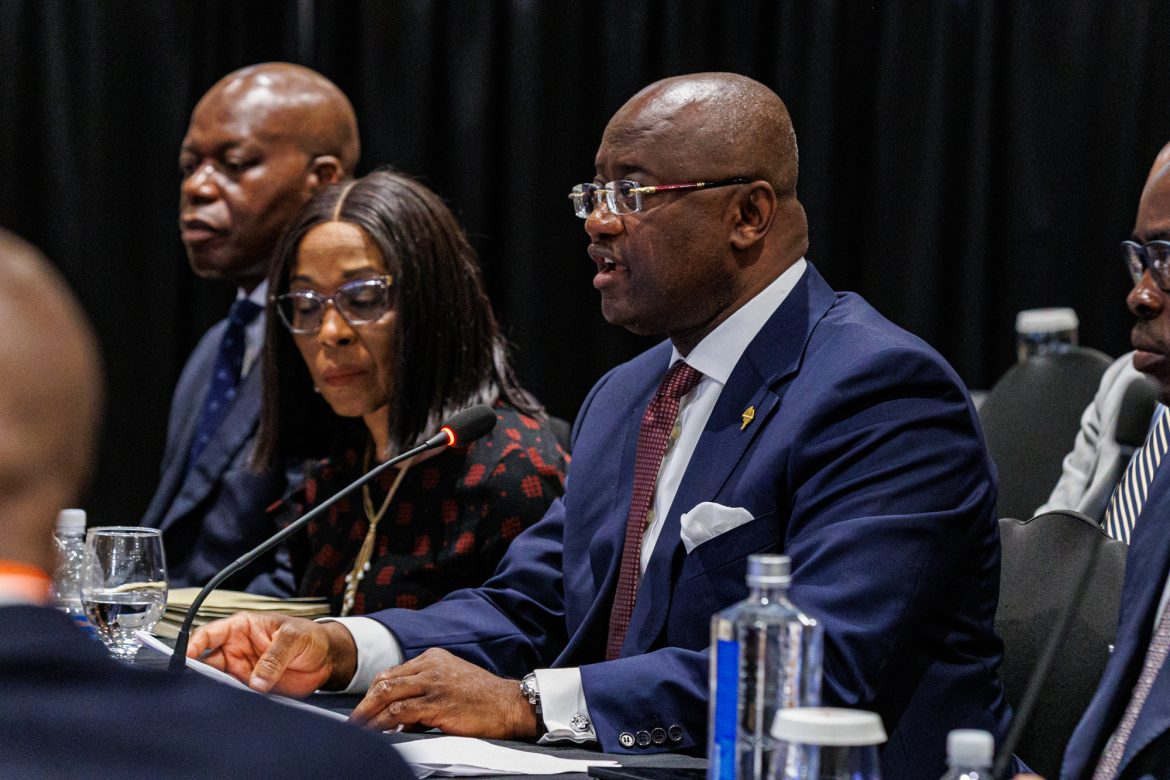
The African Export-Import Bank (Afreximbank) has increased its financing limit for the Caribbean Community (CARICOM) from $3 billion to $5 billion, a strategic expansion aimed at accelerating South-South trade and structural economic transformation between Africa and the Caribbean.
Announced by Dr. George Elombi, Executive Vice President of Afreximbank, during the 50th Regular Meeting of the Conference of Heads of Government of the CARICOM in St. Kitts and Nevis on February 25, the move scales up a regional portfolio that already includes $750 million in disbursements and a $2 billion pipeline of active transactions. The increase signals a deepening of “Global Africa” institutional ties, positioning the multilateral lender as a primary financier for infrastructure, healthcare, and industrial zones across the Caribbean archipelago.
This capital injection is framed not merely as credit expansion but as a programmatic shift toward value-addition in agricultural and natural resource sectors. According to Dr. Elombi, the bank’s ten-year vision involves transitioning regional economies away from the export of raw materials toward domestic processing to retain wealth and stimulate job creation. For African markets, this model of trans-Atlantic integration offers a critical hedge against traditional dependency on Northern capital markets, which have become increasingly volatile.
By facilitating the entry of African corporate giants, including Access Bank, Oando, and Arise Integrated Industrial Platforms (Arise IIP), into the Caribbean, Afreximbank is effectively creating a cross-continental trade corridor that allows African firms to diversify their revenue streams while exporting technical expertise in special economic zones and energy logistics.
The fiscal implications for both regions are tied to the adoption of the CARICOM Payment and Settlement System, modeled after the Pan-African Payment and Settlement System (PAPSS) pioneered by Afreximbank in 2022. The implementation of a low-cost, real-time cross-border payment system in local currencies is expected to reduce the heavy reliance on hard currency clearing through third-party international banks, a systemic bottleneck that has historically suppressed trade volumes. In Africa, where PAPSS is already operational, the system has begun to alleviate pressure on central bank foreign exchange reserves; a mirrored system in the Caribbean suggests a future where intra-regional trade is settled without the intermediation of the US dollar or Euro.
Beyond financial systems, the bank’s commitments extend to hard infrastructure and service sectors, including healthcare facilities in Guyana and Grenada, and sea-air interconnectivity projects designed to resolve the Caribbean’s long-standing logistics constraints. According to regional development strategies discussed with the Eastern Caribbean Central Bank, these investments are intended to double the size of the regional economy within a decade.
For African stakeholders, the success of this $5 billion deployment will serve as a proof of concept for the viability of South-South multilateralism, demonstrating whether African financial institutions can successfully export their development models to stabilize and grow emerging markets abroad.