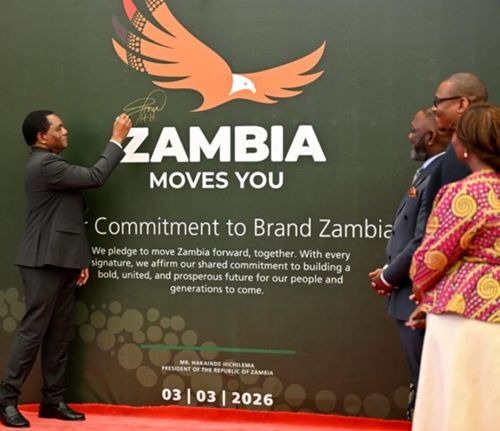
Zambia’s head of state, President Hakainde Hichilema launched a national rebranding campaign on March 3, 2026, aimed at fundamentally repositioning Zambia within the global capital markets as the country seeks to finalize its transition from a landmark debt default to a stable investment-grade destination.
The initiative, titled “Zambia Moves You,” serves as the public-facing component of a broader economic recovery strategy that prioritizes the restoration of sovereign credibility following the nation’s 2020 Eurobond default. By consolidating national identity and highlighting untapped resource wealth, the administration intends to institutionalize a more predictable investment climate to attract the long-term foreign direct investment (FDI) necessary to fund its ambitious copper production targets.
The launch occurs at a critical juncture for Zambia’s public finances. After becoming the first African nation to default on its external debt during the COVID-19 pandemic, Lusaka has spent the last five years navigating a complex debt restructuring process under the G20 Common Framework.
According to data from the International Monetary Fund (IMF), these fiscal consolidation efforts, supported by a rigorous reform program, have successfully addressed significant macroeconomic imbalances. The dividends of this policy shift were evidenced in November 2025, when Standard & Poor’s upgraded Zambia’s sovereign credit rating, signaling a return of institutional confidence that the “Zambia Moves You” campaign now seeks to capitalize upon.
Economic indicators suggest the rebranding is timed to coincide with a projected cyclical rebound. While a severe regional drought slowed output in 2024, the IMF expects Zambia’s economic growth to accelerate to approximately 5.8% through 2026.
This recovery is underpinned by a resurgence in the mining sector, particularly copper, which remains the cornerstone of the national economy and a vital component of the global energy transition.
Beyond minerals, the government is looking to the agricultural and energy sectors to diversify its revenue base and mitigate the volatility associated with commodity price fluctuations.
The practical impact of this renewed credibility is already visible in investment flows. Figures from the United Nations Conference on Trade and Development (UNCTAD) show that FDI inflows into Zambia surged to approximately $1.2 billion in 2024, a sharp increase from the $100 million recorded in 2023.
For the Zambian economy, this influx of capital is less about optics and more about the structural necessity of closing infrastructure gaps and creating employment.
With unemployment remaining a persistent challenge, the administration is linking the success of the rebranding to the creation of a more hospitable environment for private sector-led growth, which Hichilema noted requires citizens to act as “brand ambassadors” to protect the nation’s perceived stability.
However, the campaign faces the reality of an evolving global financial landscape where competition for emerging market capital is intensifying. For Zambia, the implications of this rebranding extend to the cost of future borrowing; lower perceived risk directly correlates to lower interest rates on international debt, easing the long-term pressure on the national budget.
By shifting the narrative from one of “distress” to “opportunity,” the government aims to move toward a sustainable debt-to-GDP ratio while maintaining essential social spending on health and education.
Ultimately, the success of the “Zambia Moves You” initiative will be measured not by the visibility of its marketing, but by the consistency of the governance reforms it represents.
Investors typically prioritize transparency and the rule of law over branding, and the current administration’s ability to maintain fiscal discipline will be the primary determinant of whether this campaign translates into sustained economic development.
As Zambia navigates its post-default era, the rebranding serves as a strategic marker of its intent to re-integrate into the global financial system as a stable, resource-rich partner in the heart of Southern Africa.