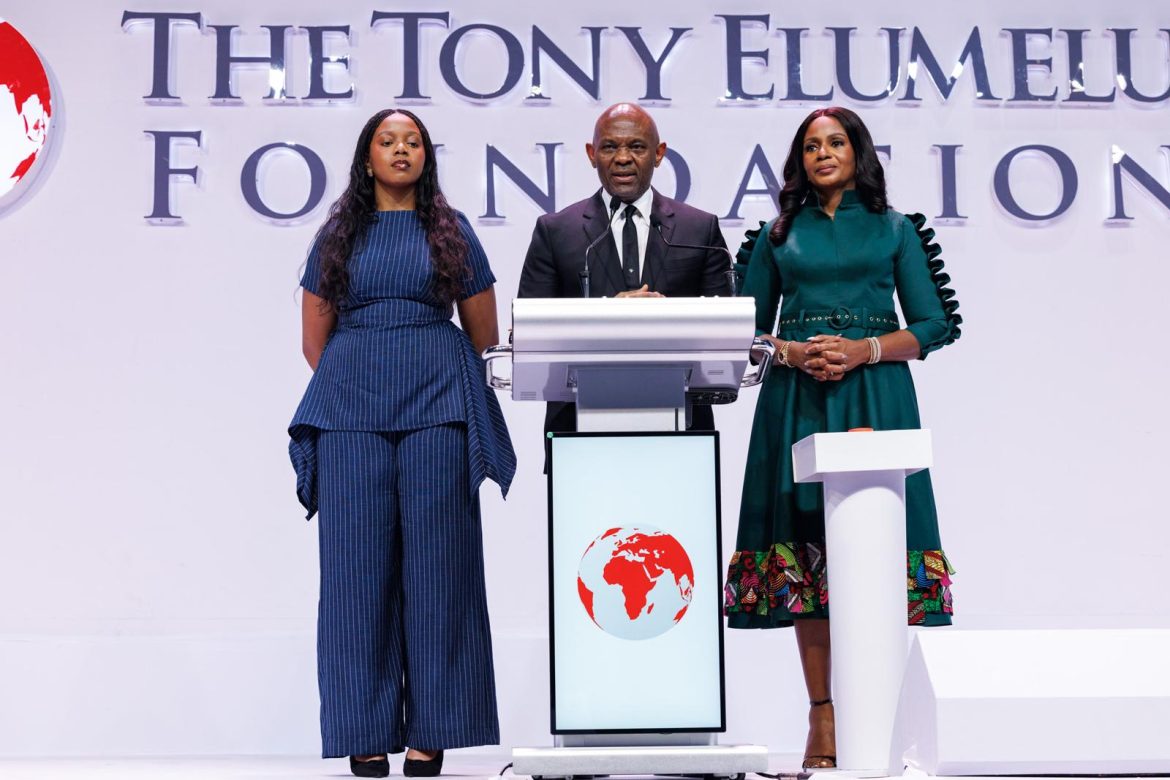
Heirs Energies has committed more than $10 million to support 2,000 entrepreneurs across Africa through a partnership with the Tony Elumelu Foundation, deepening private-sector involvement in enterprise financing at a time when access to early-stage capital remains one of the most persistent constraints on business growth across the continent.
The funding forms part of the foundation’s 2026 entrepreneurship programme unveiled in Abuja, Nigeria, where 3,200 startups drawn from all 54 African countries were selected from more than 265,000 applicants to receive seed funding, training and mentorship.
The scale of applications reflects both the depth of entrepreneurial ambition in Africa and the structural gap between business formation and available financing.
Across many economies, small and medium-sized enterprises dominate employment but operate with limited reserves, thin margins and restricted access to credit. According to regional development institutions, this financing shortfall continues to slow business expansion, reduce tax revenues and limit the ability of firms to formalise and scale.
The partnership between Heirs Energies and the foundation led by Nigerian investor and philanthropist Tony Elumelu illustrates how companies operating in resource-intensive sectors are increasingly linking their commercial activities to broader economic participation in the communities surrounding their assets.

The company operates in Nigeria’s Niger Delta through its OML 17 oil and gas block and supplies natural gas into the domestic network, enabling more than 350 megawatts of electricity generation capacity that supports industries, public services and household consumption.
Reliable energy supply remains closely tied to enterprise survival across Africa. Manufacturers, agro-processors and digital service providers often cite power interruptions as a primary driver of production delays and operating costs. In Nigeria, where electricity demand consistently exceeds supply, investments that stabilise generation capacity can directly influence factory output, employment levels and regional competitiveness.
Programmes that pair energy investment with enterprise support therefore carry practical economic implications beyond corporate social responsibility, particularly in regions where unemployment and infrastructure deficits intersect.
The entrepreneurship funding is structured across two programme cycles. In 2025, the company supported 1,000 entrepreneurs, roughly 40% of whom were drawn from the Niger Delta, including more than 150 participants from Rivers State.
Another 1,000 entrepreneurs are being supported in 2026, with half originating from the same region, signalling a targeted focus on host communities while maintaining participation from businesses across the continent. Women account for 48% of beneficiaries, reflecting the growing presence of female-led enterprises in sectors such as retail, agriculture, services and light manufacturing.
Such demographic patterns carry fiscal implications for governments managing rising youth populations and limited formal employment opportunities. Africa’s labour force is expanding faster than large-scale industries can absorb new entrants, placing increasing pressure on small businesses to generate jobs.
When these enterprises remain undercapitalised, the result is often slower productivity growth and reduced household income, conditions that can strain public finances through higher demand for social support programmes and lower tax collection.
Mentorship and training components built into the programme are designed to address another structural challenge: business sustainability. Early-stage enterprises frequently fail within their first few years due to weak financial management, limited market knowledge and supply chain disruptions.
Combining funding with advisory support has become a widely adopted model among development agencies and private investors seeking to improve survival rates and strengthen local supply networks. Firms that remain operational longer contribute to more stable employment and create predictable demand for goods and services across surrounding communities.
In the Niger Delta, where oil production has historically generated revenue without consistently delivering broad-based economic development, targeted enterprise programmes have taken on additional significance.
Community-level investments in education, health services and infrastructure, areas where Heirs Energies reports ongoing interventions, are often viewed as essential to maintaining operational stability and reducing conflict risk in resource-producing regions.
The company reports that its community initiatives have included skills training for more than 500 youths, educational support for over 1,600 students and the delivery of more than 135 infrastructure projects in host communities.
Read also: Dangote Cement signs $1B Sinoma deal to expand production across 7 African nations
Private-sector financing of entrepreneurship is also gaining prominence as African governments face tighter fiscal conditions. Rising debt servicing costs, currency volatility and competing infrastructure demands have reduced the capacity of public budgets to fund large-scale employment programmes. Partnerships that mobilise corporate resources for enterprise development offer an alternative channel for stimulating local economies without expanding government expenditure.
The long-term economic impact of initiatives like the Heirs Energies and foundation partnership will depend on whether supported businesses transition from small, grant-funded ventures into commercially viable firms capable of sustaining jobs, paying taxes and integrating into regional value chains.
In economies where employment creation remains closely tied to the growth of small enterprises, the durability of these businesses will shape not only household incomes but also the resilience of local markets and the stability of public finances.