


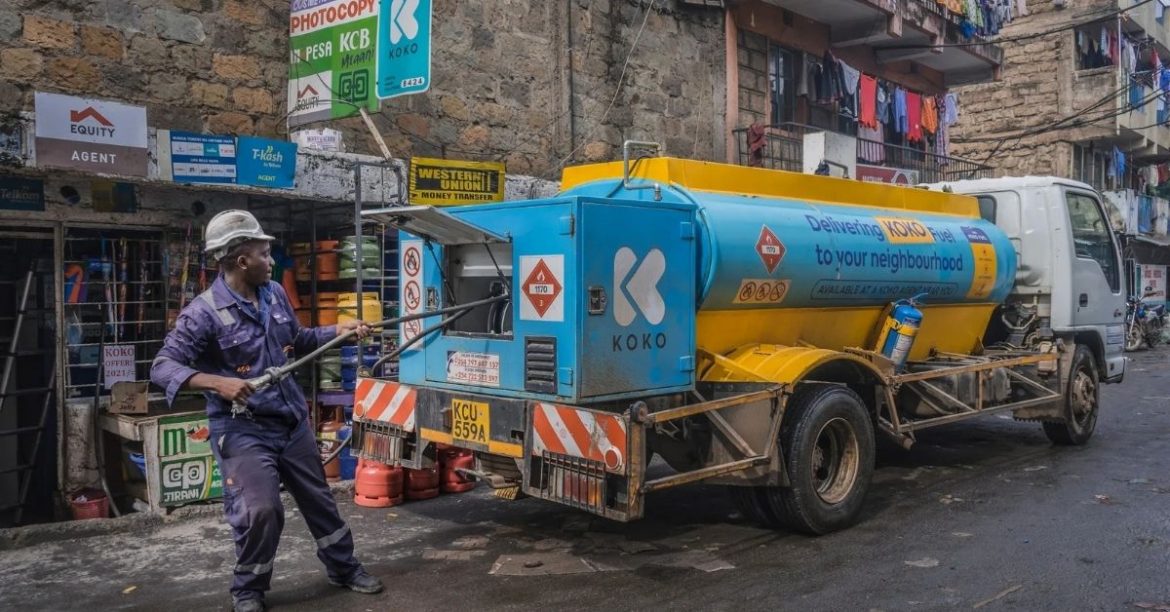
Earlier this year, 1.5 million Kenyan households received a text message reading, “Samahani KOKO customer. We regret to inform you that KOKO is closing operations today.”
Within hours, KOKO Networks, one of Africa’s most celebrated clean-energy startups, laid off 700 staff, shut 3,000 fuel stations, and took the continent’s largest bioethanol cooking network offline. The company had raised $100 million from global investors and it held a $180 million political risk guarantee from the World Bank.
None of it mattered. Because one document, a Letter of Authorisation from the Kenyan government, required under Article 6 of the Paris Agreement to sell carbon credits internationally, never came through.
Fifteen million carbon credits now sit in limbo. Thousands of families may revert to charcoal and kerosene, reversing gains in health, conservation, and emissions, The World Bank may face one of its most politically awkward guarantee payouts ever.
KOKO did not fail because its product was bad or because demand was weak. It failed because Africa’s carbon market infrastructure, consisting of registries, authorisation systems, and governance mechanisms, was not ready.
The KOKO collapse is not an isolated Kenyan story; it is a continental warning.

African carbon credits continue to trade at deep discounts. The reason is not abundance, but doubt. That doubt is a rational market response to the absence of the institutional guarantees that high-integrity markets require.
High integrity ensures credits reflect real, verifiable outcomes and enforceable benefits. When integrity is weak, credits lose credibility and become speculative instruments. When it is strong, they function as durable climate assets that attract long-term investment.
Low prices on carbon credits may attract buyers, but they mask where the real risk sits. Communities commit land and labour, governments absorb regulatory and reputational exposure, and developers face uncertainty. Discounted credits let intermediaries hedge cheaply and exit when scrutiny rises.
At a COP30 side event, three views emerged: price harmonisation, trust and verification, and fair benefit-sharing. What all three missed is that high integrity is not what markets promise; it is what institutions guarantee.
At the Second Africa Climate Summit in September 2025, leaders reframed Carbon markets as strategic economic instruments, not as tools. They called for African-owned registries, firm authorisation systems, legally grounded benefit-sharing, and broader ownership across the carbon economy.
COP30 confirmed this trajectory, but KOKO’s collapse two months later exposed how far institutions still lag political ambition.
The geopolitical context makes this more urgent. The United States’ retreat from climate finance, the war in Ukraine, and the recent conflict in Iran have weakened multilateral cooperation and increased volatility in long-term climate finance. In this environment, carbon markets without strong domestic governance are especially exposed to shifts in investor confidence.
Without full integrity systems at scale, Africa risks repeating an old pattern: exporting climate value while retaining development vulnerability, as others capture confidence, pricing power, and strategic advantage.
Three critiques come up repeatedly. First, that Africa needs fast money, not slow integrity. KOKO defied this recommendation. The company had more than $100 million in investment, World Bank backing, and a proven product reaching millions. All of it evaporated because the integrity architecture was not there.
Second, that high standards will exclude African developers. They are not held back by integrity, but by exclusion from governance. Africa needs to be integrated into the ownership of the institutions that make and apply the rules.
Third, that benefit-sharing deters investors. In reality, investors fear instability, not fairness. Projects that exclude communities face protest, litigation, and shutdowns, while projects that embed equity endure. Zimbabwe’s Kariba REDD+ project demonstrated this: after scrutiny, credits were cancelled, verification strengthened, and benefits renegotiated. The market did not collapse and confidence returned.
Leadership will require decisive action from Africa. National carbon registries must move from pilots to operation. Article 6 authorisation frameworks must be codified, resourced, and made predictable. Community benefit-sharing must be anchored in law. Access to measurement, reporting and verification systems, satellite monitoring, and digital traceability must be expanded.
KOKO’s collapse will be debated for years. Some will call it a cautionary tale about business model fragility, while others will frame it as regulatory failure, carbon colonialism, or bad luck.
Read also: Kenya launches national carbon registry to anchor article 6 climate trading
But the lesson is simple: A company that served 1.5 million families with clean fuel, backed by some of the world’s most sophisticated investors, was brought down in a single weekend by the absence of a functioning integrity system.
Africa is moving from supply to authority, from volume to value, from projects to systems, and from offsets to sovereign assets. High integrity is not pricing or rhetoric, but proof, fairness, enforceability, sovereignty, and community value.
On this foundation, Africa will supply not just carbon credits, but what markets need most in turbulent times: confidence.


