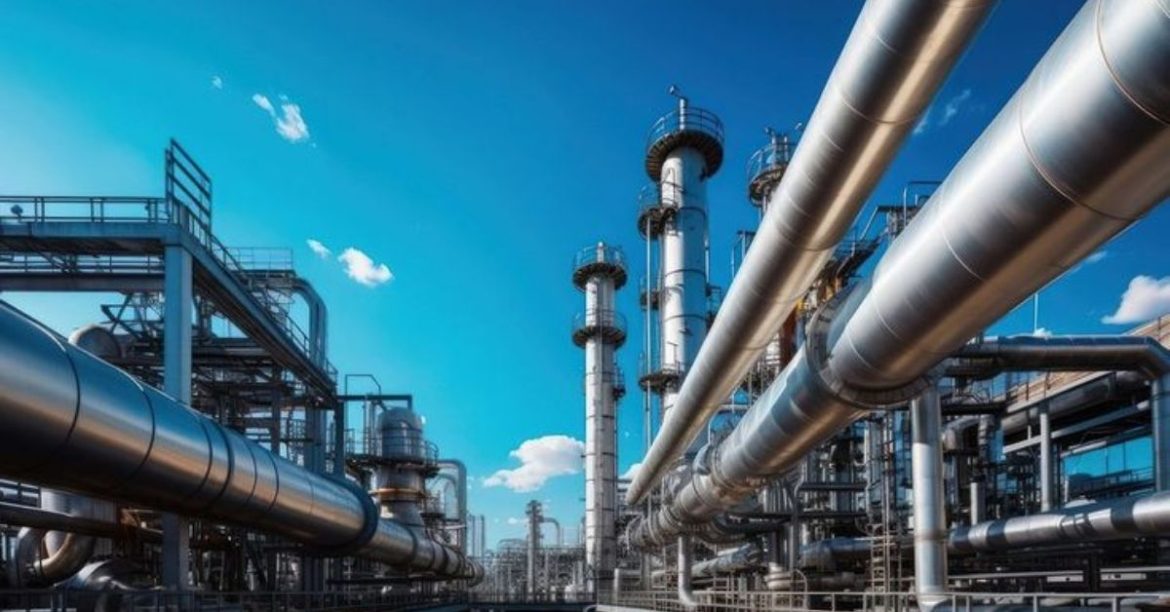
Morocco has paused key elements of its liquefied natural gas import strategy after suspending tenders in January for a major terminal at Nador West Med, a move that government officials and industry analysts say reflects a recalibration of investment timing and financing models rather than a retreat from gas development as the country seeks to balance energy security, fiscal discipline and long-term decarbonisation targets.
The Ministry of Energy Transition and Sustainable Development halted the procurement process only weeks after launching it in December 2025 for a floating LNG terminal with regasification capacity of about five billion cubic metres per year, alongside pipeline infrastructure intended to anchor a national gas network linking industrial centres from Nador to Kenitra and Mohammedia.
The scale of the proposed facility significantly exceeded Morocco’s current gas consumption, estimated at roughly one billion cubic metres annually, raising questions among lenders and developers about demand visibility, pricing risk and the long-term utilisation of large, capital-intensive infrastructure.
Read also: Morocco champions Africa-Centric ESG standards to unlock sustainable mining investment
Officials have framed the decision as part of a broader reassessment of project sequencing in response to tightening global financing conditions and volatility in LNG markets. Rising interest rates, currency risks and uncertainty over long-term gas demand have made investors more cautious about committing to large single-site projects across emerging markets.
According to regional energy analysts, this shift is prompting governments to reconsider infrastructure strategies that were designed during periods of lower capital costs and more predictable fuel markets.
The reassessment comes at a pivotal moment in Morocco’s energy transition. Gas demand is expected to rise sharply over the next decade as the country reduces its reliance on coal-fired power generation while expanding renewable energy capacity.
National planning documents target renewables to account for more than half of installed electricity capacity by 2030, yet dispatchable fuels such as natural gas remain essential for balancing intermittent solar and wind generation and maintaining grid stability during peak demand periods. This creates a structural requirement for flexible gas supply even as the country accelerates investment in low-carbon energy systems.
Rather than proceeding immediately with a large onshore terminal, policymakers are increasingly evaluating modular infrastructure models that can be deployed in phases. Floating storage and regasification units, which can be installed more quickly and financed with lower upfront capital, are gaining attention as a means of aligning infrastructure expansion with actual demand growth. These systems also allow governments to spread financial exposure over time, reducing pressure on public balance sheets and improving the bankability of projects in volatile commodity markets.

Morocco’s existing supply arrangements provide a degree of operational flexibility during this transition period. Since 2022, the country has imported LNG through Spanish regasification terminals using reverse flows along the Maghreb–Europe Gas Pipeline, enabling continued gas deliveries without the need for immediate domestic regasification capacity.
While this arrangement offers limited throughput, it has allowed authorities to maintain supply to power plants and industrial users while reassessing longer-term infrastructure investments.
Institutional reforms are also shaping the evolving investment landscape. The government has signalled its intention to strengthen market structures, improve pricing transparency and expand private sector participation in midstream and downstream gas activities.
According to officials familiar with the reforms, the state-owned National Office of Hydrocarbons and Mines is transitioning toward a more commercial operating framework, with an expanded role in structuring partnerships and facilitating project finance across the gas value chain. Such changes are intended to reduce fiscal risk by shifting a greater share of capital expenditure to private investors while preserving state oversight of strategic assets.
The implications extend beyond Morocco’s domestic energy system. Across Africa, governments are confronting similar tensions between rising energy demand, constrained public finances and the need to maintain credible decarbonisation pathways.
Many countries are seeking to replace ageing coal or heavy fuel oil plants with cleaner gas-fired generation, yet large-scale infrastructure projects often face delays due to financing gaps, currency exposure and uncertain demand projections. According to regional development finance institutions, energy infrastructure remains one of the largest sources of contingent liabilities on government balance sheets, underscoring the importance of investment models that distribute risk more evenly between public and private partners.
Flexible gas infrastructure is therefore emerging as a strategic tool for managing both energy security and fiscal stability. In countries such as Ghana, Senegal and Mozambique, phased LNG and gas-to-power developments are being structured to match incremental demand growth while limiting exposure to underutilised assets. The approach reflects a broader shift in energy planning across the continent, where governments are prioritising adaptability in response to fluctuating fuel prices, changing climate policies and evolving investor expectations.
Morocco’s policy adjustment also highlights the growing influence of financial markets on energy transition decisions. Multilateral lenders and export credit agencies are increasingly scrutinising project economics, emissions trajectories and long-term demand scenarios before approving financing for fossil fuel infrastructure. This scrutiny is reshaping project design, encouraging smaller, more flexible investments that can accommodate future shifts in technology or regulation without locking countries into costly stranded assets.