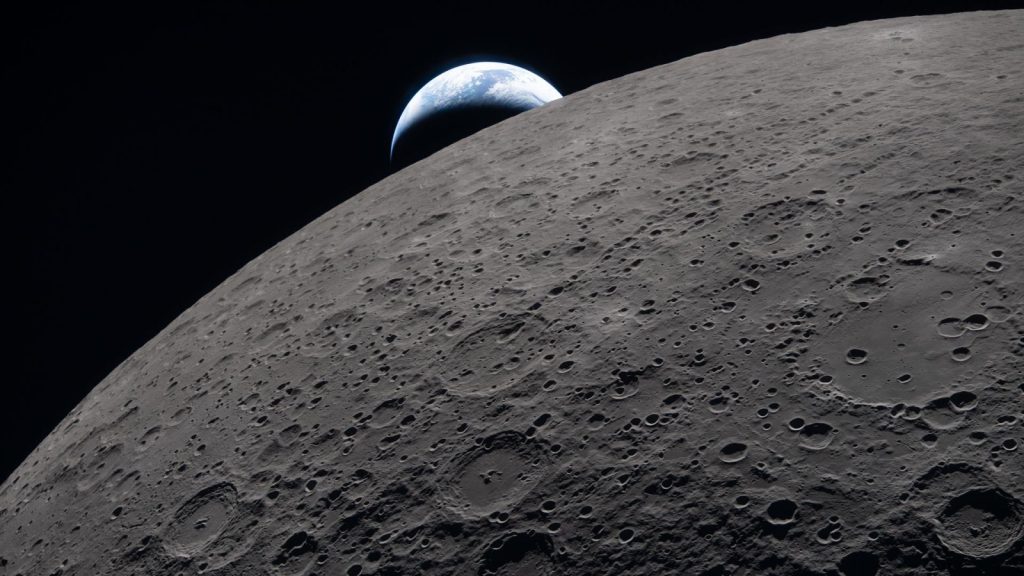
South Africa has quietly cemented its place in the modern space race after playing a decisive role in the successful completion of NASA’s latest crewed lunar mission, underscoring Africa’s growing technical capacity in high-precision science and the continent’s strategic relevance in global exploration beyond Earth.
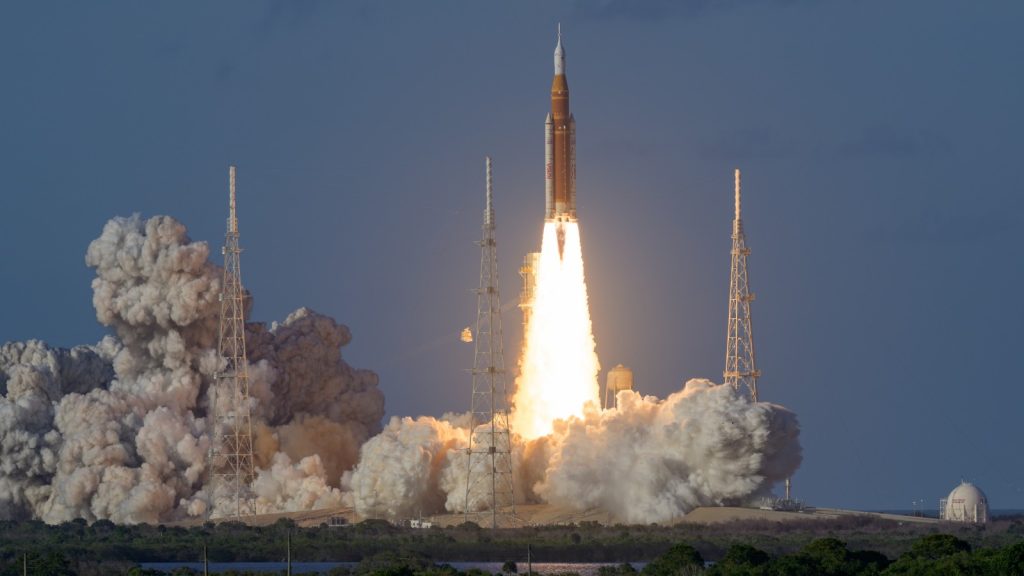
When the four-member crew of the Artemis II returned safely to Earth on April 10 after a historic 10-day journey around the Moon, attention naturally focused on the astronauts and the spacecraft. Yet thousands of kilometres away, engineers at the South African National Space Agency (SANSA) were celebrating a milestone of their own.
From a quiet site in Gauteng province, their ground systems had helped guide the mission through some of its most critical moments, reinforcing Africa’s emerging role in the global space economy.
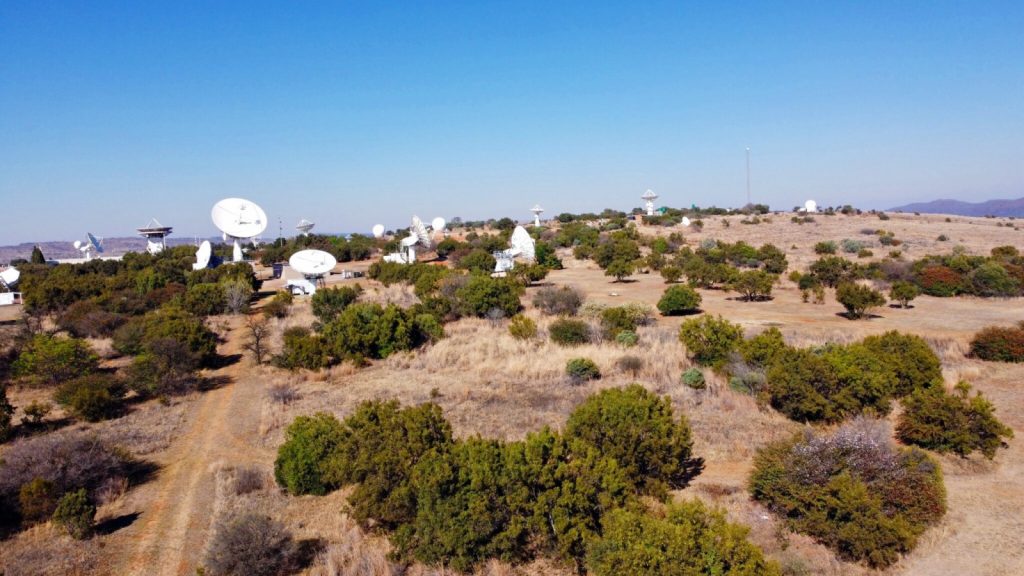
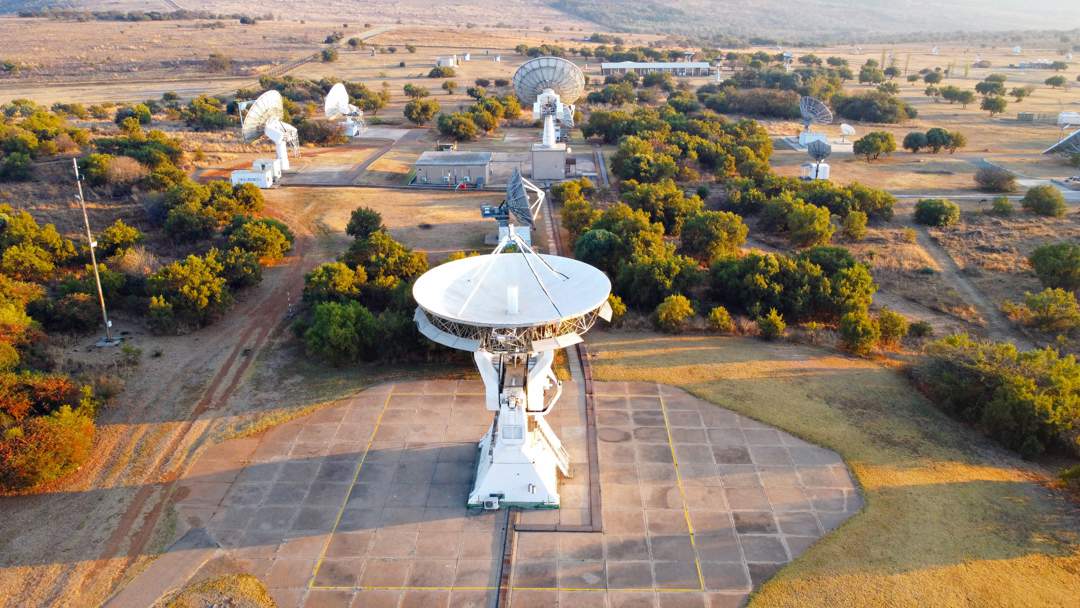
Operating from the Hartebeesthoek Radio Astronomy Observatory, commonly known as HartRAO, SANSA provided essential tracking, telemetry and data relay services as the Orion spacecraft travelled beyond low Earth orbit and looped around the far side of the Moon.
The station’s contribution was particularly important when the spacecraft moved out of range of northern hemisphere tracking facilities, highlighting the importance of geographically distributed infrastructure in deep-space missions.
The mission marked the first time humans had travelled beyond low Earth orbit since the Apollo 17, and it set a new record for the farthest distance humans have journeyed from Earth. For space agencies worldwide, including those across Africa, the achievement signals renewed momentum in lunar exploration and a growing demand for global technical partnerships.
SANSA engineers worked around the clock to ensure uninterrupted communication with the spacecraft during high-risk phases, including its dramatic re-entry into Earth’s atmosphere, the most dangerous segment of any spaceflight.
Using advanced antennas and atomic timing systems, the team captured Doppler measurements and ranging data that allowed mission controllers to calculate the spacecraft’s precise speed and trajectory. Those calculations ultimately helped determine the exact splashdown location in the Pacific Ocean off the coast of California.
The success of the mission reflects decades of collaboration between South Africa and the United States in space science, a relationship that dates back to the early years of the space age. The Hartebeesthoek facility was originally built by NASA in 1963 to support missions during the Cold War era, including communications linked to the historic Apollo 11 Moon Landing. Control of the station was later transferred to South African authorities in the 1970s, laying the foundation for the country’s modern space capabilities.
Since the establishment of SANSA in 2011, the agency has steadily expanded its technical expertise, positioning South Africa as a reliable partner in international missions. Its role in Artemis II demonstrates how African infrastructure can deliver mission-critical services in highly complex scientific operations, while also strengthening the continent’s participation in the rapidly evolving global space sector.
Spaceflight today depends on a network of ground stations distributed around the world, forming a continuous communication chain as spacecraft move across the planet’s horizon. Each station assumes responsibility for tracking and data transmission when the spacecraft enters its coverage area, ensuring that mission controllers never lose contact. In this system, southern hemisphere stations like Hartebeesthoek are indispensable, particularly for missions that travel beyond Earth’s immediate orbit.
Modern tracking technology has advanced significantly since the manual systems used during the 1960s Apollo era. Today’s operations rely on automated antenna systems capable of locking onto spacecraft signals with extreme precision, supported by high-speed digital data transfer and sophisticated navigation software.
While SANSA’s current 12-metre antennas are smaller than those used in NASA’s Deep Space Network, they remain essential for monitoring spacecraft travelling between Earth and deep space.

Looking ahead, South Africa is investing in new infrastructure designed to expand its influence in the international space community. Plans are underway to develop an additional ground station in Matjiesfontein, a move expected to extend the country’s tracking range and increase its capacity to support future missions to the Moon, Mars and beyond.
Such investments reflect a broader strategic vision to position Africa as an active contributor to global scientific discovery rather than a passive observer.
For the continent, the implications extend beyond prestige. Participation in advanced space missions drives innovation in engineering, communications, data science and education; sectors increasingly viewed as critical to Africa’s long-term economic transformation.
As governments and research institutions deepen partnerships with global agencies, opportunities are emerging for African scientists, technicians and entrepreneurs to participate directly in frontier technologies.
The successful return of Artemis II therefore represents more than a technological milestone for NASA. It also serves as a powerful reminder that Africa’s scientific infrastructure is becoming an integral part of humanity’s next chapter in space exploration, one in which collaboration across continents will determine how far and how safely humans can travel beyond Earth.