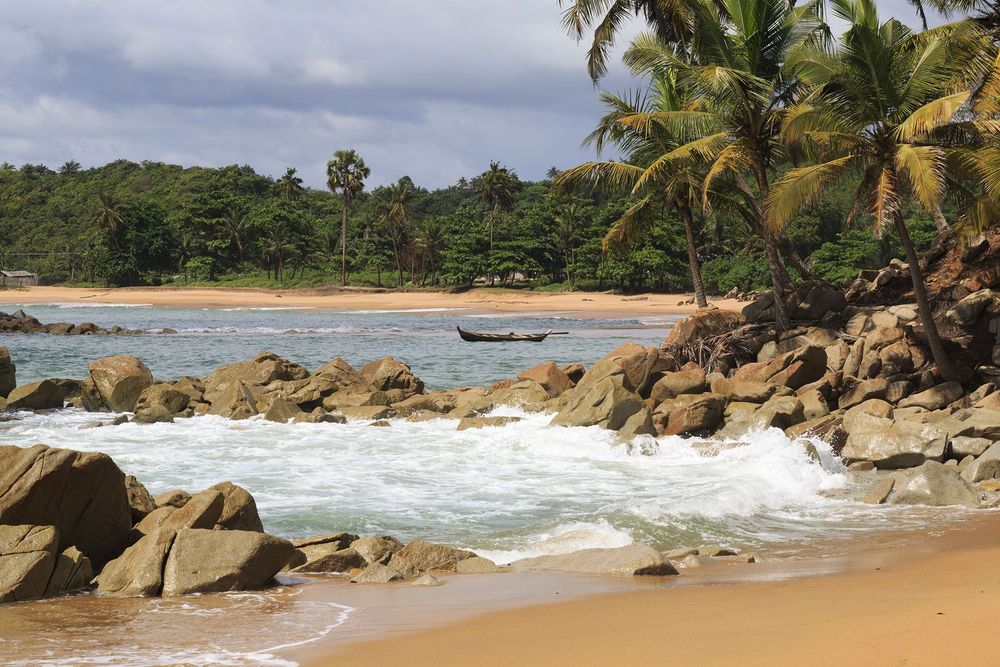
Ghana has formally established its first marine protected area, designating a 703-square-kilometre stretch of ocean along its western coastline as a conservation zone aimed at restoring declining fish stocks, safeguarding biodiversity and strengthening coastal livelihoods.
The declaration of the Greater Cape Three Points Marine Protected Area on 14 April 2026 by Vice President Naana Jane Opoku-Agyemang marks a significant shift in the country’s ocean governance strategy, signalling a move from decades of resource pressure toward long-term ecosystem stewardship in one of West Africa’s most ecologically important marine regions.
The protected area, located in the Western Region near the Cape Three Points peninsula, is widely recognised as a biodiversity hotspot that supports critical fish breeding and nursery grounds, mangrove wetlands and diverse reef systems. These ecosystems not only sustain marine life but also serve as natural barriers against coastal erosion and storm surges.
Read also: Africa’s first land-based Coral Spawning lab records breakthrough in Seychelles
For a country where an estimated three million people depend directly or indirectly on fisheries for food and income, the restoration of marine habitats has become increasingly urgent as overfishing, illegal practices, pollution and climate change continue to strain ocean resources.
Government officials say the new designation represents the culmination of years of scientific research, stakeholder consultations and policy development.
The initiative has been led by the Ministry of Fisheries and Aquaculture Development with sustained technical support from the Ghanaian non-profit Hen Mpoano and a coalition of international partners working to strengthen sustainable fisheries management and marine conservation across the Gulf of Guinea.
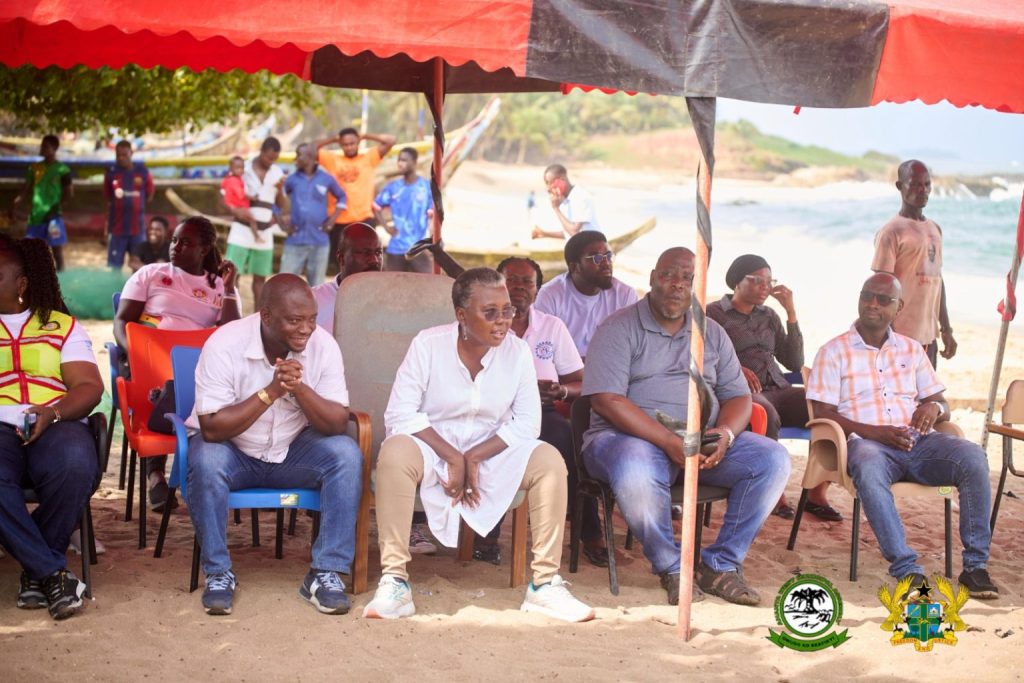
Speaking during the official declaration, Fisheries and Aquaculture Minister Emelia Arthur described the move as a defining moment for the country’s blue economy and environmental future. She said the establishment of the marine protected area reflects a national commitment to safeguarding ocean resources for future generations while ensuring that coastal communities continue to benefit from sustainable fisheries.
“The declaration of our first Marine Protected Area is not just a policy milestone, it is a national turning point,” Arthur said in her opening remarks. “For the first time, Ghana decisively says: our marine resources must endure.”
She noted that the Greater Cape Three Points ecosystem, while rich in biodiversity and essential to livelihoods, has faced mounting environmental pressures over the past two decades. Declining fish stocks, habitat degradation and rising climate risks have underscored the need for stronger conservation measures that balance ecological recovery with economic stability.
“This Marine Protected Area signals a new direction, where conservation and prosperity are not in conflict, but in partnership,” Arthur added. “It is just the beginning, of a network, of restoration, and of a new social contract between people and the sea.”
Unlike traditional conservation approaches that impose blanket bans on fishing, Ghana’s marine protected area introduces a zoning system designed to balance environmental protection with livelihood needs. Highly sensitive habitats will be designated as core zones where extractive activities are restricted to allow ecosystems to regenerate naturally.
Read also: Guinea-Bissau bans fish meal production to protect regional marine stocks
Surrounding multiple-use zones will permit regulated fishing and other economic activities under stricter monitoring and enforcement frameworks aimed at reducing illegal, unreported and unregulated fishing, a persistent challenge across West African waters.
Authorities say the zoning approach is grounded in scientific evidence and international best practice, recognising that sustainable fisheries depend on healthy ecosystems. By allowing fish populations to recover within protected zones, policymakers expect to see improved fish catches in adjacent fishing grounds, more stable incomes for fishers and processors, and stronger food security outcomes for coastal communities over time.
Stephen Kankam, Deputy Director of Hen Mpoano, said the declaration represents a practical step toward rebuilding Ghana’s fisheries sector beyond policy commitments. He emphasised that long-term success will depend on consistent enforcement, community participation and sustained investment in monitoring systems.
“This declaration means Ghana is taking a very practical step to rebuild its fisheries, not just in policy, but on the ground,” Kankam said. “In simple terms, the declaration of Ghana’s first Marine Protected Area means giving fish the space to recover, reducing destructive activities and ensuring that fishing can continue in a more sustainable way.”
The marine protected area forms part of a broader national fisheries reform agenda that includes seasonal fishing closures, gear restrictions and vessel registration programmes aimed at curbing overcapacity and improving compliance.
While these measures provide temporary relief to overstressed fish stocks, officials say permanent habitat protection is essential to ensure long-term resilience in the face of climate change, population growth and rising demand for seafood.
A defining feature of the initiative is its community-centred governance structure. Coastal residents, traditional authorities and local fishing associations are expected to play an active role in co-managing the protected area alongside government agencies. This collaborative model is designed to integrate local knowledge into decision-making while strengthening compliance with conservation rules, a factor widely recognised as critical to the success of marine protected areas globally.
Environmental analysts note that Ghana’s decision comes at a time when countries worldwide are accelerating efforts to meet the global “30×30” biodiversity target under the Kunming-Montreal Global Biodiversity Framework, which calls for the protection of at least 30 percent of the planet’s land and ocean areas by 2030.
Within Africa, where coastal economies are highly dependent on marine resources yet face mounting ecological pressures, the move positions Ghana as an emerging leader in sustainable ocean governance and blue economy development.

International partners, including philanthropic foundations and bilateral donors, have pledged technical and financial support to help ensure effective implementation, surveillance and scientific monitoring within the protected area. Their involvement reflects growing recognition that marine conservation requires sustained investment in research, enforcement capacity and community engagement to deliver measurable ecological and economic outcomes.
For policymakers across the continent, including those shaping coastal and fisheries strategies in East and Southern Africa, a region increasingly focused on blue economy growth; Ghana’s initiative offers a practical case study in aligning conservation with development priorities.
As African governments seek to secure food systems, protect biodiversity and build climate resilience, the establishment of the Greater Cape Three Points Marine Protected Area underscores a broader shift toward integrated ocean management approaches that recognise healthy marine ecosystems as the foundation of long-term economic stability and social well-being.