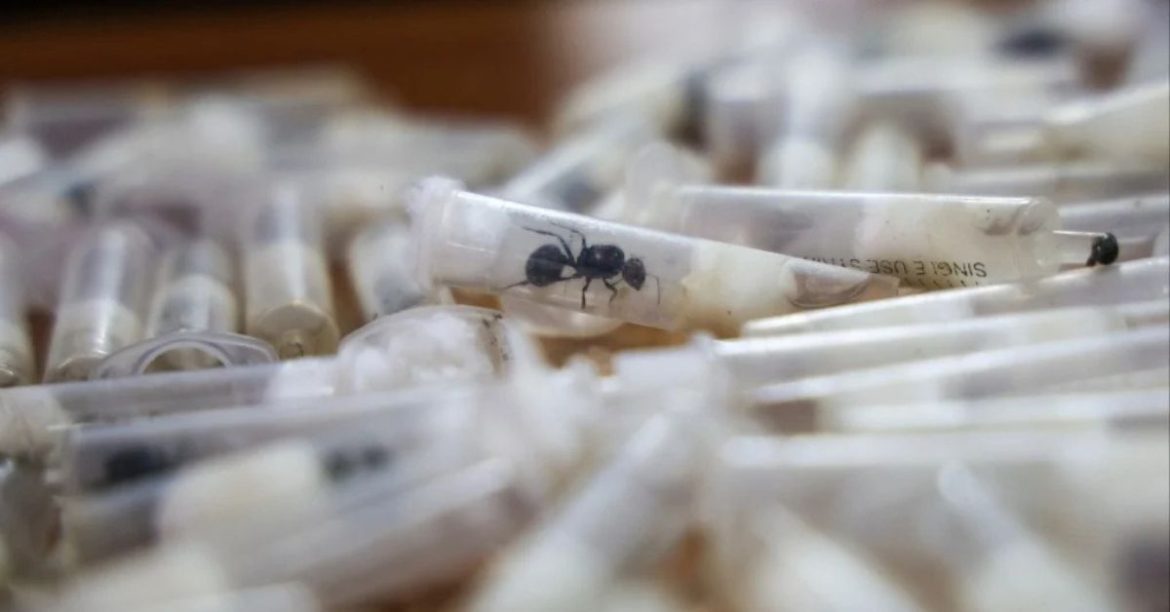
Kenyan authorities have sentenced a Chinese national to one year in prison and imposed a fine of KSh1 million (about $7,700) for attempting to smuggle more than 2,000 live queen ants out of the country in a case that has exposed a fast-evolving and largely invisible frontier of wildlife trafficking driven by global demand for rare insect species.
The ruling, delivered in Nairobi, comes amid growing alarm from conservationists and enforcement agencies who say Kenya is increasingly becoming a source market for high-value ant species traded to collectors in Europe and Asia, where live colonies are sold for use in transparent “formicarium” setups that allow hobbyists to observe colony behaviour.
The case has highlighted how a new wave of biodiversity exploitation is extending beyond iconic wildlife such as elephants and rhinos into insects that play critical ecological roles.
The court found that Zhang Kequn attempted to transport queen garden ants through Jomo Kenyatta International Airport in March, concealed in luggage bound for China. Judge Irene Gichobi said the offence demonstrated both intent and awareness of wrongdoing, noting that the accused was “not entirely honest” and lacked remorse. She imposed the custodial sentence alongside a fine, stressing the need for a deterrent as cases involving insect trafficking continue to rise.
Read also: Ghana launches first marine protected area to restore fisheries and protect Coastal livelihoods
“There is need for a stiff deterrent sentence,” the judge said, warning that the “rising cases of dealing in large quantities of garden ants” were already producing “negative ecological side effects”.
Prosecutors told the court that the consignment contained more than 2,000 queen ants, a keystone reproductive species capable of founding entire colonies that can persist for decades. Wildlife officials warned that removing such queens in large numbers risks collapsing entire local colonies and disrupting soil ecosystems that depend on their activity.
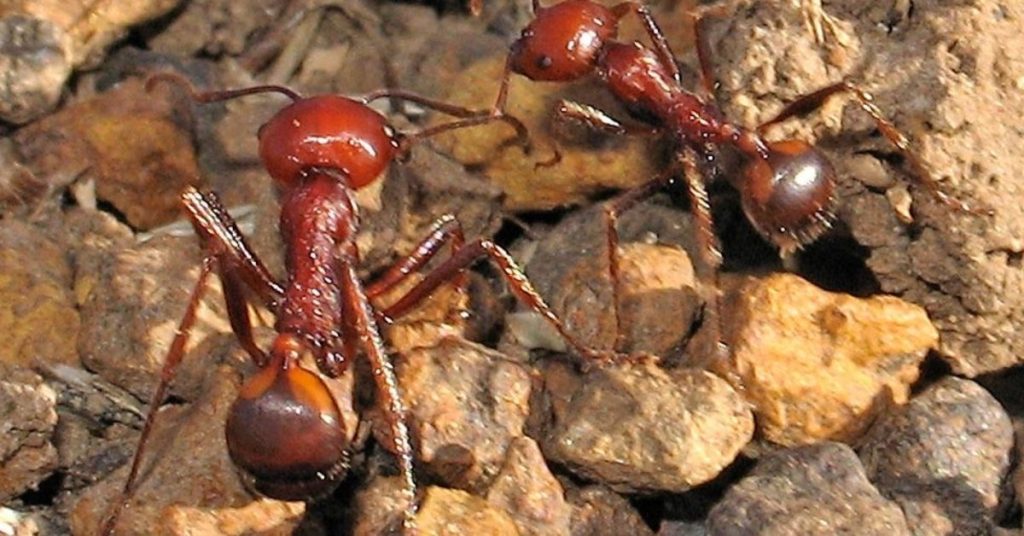
The case has drawn renewed attention to the growing international trade in East Africa’s giant harvester ants, particularly Messor cephalotes, a striking red species native to the region. During Kenya’s rainy season, winged ants emerge in synchronized swarms from thousands of mounds across the Rift Valley, especially around agricultural areas such as Gilgil, where local collectors target fertilised queens mid-flight.
These queens are highly prized in global collector markets. A single fertilised queen can fetch up to $220, driven by demand from enthusiasts who maintain artificial colonies in sealed observation habitats. Because queens can survive for decades and establish entire colonies from a single specimen, they are considered the most valuable component of the trade.
Recent investigative reporting has shown how local supply chains operate during these seasonal swarms. Collectors identify nesting sites in open fields, capture fertilized queens shortly after mating flights, and transfer them into small tubes or syringes lined with moist cotton wool to increase survival during transport. These consignments are then aggregated and sold to intermediaries, who coordinate export routes through urban hubs such as Nairobi.
One former broker, speaking to journalists anonymously, described how he previously linked foreign buyers with local collectors. He said the trade was initially viewed by participants as harmless, partly due to limited awareness of its ecological consequences. “At first, I did not even know it was illegal,” he said, adding that he quit after seeing arrests reported in the media.
The scale of the trade became more visible in 2025 when Kenyan authorities uncovered a separate shipment of about 5,000 queen ants at a guesthouse in Naivasha, many collected from the same Rift Valley ecosystem. In that case, suspects from Belgium, Vietnam and Kenya were convicted of biopiracy and fined or sentenced to imprisonment, reinforcing Kenya’s emerging enforcement stance against insect trafficking networks.

Scientists say the ecological stakes are higher than they may appear. Harvester ants are considered ecosystem engineers, playing a central role in seed dispersal, soil aeration and nutrient cycling. Their colonies can last for 50 years or more, with queens acting as the long-term reproductive core of entire underground systems.
“Unsustainable harvesting, particularly the removal of queen ants, can lead to colony collapse, disrupting ecosystems and threatening biodiversity,” said Mukonyi Watai, a senior scientist at the Kenya Wildlife Research and Training Institute.
Entomologists warn that the rapid expansion of the ant trade is being driven by rising global interest in ant-keeping as a hobby, particularly in parts of Europe and Asia. Online markets have reportedly facilitated the sale of tens of thousands of colonies, many of which include non-native species, raising additional concerns about invasive species risks if escapes occur.
Read also: Africa’s first land-based Coral Spawning lab records breakthrough in Seychelles
Researchers have also noted that the trade is difficult to regulate due to the biological characteristics of ants. Queens and eggs can be transported in small containers and are often difficult to detect during standard airport screening procedures, making enforcement more challenging than in traditional wildlife trafficking cases.
In Kenya’s Rift Valley, particularly in Gilgil, residents and scientists have observed increased harvesting activity during seasonal swarming periods. Giant harvester ants, which are native to East Africa and known for their seed-gathering behaviour, are now at the centre of what experts describe as a new and poorly understood wildlife economy operating at the intersection of ecology, technology and online commerce.
Despite the emerging trade, Kenya’s Wildlife Service says no formal permits have been issued for large-scale ant exports, despite legal provisions that allow regulated collection under strict conditions, including benefit-sharing agreements with local communities and disclosure of export volumes and destinations.
The sentencing in Nairobi is therefore being seen as part of a broader effort to close enforcement gaps before insect trafficking becomes entrenched. Conservationists argue that the case reflects a wider shift in global wildlife crime patterns, where less visible species are increasingly targeted due to their commercial value and ease of transport.
As appeals in the case proceed, Kenya’s authorities are signalling that biodiversity protection now extends beyond charismatic megafauna to the smallest but ecologically vital species. In doing so, the country is confronting a new conservation frontier, one where even a single ant, valued at hundreds of dollars on global markets, can carry consequences for entire ecosystems.