


The European Union is recalibrating key pillars of its climate and sustainability framework as policymakers seek to preserve industrial competitiveness while maintaining long-term decarbonisation targets, in a policy shift that could reshape global carbon markets and influence regulatory strategies across emerging economies, including Africa.
Recent proposals from the European Commission indicate that Brussels is preparing a broader overhaul of the EU Emissions Trading System (ETS), the bloc’s flagship carbon pricing mechanism, amid mounting pressure from energy-intensive industries concerned about rising compliance costs, weakening industrial competitiveness and volatile energy prices.
The Commission has proposed increasing the allocation of free carbon allowances for certain industries between 2026 and 2030, a move that could save European companies an estimated €4 billion in carbon costs. The proposed revisions would expand the calculation of free allowances to include indirect emissions, replacing the current system focused primarily on direct emissions.
The EU carbon market, launched in 2005, remains Europe’s central mechanism for reducing greenhouse gas emissions by requiring companies in sectors such as power generation, manufacturing and aviation to purchase permits for the carbon they emit. Yet the system is increasingly facing political and economic scrutiny as European industries warn that higher carbon costs could accelerate industrial relocation to jurisdictions with less stringent environmental regulations.
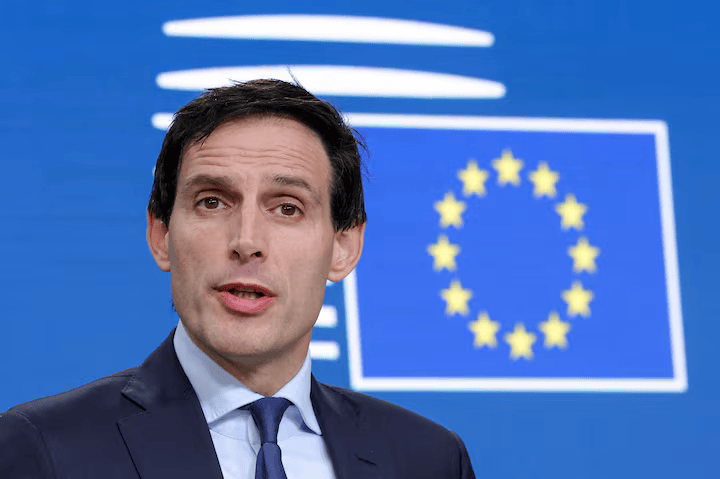
European officials argue that the proposed adjustments are intended to protect industrial capacity during the transition to a low-carbon economy rather than dilute climate ambition. EU Climate Commissioner Wopke Hoekstra said the planned reforms aim to channel more carbon market revenues back into industrial decarbonisation efforts, including investment in cleaner production technologies, renewable energy systems and electrification.
“We see opportunities to improve it, including ensuring more of the revenue generated is returned to industry to support further decarbonisation,”Hoekstra said in Lisbon this week.
The proposed changes come as Europe faces a more complex phase in its climate transition strategy, shaped by weaker economic growth, geopolitical instability and intensifying global competition from the United States and China, both of which have expanded industrial subsidies tied to strategic sectors including clean energy manufacturing and electric vehicles.
Analysts say the EU is attempting to strike a balance between maintaining regulatory credibility and avoiding deindustrialisation risks. The bloc’s carbon market has experienced significant volatility in recent months, with benchmark carbon prices falling nearly 20% since the start of 2026 amid uncertainty surrounding proposed reforms and growing political pressure from member states.
According to Reuters surveys of market analysts, average EU carbon price forecasts for 2026 and 2027 have been revised downward because of concerns over policy uncertainty and future permit supply levels.
Alongside carbon market reforms, the EU has also moved to simplify several corporate sustainability reporting and due diligence rules following lobbying from businesses and trade partners who argued that compliance obligations risked undermining competitiveness. Recent changes approved by EU member states reduced the number of companies covered by some sustainability regulations and delayed implementation timelines.
The adjustments reflect growing recognition within European policymaking circles that climate policy durability may increasingly depend on political and industrial acceptability rather than ambition alone. Environmental policymakers continue to defend the overall integrity of the EU’s climate architecture, arguing that predictable carbon pricing remains essential for driving investment in low-carbon technologies over the long term.
For African economies, the evolving direction of EU climate policy carries significant implications. The European Union remains one of Africa’s largest export markets and a major source of climate finance, development funding and sustainability-related regulation. Changes to EU carbon pricing frameworks and sustainability standards could directly affect African exporters operating in sectors such as steel, cement, fertilisers, agriculture and manufacturing.
African policymakers and exporters are already adjusting to the EU’s Carbon Border Adjustment Mechanism (CBAM), which will impose carbon-linked costs on selected imported goods entering the European market. Any recalibration of Europe’s carbon market or free allowance systems may influence how African producers compete under emerging low-carbon trade regimes.
The debate also highlights broader tensions facing developing economies attempting to balance industrialisation goals with climate commitments. African governments have repeatedly argued that climate transition frameworks must account for economic development realities, infrastructure deficits and unequal historical emissions responsibilities.

At the same time, European sustainability regulations continue to shape global corporate governance standards. The EU’s approach to emissions trading, climate disclosure and supply chain due diligence has frequently influenced regulatory developments in other regions, including emerging carbon markets now being explored in parts of Africa, Asia and Latin America.
Industry analysts say the current reforms suggest Europe is entering a more implementation-focused phase of climate governance, where economic resilience and industrial adaptation are becoming as central to policy design as emissions reduction targets themselves.
The outcome of that balancing act may determine not only the future credibility of Europe’s net-zero pathway, but also the pace and structure of climate transition frameworks increasingly being adopted worldwide.


