


African sovereign debt managers are under growing pressure to integrate climate finance into national borrowing strategies as rising debt servicing costs, climate vulnerability and constrained fiscal space increasingly converge into what policymakers describe as a systemic development challenge.
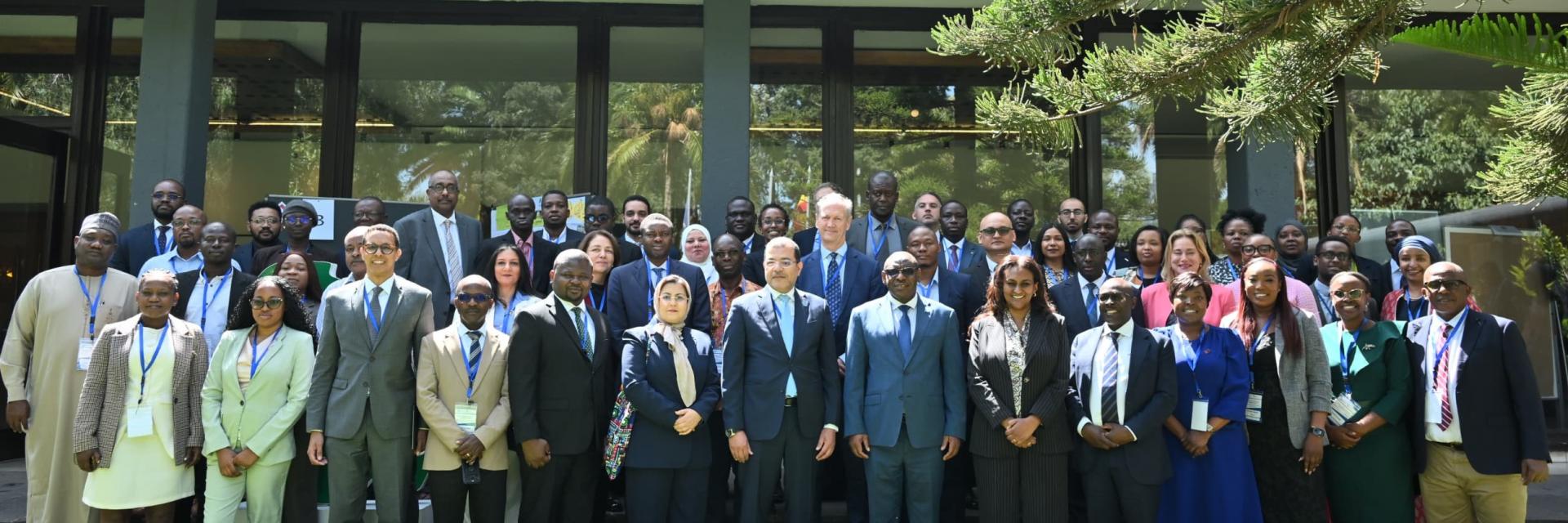
That message dominated discussions at the Second African Forum on Sovereign Finance, which concluded in Addis Ababa on Friday after bringing together debt management offices and finance ministries from 18 African countries alongside multilateral lenders, credit rating agencies and climate finance specialists.
The three-day forum, jointly organised by the United Nations Economic Commission for Africa and Financial Sector Deepening Africa, focused on how African governments can redesign debt management frameworks to better account for climate-related risks and resilience investments.
Participants argued that current international debt assessment systems continue to penalise climate-vulnerable countries by failing to recognise the long-term fiscal and economic benefits of adaptation investments. A central concern raised during the forum was what officials described as a structural imbalance within the International Monetary Fund’s Debt Sustainability Framework, where climate-related downside risks are incorporated into debt assessments while the stabilising effects of resilience investments remain largely excluded.
According to delegates, the result is a financing environment in which governments receive limited recognition for investing in infrastructure and adaptation measures that could reduce future economic losses linked to droughts, floods, food insecurity and climate-related displacement.
Mark Napier, chief executive of FSD Africa, said sovereign debt management, climate finance and domestic capital market reforms should be treated as interconnected policy challenges rather than isolated issues.
“Current circumstances suggest that we should double down on financing strategies for climate and nature action to build medium and long-term resilience,” Napier said during the forum.
The discussions come as African economies face mounting debt burdens alongside rising adaptation financing needs. According to the African Development Bank, Africa’s external debt has reached approximately $1.2 trillion, while total debt servicing costs have more than doubled over the past decade to $163 billion. External debt obligations are projected to rise further to $88.7 billion in 2025.
In several African countries, debt servicing costs now exceed spending on public health systems, limiting governments’ capacity to finance climate adaptation, infrastructure expansion and social protection programmes simultaneously.
Mama Keita, Deputy Executive Secretary of the ECA, described the continent’s debt situation as extending beyond conventional fiscal pressures into a broader governance and development crisis.
“Africa’s debt challenge has become a development crisis, a climate vulnerability, and a governance emergency, all of which must be tackled together in an integrated response,” she said.
The forum was held against the backdrop of the evolving global post-COP30 policy environment, where pressure is growing on both advanced economies and international financial institutions to reform climate finance systems and improve access to concessional funding for vulnerable countries.
Delegates discussed ways of embedding climate and environmental targets directly into sovereign debt management tools, including Medium-Term Debt Strategies, Debt Sustainability Analyses and Liability Management Operations. The objective, according to participants, is to move climate alignment from broad policy commitments toward operational borrowing frameworks that influence how governments raise and manage capital.
The discussions also reflected broader concerns that African countries remain disproportionately exposed to climate shocks despite contributing minimally to global greenhouse gas emissions. Extreme weather events, declining agricultural productivity and infrastructure damage linked to climate variability continue to place additional pressure on already strained public finances across the continent.
At the same time, African governments face increasingly expensive access to international capital markets amid tightening global financial conditions and heightened investor risk perceptions toward developing economies.
Claver Gatete, Executive Secretary of the ECA, called on African debt managers to engage more actively with institutional investors, guarantee providers and development finance institutions in designing risk-sharing structures adapted to African financing realities.
He also urged governments to develop country-level implementation roadmaps extending through 2026 and beyond to integrate climate resilience objectives into sovereign financing strategies.
Analysts attending the forum said failure to reform sovereign debt frameworks could deepen Africa’s infrastructure financing gap and delay adaptation investments at a time when climate-related economic losses are expected to intensify. They argued that without greater alignment between debt sustainability assessments and resilience financing, many African governments may continue prioritising short-term fiscal consolidation over long-term climate preparedness.
The Addis Ababa discussions highlighted a growing consensus among African policymakers that climate finance can no longer be treated as a separate environmental agenda, but increasingly as a core component of fiscal stability, sovereign risk management and economic resilience.


