


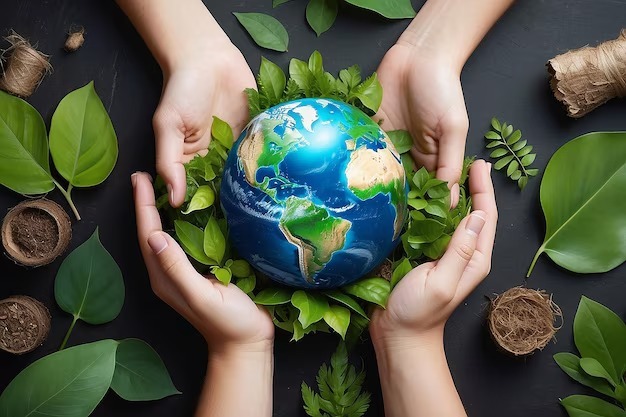
As governments, businesses, financial institutions and communities mark World Environment Day on June 5, environmental sustainability is increasingly being viewed not only as a conservation priority but also as a central economic and development issue for Africa. Across the continent, climate change, biodiversity loss, pollution, land degradation and resource scarcity are reshaping investment decisions, infrastructure planning, agricultural production and public finances, placing environmental governance at the centre of Africa’s development agenda.
Observed annually under the auspices of the United Nations Environment Programme (UNEP), World Environment Day has evolved into one of the largest global platforms for environmental awareness. This year’s observance comes at a time when African countries face growing pressure to balance economic growth ambitions with the need to protect natural capital that underpins livelihoods, food systems, energy security and long-term prosperity.
Africa contributes less than four per cent of global greenhouse gas emissions, yet remains among the regions most exposed to climate-related risks. According to the African Development Bank, climate shocks already cost many African economies between two and five per cent of gross domestic product annually through impacts on agriculture, infrastructure damage, health costs and disruptions to economic activity.
Recent years have demonstrated the scale of these challenges. Prolonged droughts in the Horn of Africa have threatened food security for millions, while severe flooding across countries including Kenya, Nigeria, South Africa and Libya has caused extensive loss of life, displacement and infrastructure destruction. These events have reinforced the reality that environmental risks are increasingly becoming fiscal and economic risks.
 The implications extend beyond climate. Land degradation affects an estimated 65 per cent of Africa’s productive land, reducing agricultural output and increasing pressure on rural communities. Meanwhile, deforestation continues to accelerate in several regions as growing populations and economic pressures drive demand for land, fuelwood and natural resources. Biodiversity loss is also emerging as a significant concern, particularly as African economies seek to expand nature-based tourism, sustainable agriculture and ecosystem-based industries.
For policymakers, the environmental agenda is becoming inseparable from economic planning. Governments across the continent are increasingly integrating climate resilience and environmental sustainability into national development strategies, recognising that future competitiveness will depend on the ability to manage environmental risks effectively.
This shift is also being driven by global financial markets. Environmental, Social and Governance (ESG) standards have become an increasingly important consideration for investors, development finance institutions and multinational corporations seeking reliable and sustainable supply chains. Access to international capital is increasingly linked to environmental performance, transparency and responsible resource management.
Kenya’s growing focus on green finance, South Africa’s efforts to mobilise climate investment through its Just Energy Transition (JET) Framework, Morocco’s expansion of renewable energy infrastructure and Rwanda’s emphasis on sustainable urban development illustrate how environmental considerations are becoming embedded within broader economic strategies. Across the continent, governments are seeking to position themselves as destinations for sustainable investment while addressing domestic environmental challenges.
The energy transition further highlights the complex relationship between environmental sustainability and economic development. Africa possesses significant reserves of critical minerals required for renewable energy technologies, electric vehicles and battery manufacturing. Countries such as the Democratic Republic of Congo (DRC), Zambia, Zimbabwe, Namibia and South Africa are increasingly viewed as strategic suppliers in emerging global clean energy supply chains.
However, the opportunity also presents governance challenges. As competition for critical minerals intensifies, questions surrounding environmental safeguards, community engagement, local value addition and responsible mining practices are becoming increasingly important. According to industry analysts, countries that establish robust environmental governance frameworks may be better positioned to attract long-term investment and secure greater economic benefits from the global energy transition.
Urbanisation presents another critical dimension of Africa’s environmental future. The continent’s cities are among the fastest-growing in the world, creating significant demands for housing, transport, water systems, waste management and energy infrastructure. Without adequate planning, environmental pressures could intensify, increasing vulnerability to flooding, pollution and resource constraints. Conversely, investments in resilient infrastructure, sustainable transport systems and climate-smart urban planning may offer opportunities to improve productivity and quality of life while reducing environmental risks.
The private sector is also playing an increasingly important role. Businesses across sectors ranging from agriculture and manufacturing to finance and telecommunications are facing growing expectations from regulators, investors and consumers regarding environmental performance. Sustainability reporting, emissions management, circular economy initiatives and responsible supply chain practices are gradually moving from voluntary commitments to business requirements in many markets.
For communities across Africa, environmental sustainability remains closely connected to everyday realities. Access to clean water, productive agricultural land, reliable energy and healthy ecosystems directly influences livelihoods, public health and economic opportunity. Environmental degradation often disproportionately affects vulnerable populations, making effective environmental management both a governance and social equity issue.
 World Environment Day therefore serves as more than a symbolic observance. It provides an opportunity to assess how environmental stewardship intersects with economic resilience, investment competitiveness and long-term development outcomes. The environmental challenges confronting Africa are significant, but so too are the opportunities associated with sustainable resource management, green investment and climate-resilient growth.
As global environmental pressures intensify, the continent’s ability to protect natural assets while advancing economic development will increasingly influence its position within the evolving global economy. For African governments, businesses and institutions, environmental sustainability is no longer a peripheral concern. It has become a fundamental component of economic strategy, governance effectiveness and future prosperity.


