


Non-profit organizations across global and African development sectors are increasingly being required to demonstrate measurable social impact as governments, philanthropic institutions and private donors demand greater accountability, transparency and evidence-based allocation of funding. The shift is driving renewed attention toward impact evaluation frameworks capable of measuring outcomes that extend beyond traditional financial indicators, particularly in areas such as poverty reduction, food security, gender equality, education and community resilience.
The growing emphasis on impact evaluation reflects broader changes in how development financing and social investment are assessed. While private companies typically measure performance through revenue growth, profitability, and shareholder returns, many non-profit organizations pursue social objectives that are more difficult to quantify. As a result, organizations are increasingly investing in methodologies designed to evaluate how programmes, interventions, and institutional strategies influence long-term economic and social outcomes.
According to researchers and development practitioners, impact evaluation seeks to determine the extent to which observed changes in outcomes can be directly attributed to a specific intervention, policy, or programme. The discipline emerged more formally during anti-poverty initiatives in the United States in the 1960s, when policymakers sought to assess whether public programmes were effectively reducing poverty and improving social mobility.
Over time, however, development analysts have argued that programme-level measurement alone often fails to capture broader social and institutional impacts, particularly in sectors where outcomes are shaped by community relationships, behavioural changes and systemic inequalities. This has led to growing interest in blended evaluation models that combine quantitative indicators with qualitative assessments of wellbeing, inclusion, and institutional effectiveness.
Recent studies examining food distribution networks and women’s economic empowerment initiatives illustrate the changing direction of impact evaluation systems. In the United Kingdom, researchers working with community food hubs in Leeds developed assessment tools that measured not only food distribution volumes but also social outcomes such as reduced food waste, improved access to healthy food, emotional wellbeing and strengthened community cohesion. The methodology combined statistical data with interviews, focus groups, and participant experiences to capture impacts not reflected in traditional performance metrics.
Similarly, researchers evaluating women’s and girls’ economic empowerment programmes found that labour force participation alone provided an incomplete assessment of impact. According to development specialists, more nuanced indicators such as control over resources, decision-making power, and economic autonomy offered a more accurate understanding of long-term empowerment outcomes.
The shift toward multidimensional evaluation frameworks is becoming increasingly relevant for African non-profit organizations operating within constrained fiscal environments and rapidly evolving donor expectations. Governments, multilateral agencies and private foundations are placing greater emphasis on measurable outcomes as competition for development financing intensifies across sectors including climate adaptation, healthcare, agriculture, education and urban development.
For African economies, the implications extend beyond the non-profit sector itself. Development organizations often play a significant role in delivering social services, supporting vulnerable populations, and supplementing state capacity in areas where public institutions face financial or operational limitations. According to the African Development Bank, effective social investment and programme delivery are increasingly critical to addressing poverty, unemployment, food insecurity and climate vulnerability across the continent.

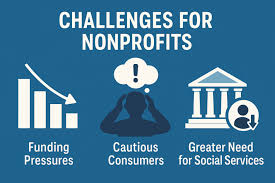
At the same time, fluctuations in international development of financing and tighter fiscal conditions among donor governments are placing additional pressure on organizations to demonstrate efficiency and measurable outcomes. Analysts say this trend is accelerating the professionalization of impact evaluation systems as organizations seek to strengthen credibility with donors, attract long-term financing, and improve operational effectiveness.
The growing focus on evidence-based impact measurement also intersects with wider ESG and sustainability reporting trends influencing both public and private institutions globally. Investors, development finance institutions and philanthropic organizations are increasingly seeking standardized frameworks capable of linking social interventions to broader economic resilience, governance quality and sustainable development outcomes.
For African non-profits working in sectors such as affordable housing, renewable energy access, climate resilience and agricultural development, stronger impact evaluation systems may also improve access to blended finance structures and results-based funding models. Donors and institutional investors increasingly require organizations to demonstrate measurable outcomes tied to poverty reduction, emissions reductions, food system resilience or gender inclusion before committing long-term funding.
However, development specialists caution that measuring social impact remains inherently complex, particularly in environments where structural inequalities, political instability and climate-related disruptions influence outcomes beyond the direct control of implementing organizations. Analysts say overly rigid or purely quantitative frameworks risk overlooking important social dynamics, including trust-building, community participation and behavioural change.
As a result, many organizations are revisiting their theories of change, the strategic frameworks that define how specific interventions are expected to generate desired outcomes. Reassessing these frameworks can help organizations identify gaps between programme activities and broader social objectives while improving alignment between operational priorities and measurable impact indicators.
For African institutions operating in increasingly resource-constrained environments, the ability to demonstrate measurable and credible social outcomes may become an important determinant of long-term sustainability. Organizations capable of integrating robust data systems, community-informed evaluation models, and transparent reporting frameworks may strengthen their ability to attract funding and influence policy development.
The evolution of impact evaluation also reflects a broader transformation in how development effectiveness is understood globally. Social impact is increasingly being treated not simply as a moral or charitable objective, but as a measurable economic and governance issue tied directly to institutional resilience, fiscal efficiency and long-term social stability.


