


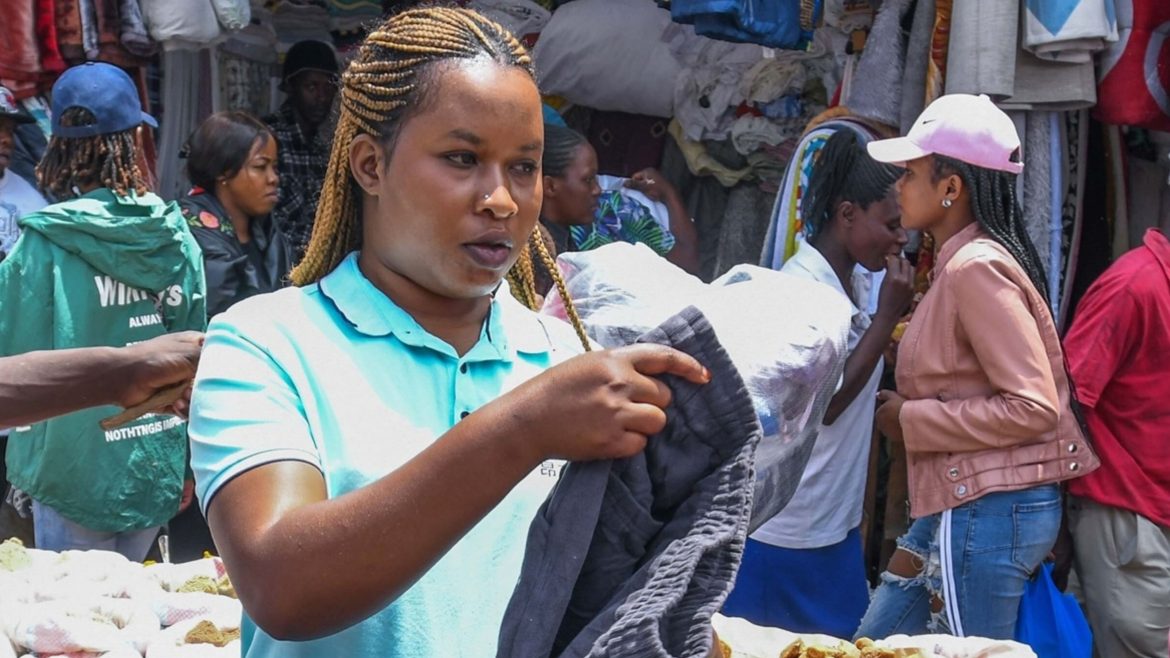
Heavy rains did little to slow activity at Nairobi’s Gikomba market this week, where traders and consumers continued navigating flooded pathways in search of second-hand clothing, underscoring the enduring economic importance of East Africa’s mitumba trade even as governments across the region push to curb imports in support of domestic textile industries and environmental goals. The debate has resurfaced across Kenya, Uganda, Tanzania and Rwanda as policymakers attempt to balance industrialization ambitions, consumer affordability, employment concerns and mounting textile waste pressures linked to global fast fashion supply chains.
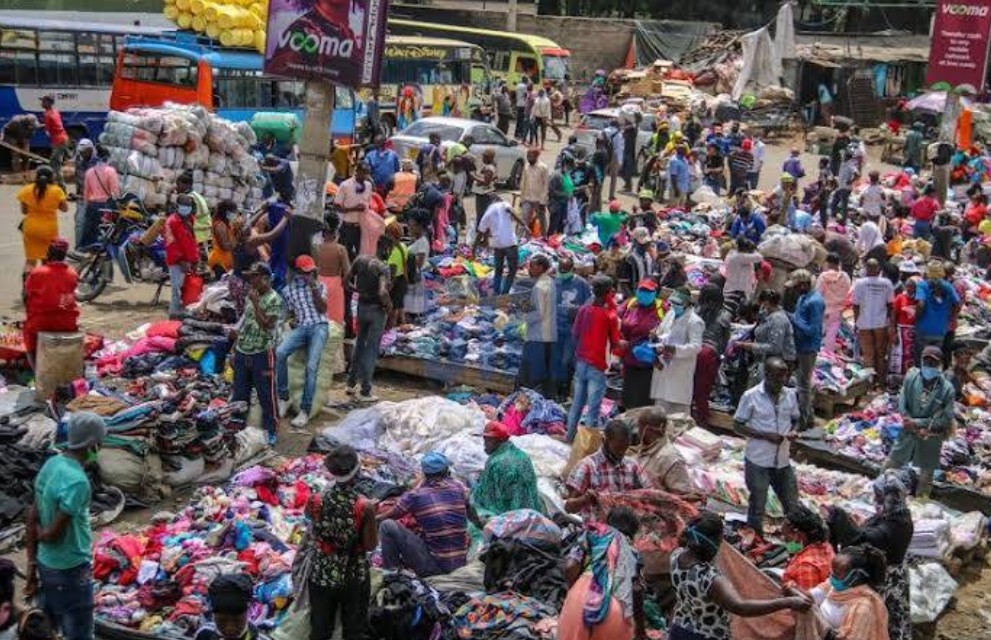 At the centre of the dispute is a longstanding policy dilemma facing the East African Community (EAC), whether reducing dependence on imported used garments can realistically stimulate local manufacturing without deepening inflationary pressures or undermining livelihoods tied to the second-hand economy. According to trade data from the Observatory of Economic Complexity (OEC), Kenya remains Africa’s largest importer of used clothing, receiving nearly 180,000 tonnes in 2022, a sharp increase from levels recorded a decade earlier. The trade supports extensive informal commercial networks that stretch from importers and wholesalers to transport operators, tailors and street vendors.
Regional governments increasingly argue that the sector constrains industrial development by crowding out locally manufactured apparel. Uganda recently imposed an additional 30% environmental levy on used clothing imports, adding to existing import duties and value-added taxes, while Kenya has periodically explored adjustments to its own tax regime for mitumba imports. Rwanda, which resisted pressure to reverse restrictions introduced in 2016, maintains some of the region’s toughest measures against second-hand clothing imports.
The policy direction reflects broader ambitions among East African states to expand domestic value addition, create manufacturing jobs and reduce external trade dependence. According to regional economic planners, textiles and garments are viewed as strategic industries capable of supporting industrial diversification, export growth and urban employment, particularly among young populations entering labour markets at scale.
Yet the economics remain deeply contested. Consumers across the region continue to prioritize affordability and durability amid high living costs and constrained household incomes. In cities such as Nairobi and Dar es Salaam, second-hand garments often remain substantially cheaper than locally produced alternatives. Designers and local manufacturers argue that imported used clothing suppresses the growth of domestic brands, but many also acknowledge that local production systems remain constrained by high energy costs, limited industrial capacity, fragmented supply chains and competition from low-cost imported fast fashion from Asia.
The debate increasingly extends beyond trade policy into environmental governance. Environmental groups warn that significant volumes of imported clothing entering African markets are unsuitable for resale and ultimately become waste. According to estimates by the Changing Markets Foundation, more than one-third of used clothing shipped to Kenya in 2023 was of insufficient quality for reuse. Weak waste management infrastructure across many African cities has intensified concerns over landfill pressures, drainage blockages and growing textile pollution.
At the same time, defenders of the mitumba trade argue that second-hand clothing contributes to circular economy objectives by extending garment life cycles and reducing global textile waste. Industry associations across East Africa maintain that the trade provides affordable clothing access while supporting millions of informal sector livelihoods in a region where formal employment opportunities remain limited.
The issue also highlights Africa’s constrained position within global trade systems. In 2015, the EAC proposed a phased ban on used clothing imports to protect regional manufacturing, but the initiative largely collapsed after the United States threatened to suspend preferential trade access under the African Growth and Opportunity Act (AGOA). Rwanda proceeded independently and subsequently faced tariffs on apparel exports to the US market, illustrating the geopolitical and commercial risks attached to industrial protection measures in developing economies.
For African policymakers, the current debate reflects broader questions around economic sovereignty, industrial competitiveness and sustainable urban consumption patterns. Restricting second-hand imports without parallel investments in manufacturing infrastructure, electricity reliability, logistics and skills development risks exposing structural weaknesses within regional textile sectors. According to industry analysts, East Africa’s garment producers continue to face higher production costs than competitors in Asia, limiting their ability to scale rapidly enough to replace imported supply.

The growing influx of ultra-cheap new clothing from China and Turkey has further complicated the equation. Both local manufacturers and mitumba traders increasingly identify low-cost fast fashion imports, rather than second-hand garments alone, as a major source of competitive pressure. This has widened the policy discussion from used clothing restrictions toward broader industrial trade strategy and consumer market regulation.
The outcome carries implications extending beyond fashion retail. Textile manufacturing has long been identified as a potential driver of industrialisation across Africa due to its labour intensity and export potential. But building viable domestic industries will require coordinated investment in energy systems, transport infrastructure, financing access and regional trade integration under frameworks such as the African Continental Free Trade Area (AfCFTA).
For now, markets such as Gikomba remain central to everyday economic survival for millions of East Africans navigating rising living costs and limited purchasing power. The challenge facing governments is not simply whether to restrict used clothing imports, but whether domestic industries can evolve quickly enough to provide affordable alternatives without triggering wider economic disruption.


