


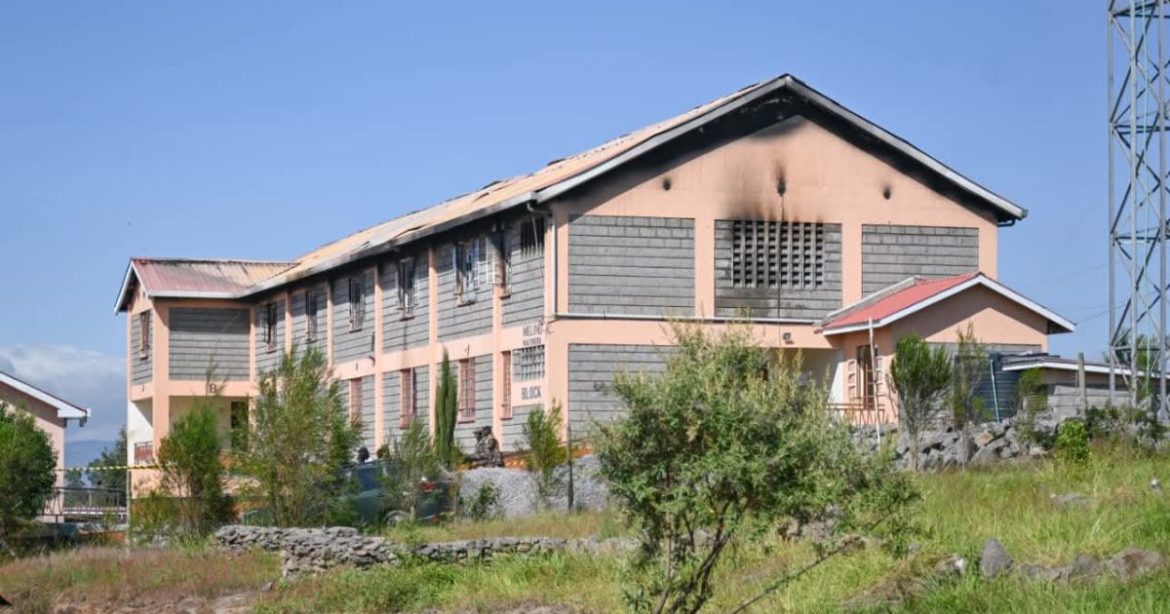
Kenyan authorities have arrested eight students over a suspected arson attack at Utumishi Girls’ Academy Senior School in Gilgil, West-Central Kenya, after a dormitory fire killed 16 students and injured 79 others, intensifying scrutiny of safety standards, overcrowding and governance failures within the country’s boarding school system.
The fire broke out in the early hours of Thursday inside one of the school’s dormitories, triggering panic among students and emergency responders. According to Kenya’s Directorate of Criminal Investigations (DCI), preliminary findings identified eight students as persons of interest connected to the planning and execution of the blaze. The students remain in police custody as investigations continue.
Authorities say the affected dormitory contained 135 bunk beds, raising concerns over overcrowding and whether the facility complied with national safety regulations. Education Minister Julius Ogamba stated that preliminary investigations indicated two teachers had allegedly received prior warnings about possible plans to start the fire but failed to act. He also accused the school administration of negligence, citing reports that an emergency exit remained locked during the incident, potentially worsening the death toll.
The government has since dissolved the school’s board of management and announced plans for disciplinary and legal action against any officials found responsible for breaching safety obligations.
The tragedy has revived longstanding concerns over recurring fires in Kenyan boarding schools, where overcrowding, ageing infrastructure and weak enforcement of safety protocols continue to pose risks to students. Boarding schools remain a central pillar of Kenya’s education system, particularly in rural and peri-urban areas where families depend on residential learning institutions to access secondary education opportunities.
 According to education researchers and child welfare advocates, school fires in Kenya have historically been linked to student unrest, harsh disciplinary systems, mental health pressures and inadequate living conditions. In many institutions, growing enrolment numbers have outpaced investments in dormitory infrastructure, fire prevention systems and emergency preparedness.
The latest incident follows several major school fire disasters in Kenya over the past two decades. In 2024, a dormitory fire at a boarding primary school in Nyeri County killed 21 students, while the 2001 Kyanguli Secondary School fire near Nairobi, which claimed 67 lives, remains one of the country’s deadliest school tragedies.
Beyond the immediate human loss, the repeated incidents carry wider implications for Kenya’s education system, public confidence and long-term social development. Education is widely viewed as one of Kenya’s key economic drivers and a critical pathway for youth mobility, workforce development and poverty reduction. Persistent safety failures within schools’ risk undermining learning outcomes, increasing inequality and placing additional strain on already stretched public institutions.
The fires also expose broader governance and infrastructure challenges facing several African education systems, where rapid population growth and expanding school enrolment often outpace public investment in safe learning environments. According to regional policy analysts, inadequate oversight of boarding facilities reflects wider institutional capacity gaps affecting health, housing and public infrastructure management across parts of the continent.
The incident is likely to intensify calls for reforms in school safety regulation, including stricter inspections, improved emergency response systems and upgraded dormitory standards. Questions are also emerging over whether schools have sufficient mental health and counselling support structures for students living in high-pressure residential environments.
 For Kenya, the tragedy arrives at a time when the government is pursuing broader education reforms aimed at expanding access and improving learning quality. However, analysts note that sustained investment in infrastructure resilience, student welfare and institutional accountability will be necessary if confidence in the country’s boarding school system is to be restored.
As investigations continue, the Utumishi Girls’ Academy fire has become more than a criminal inquiry. It now stands as a wider test of how effectively public institutions can balance expanding educational access with the safety, welfare and protection of students in one of Africa’s fastest-growing economies.


