


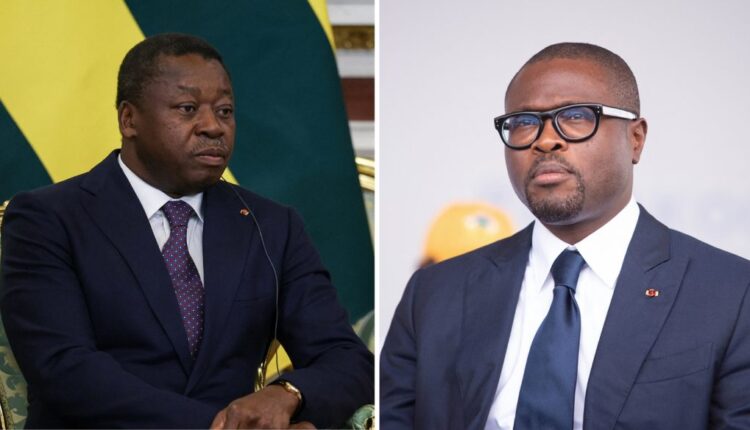
Benin President Romuald Wadagni’s visits to Niger and Burkina Faso this week mark the strongest indication yet of a diplomatic reset between Coastal West Africa and the military-led Sahel states, with both sides signalling a willingness to restore cooperation on trade, security and regional connectivity after nearly three years of strained relations following Niger’s 2023 coup.
Meeting Niger’s military leader Abdourahamane Tiani in Niamey before travelling to Ouagadougou for talks with Burkina Faso’s President Ibrahim Traoré, Wadagni pledged to strengthen bilateral ties and address longstanding points of tension that have disrupted economic activity and regional diplomacy. The discussions culminated in joint statements committing the countries to deepen cooperation against terrorism, cross-border crime and violent extremism while working toward the reopening of the Benin-Niger border.
The diplomatic engagement comes at a critical moment for West Africa, where geopolitical divisions, security challenges and economic fragmentation have increasingly complicated regional integration efforts. Relations between Benin and Niger deteriorated sharply after the July 2023 military takeover in Niamey. Niger’s junta accused Benin of facilitating French influence and hosting military infrastructure intended to destabilise its government, allegations repeatedly denied by both Cotonou and Paris.
In response, Niger closed its border with Benin, severing one of the region’s most important commercial corridors. The closure disrupted trade flows between the two countries and raised logistical costs for businesses operating across the Sahel and Coastal West Africa. Although the cross-border pipeline transporting Nigerien crude oil through Benin remained operational, broader commercial and transport links suffered significant setbacks.
According to official Nigerien figures, approximately 80 percent of the country’s freight previously transited through Benin’s port infrastructure before the diplomatic dispute emerged. The Port of Seme-Kpodji in Cotonou has historically served as Niger’s principal maritime gateway, handling imports ranging from food and consumer goods to industrial equipment, while facilitating exports of agricultural commodities and natural resources.
For Niger, a landlocked country facing rising security expenditures and economic pressures, access to efficient transport corridors remains essential for trade competitiveness and fiscal stability. For Benin, maintaining commercial links with its Northern neighbour supports port revenues, logistics services and broader economic activity linked to regional commerce.
The meetings also reflect evolving political dynamics in West Africa following the formation of the Alliance of Sahel States (AES), a confederation established by Niger, Burkina Faso and Mali after their withdrawal from the Economic Community of West African States (ECOWAS). The three military-led governments have criticised ECOWAS for what they describe as excessive alignment with Western interests and insufficient support in combating jihadist insurgencies that continue to destabilise large parts of the Sahel.
Security concerns remain a central factor driving the renewed engagement. Both Benin and Niger face escalating threats from armed extremist groups operating across porous borders. Northern Benin has experienced a significant rise in jihadist attacks in recent years, reflecting the southward expansion of insecurity from the Sahel into Coastal West Africa. Joint statements issued following the meetings emphasised the need for enhanced coordination against terrorism, banditry and organised crime, challenges that increasingly transcend national boundaries.
According to regional security analysts, improved cooperation between coastal states and Sahel governments could strengthen intelligence sharing, border management and operational coordination against armed groups. However, security gains are likely to depend on sustained political trust and institutional collaboration rather than symbolic diplomatic gestures alone.
The visit also carries broader implications for regional development and investment. Political tensions and border closures can undermine infrastructure utilisation, delay supply chains and increase transaction costs for businesses. These disruptions affect not only bilateral trade but also regional ambitions under the African Continental Free Trade Area (AfCFTA), which seeks to strengthen intra-African commerce and reduce dependence on external markets.
Infrastructure connectivity remains particularly important in a region where transport costs are among the highest globally. Efficient access to ports, roads and energy corridors plays a significant role in determining the competitiveness of landlocked economies and the ability of governments to generate revenues from trade and investment. Reopening the Benin-Niger border could therefore provide economic benefits that extend beyond the two countries.
 Political observers note that Wadagni’s election may have created an opportunity for diplomatic recalibration. As the former finance minister and successor to former President Patrice Talon, Wadagni inherited relationships that had become increasingly strained with the military-led Sahel governments. Some analysts suggest that the departure of Talon from office has reduced a source of personal friction between leaders, creating space for renewed dialogue.
The symbolism surrounding the visit underscored this shift. Roads in Niamey were lined with the flags of both countries, while hundreds of residents gathered to welcome the presidential convoy. Niger’s Prime Minister Ali Lamine Zeine had previously attended Wadagni’s inauguration, describing the moment as the beginning of a “new path” in bilateral relations.
Despite these positive signals, practical challenges remain. The only bridge connecting Niger and Benin across the Niger River remains closed under heavy security restrictions, according to local residents. Reopening transport links and restoring full economic cooperation will require sustained political engagement and confidence-building measures from both governments.
 For Africa, the diplomatic thaw highlights the growing intersection between security, trade and development. Regional stability increasingly depends on functional cooperation between neighbouring states, particularly in areas affected by terrorism, climate pressures and economic vulnerability. The ability of governments to maintain trade corridors, coordinate security responses and attract investment is closely linked to broader development outcomes, including job creation, fiscal resilience and infrastructure expansion.
While significant policy differences remain between Benin and the Alliance of Sahel States, the latest meetings suggest a recognition that economic interdependence and shared security threats may offer a stronger foundation for cooperation than prolonged political confrontation. Whether this translates into lasting regional stability will depend on the extent to which diplomatic commitments are converted into practical measures that restore connectivity, strengthen institutions and support economic growth across West Africa.


