


Researchers at Cairo University have reported a significant advance in plastic waste management after identifying a bacterial consortium capable of degrading up to 26.8 percent of polyvinyl chloride (PVC), one of the world’s most difficult plastics to recycle. The study, conducted entirely in Egypt and published in the peer-reviewed journal Microbial Cell Factories, demonstrates how naturally occurring bacteria isolated from contaminated soil can break down PVC under laboratory conditions, potentially opening new avenues for sustainable waste management technologies across Africa and beyond.
The research was carried out by a team from Cairo University’s Faculty of Science under the supervision of Professor Tarek Abdelmawgoud Abdelmuttalib Morsi and involved scientists Dr. Nawal Magdy, Mahmoud Sabry Maher, Ahmed Mohamed Soliman and Dr. Hoda Shehata. The team identified two bacterial strains, Stutzerimonas sp. NH2 and Glutamicibacter nicotinae NH27, which demonstrated the ability to alter and degrade PVC structures. According to the study, the highest degradation rate was achieved when both strains were combined in equal proportions, resulting in a 26.8 percent reduction in PVC mass.
 The findings address a longstanding challenge in global waste management. PVC is one of the most widely used plastics in sectors including construction, healthcare, packaging and infrastructure, with annual global production exceeding 40 million tonnes. However, its chemical composition, particularly its chlorine content, makes it difficult to recycle using conventional mechanical methods. When exposed to high temperatures during disposal or recycling processes, PVC can release hazardous substances, including hydrogen chloride gas, creating environmental and health concerns.
According to the researchers, laboratory analysis confirmed that bacterial activity caused measurable changes to the plastic’s physical and chemical structure. Scanning electron microscopy revealed cracks, voids and surface deterioration on treated PVC samples, while Fourier-transform infrared spectroscopy and gas chromatography-mass spectrometry identified molecular changes consistent with biodegradation. Thermal analysis further indicated a decline in the material’s stability, suggesting progressive structural breakdown.
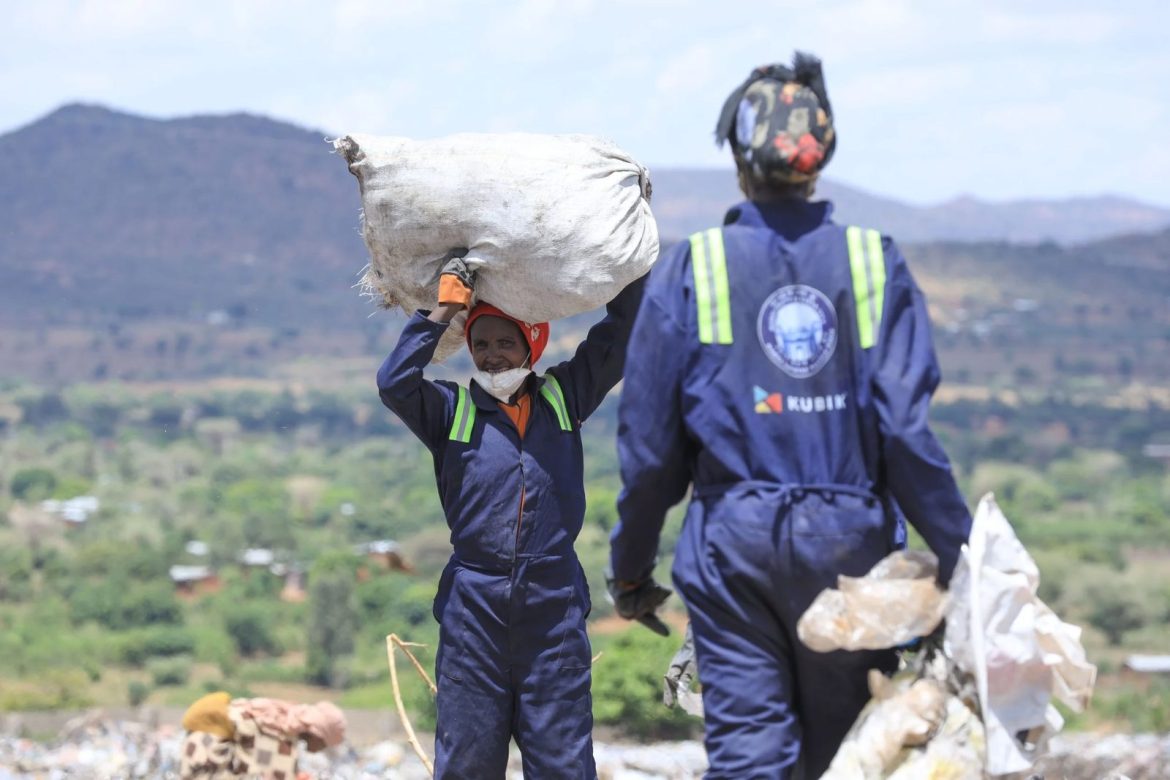
The significance of the discovery extends beyond scientific innovation. Across Africa, rapid urbanisation, population growth and rising consumption have contributed to mounting plastic waste challenges, while recycling infrastructure remains underdeveloped in many countries. According to international environmental assessments, a substantial proportion of plastic waste generated across the continent is either disposed of in open dumpsites, burned informally or enters rivers and coastal ecosystems. Materials such as PVC are particularly problematic because of their durability and resistance to natural degradation processes.
For policymakers and environmental planners, the research highlights the growing role of biotechnology in addressing waste management challenges. Biological degradation methods are increasingly being explored as alternatives to energy-intensive recycling technologies, which often require significant capital investment and stable energy supplies. Nature-based solutions may offer additional flexibility in regions where waste management systems face financial and infrastructure constraints.
The findings are also relevant to Africa’s emerging circular economy agenda. Governments across the continent are seeking to reduce waste, improve resource efficiency and create economic opportunities through recycling and materials recovery. However, achieving these objectives requires solutions capable of dealing with complex and low-value waste streams that are often excluded from conventional recycling systems. Technologies that improve the recoverability or treatment of problematic plastics could strengthen the economic viability of waste management value chains.
Egypt’s research contributes to a broader trend of scientific innovation emerging from African institutions in response to environmental and sustainability challenges. Universities and research centres across the continent are increasingly focusing on applied science and locally relevant technologies that address issues ranging from climate adaptation and water security to waste management and renewable energy. Such innovations have the potential to reduce dependence on imported technologies while supporting domestic knowledge economies.
The study also arrives at a time when global pressure is increasing for stronger action on plastic pollution. International negotiations on a legally binding global plastics treaty continue to advance, with governments seeking mechanisms to reduce plastic leakage into the environment while promoting more sustainable production and consumption patterns. Research into biological degradation could eventually complement broader efforts to redesign materials, strengthen recycling systems and improve waste collection infrastructure.
 While the Cairo University findings remain at the laboratory stage and would require further validation before commercial application, they demonstrate the potential of biological processes to address one of the most persistent challenges in the plastics sector. According to environmental experts, scaling such technologies would require additional research into efficiency, cost-effectiveness and operational feasibility under real-world conditions.
For Africa, where plastic pollution increasingly intersects with public health, environmental protection and economic development priorities, the study underscores the importance of investing in scientific research as part of long-term sustainability strategies. As countries seek to balance industrial growth with environmental stewardship, innovations that expand the range of available waste management solutions may play an increasingly important role in building more resilient and resource-efficient economies.


