


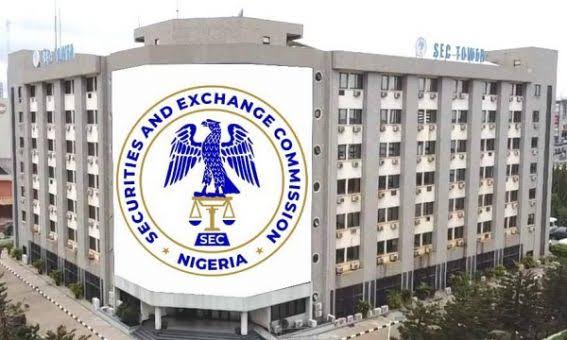
Nigeria’s capital markets regulator has warned that weak environmental, social and governance (ESG) disclosures could leave Nigerian companies and other African businesses at a disadvantage as international investors increasingly assess where to deploy capital based on transparency, governance and sustainability performance. Securities and Exchange Commission (SEC) Director-General Dr Emomotimi Agama made the warning at the FITC Sustainability & ESG Conference 2026 in Lagos, where regulators, financial institutions, businesses and development partners examined the role of sustainability reporting and finance in strengthening Africa’s economic resilience.
Agama’s message reflects a broader shift in global capital markets, where ESG information is increasingly being treated as part of investment risk assessment rather than simply a corporate reporting exercise. For African companies seeking international financing, the quality, consistency and credibility of sustainability information can influence how investors evaluate governance risks, climate exposure, operational resilience and long-term value creation.
Nigerian companies that fail to strengthen their Environmental, Social and Governance disclosures risk missing significant global capital flows as investors increasingly prioritise transparency, responsible governance and sustainable business practices,” Agama said.
The issue is particularly relevant for African economies that depend on foreign investment to finance infrastructure, energy, manufacturing and other capital-intensive sectors. Companies operating in these markets face growing expectations from international lenders and investors for information that allows them to compare sustainability-related risks across jurisdictions and businesses.
For Nigeria, the challenge extends beyond corporate reporting. The country is seeking to attract investment into sectors such as energy, infrastructure and industrial development while simultaneously managing exposure to climate-related risks and strengthening financial-market institutions. Poor-quality ESG information can make it harder for investors to distinguish between companies with robust sustainability systems and those whose commitments exist primarily at the level of public disclosure.
At the Lagos conference, FITC Managing Director and Chief Executive Officer Dr Chizor Malize described sustainability and ESG as increasingly connected to competitiveness, resilience and long-term value creation. Her position reflects the growing integration of sustainability considerations into corporate strategy, financing decisions and risk management.
The implications extend beyond individual companies. African governments and financial regulators are increasingly developing frameworks intended to improve sustainability reporting, climate-risk management and green finance. The effectiveness of these measures will depend partly on whether companies can produce reliable data and whether investors have confidence in the information being disclosed.
Prof. Fabian Ajogwu, Chairman of the Advisory Board of the FITC Sustainability & ESG Institute, argued that sustainability should be incorporated into corporate strategy, institutional governance and national development planning. He also linked environmental stewardship to the protection of Africa’s natural capital, which underpins sectors ranging from agriculture and mining to tourism and energy.
That connection is significant because climate and environmental risks already have direct economic consequences across the continent. Droughts, floods, extreme heat and changing rainfall patterns can disrupt agricultural production, damage infrastructure and increase pressure on public finances. For businesses, these risks can affect supply chains, insurance costs, asset values and access to finance.
The conference also placed sustainable finance at the centre of Africa’s transition challenge. Representing the Central Bank of Nigeria’s Deputy Governor for Economic Policy, Mr Mike Ononugbo highlighted green finance as a mechanism for directing capital towards renewable energy, climate-resilient infrastructure, low-carbon technologies and environmentally sustainable businesses.
Financial instruments such as green bonds, sustainability-linked loans and green equity can help channel private capital into projects aligned with climate and environmental objectives. However, their expansion also depends on credible standards and disclosure systems that allow investors to assess whether capital is being used for its intended purpose and whether projects are generating measurable environmental or social outcomes.
Initiatives such as the Africa Carbon Market Initiative and the Green Climate Fund were cited at the conference as potential sources of capital for addressing Africa’s climate-financing needs. Yet access to such financing increasingly depends on institutional capacity, project quality, regulatory credibility and the availability of reliable data.
This places ESG disclosure within a wider financing equation for African economies. Better reporting alone will not create investment opportunities, but weak reporting can increase information gaps and make it more difficult for investors to price risk. Companies that cannot demonstrate how they manage material environmental, social and governance risks may therefore face higher scrutiny when seeking international capital.
The challenge is also one of consistency. ESG reporting across African markets remains uneven, reflecting differences in regulatory requirements, corporate capacity, data availability and the maturity of sustainability functions within companies. Smaller businesses can face particularly high costs in collecting environmental and social data, while larger companies may have greater resources to establish formal reporting and governance systems.
For regulators, the task is consequently to improve disclosure without creating reporting requirements that are disconnected from the economic realities of local businesses. Effective ESG regulation needs to produce information that investors can use while encouraging companies to improve the underlying systems and controls behind their disclosures.
That distinction was central to the leadership discussion at the Lagos conference. Mrs Mosun Belo-Olusoga, Chairman of the MTN Foundation, argued that Africa’s long-term competitiveness would depend not only on its natural resources but also on the quality of its institutions, leadership and ability to create lasting economic and social value.
For African businesses, the direction of travel is increasingly clear: sustainability is becoming linked to how companies access capital, manage risk and compete in international markets. The immediate challenge is converting ESG from a reporting requirement into a management discipline supported by credible data, accountable governance and measurable performance.
 Nigeria’s experience is relevant beyond its borders. As African economies compete for international capital to finance energy transitions, infrastructure development and industrial expansion, investors are likely to place greater weight on the information available to assess environmental and governance risks. The quality of that information could increasingly influence not only corporate reputations but also the cost and availability of capital.
The SEC’s warning therefore points to a broader issue for Africa’s financial markets. The continent’s investment challenge is not solely about attracting more capital; it is also about building the regulatory, institutional and information infrastructure needed to make that capital easier to deploy and more effectively matched with sustainable economic activity.


