


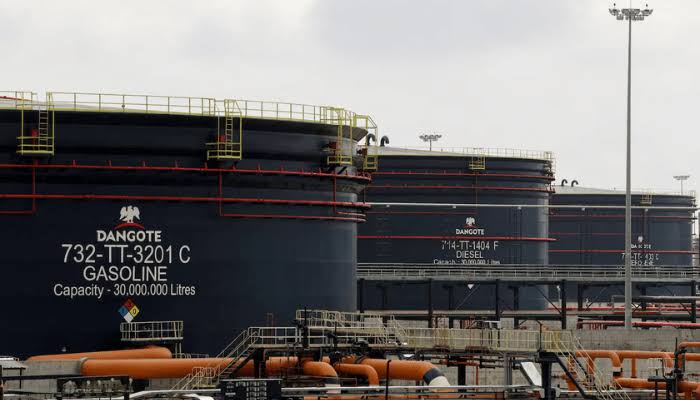
Dangote Petroleum Refinery & Petrochemicals FZE has secured a $1 billion underwriting programme ahead of its planned initial public offering, strengthening the financing base for what could become one of Africa’s largest industrial listings and deepening the role of African financial institutions in funding strategic infrastructure. The programme comprises a fully funded $600 million private-placement tranche and a further $400 million underwriting commitment, according to the financial advisers Marob Strategies and Consulting DIFC Ltd and Lilium Capital Group.
The financing comes as the 650,000-barrel-per-day refinery prepares for a proposed Nigerian listing that could raise about $5 billion, although the final offer size remains subject to regulatory approval and market conditions. Reuters reported that Dangote plans to launch the IPO in Nigeria by October 2026 and is initially focusing on broad Nigerian participation rather than an immediate foreign listing. The latest funding arrangement is significant because it separates capital already committed from money that remains conditional. The $600 million has been completed through a private placement, while the remaining $400 million is an underwriting commitment linked to the IPO and remains subject to market conditions, regulatory approvals, definitive documentation and applicable securities laws.
That distinction will matter to investors assessing the refinery’s eventual valuation and ownership structure. While the refinery has attracted substantial institutional interest, the precise terms of the $600 million private placement, including the investors involved, the valuation and the stake acquired, have not been fully disclosed publicly. The forthcoming offering documentation is therefore likely to provide a clearer picture of the capital structure being presented to the market.
The development follows a $2.5 billion private placement completed in July, which was reportedly 3.7 times oversubscribed and led by the Africa Finance Corporation alongside strategic investors. Reuters reported that the transaction valued the refinery at about $40 billion, although the final valuation for the IPO could differ depending on market conditions and the pricing process. For Nigeria, the planned listing is about more than raising capital for a single company. Dangote Refinery represents one of the country’s largest industrial investments and is increasingly central to Nigeria’s strategy to reduce dependence on imported refined petroleum products. Its 650,000-barrel-per-day capacity gives it the potential to supply the domestic market while serving customers across Africa and other international markets.

The refinery’s emergence as an exporter has already begun to change the regional petroleum-products market. Reuters reported that the plant became Europe’s largest jet-fuel supplier in June and July amid disruptions in global crude and refined-product markets. Its ability to export products provides a new revenue stream for the company while demonstrating how large-scale African refining capacity can participate in international commodity markets rather than operating solely as a domestic supply asset.
The broader significance lies in the capital required to sustain and expand such an industrial operation. Refineries are capital-intensive businesses, requiring continuous expenditure on crude procurement, maintenance, logistics, storage, technology and working capital. The proposed IPO could therefore provide Dangote Industries with additional flexibility as it seeks to strengthen the refinery’s balance sheet and potentially finance further expansion.
Dangote has indicated that it intends to increase the refinery’s capacity to as much as 1.4 million barrels per day within three years, with the IPO and debt expected to contribute to the financing of that expansion. The planned listing also reflects a wider effort to deepen African capital markets. One of the longstanding challenges facing large African infrastructure and industrial projects is the availability of long-term local and regional capital. Major projects frequently depend on international banks, development-finance institutions and foreign investors because domestic capital markets often lack sufficient depth to finance investments running into billions of dollars.
The Dangote refinery’s proposed listing offers a different model: mobilising African institutional and retail investors around an operating industrial asset with regional economic significance. That is where the involvement of Marob Strategies and Lilium Capital becomes relevant. Marob is chaired by Benedict Oramah, the former president of the African Export-Import Bank, while Lilium is chaired by Simon Tiemtoré, who previously worked at Afreximbank and now heads Vista Bank Group. Their involvement creates a direct institutional link to the Pan-African financing architecture that has supported Dangote’s refinery development over several years.
Afreximbank remains one of the refinery’s most significant financial backers. In March 2026, the bank announced that it had underwritten $2.5 billion of a $4 billion senior syndicated term loan for Dangote Petroleum Refinery and Petrochemicals, with Access Bank serving alongside it as co-Mandated Lead Arranger. The five-year facility was designed to consolidate existing financing, optimise the refinery’s capital structure and align its debt profile with its operational status and growth plans. That financing followed an earlier $1.35 billion facility signed by Afreximbank in August 2025 as part of a roughly $4 billion syndicated refinancing package for Dangote Industries. The bank said the financing was intended to refinance capital spent on constructing the refinery and strengthen the group’s balance sheet.
The continued involvement of Afreximbank highlights the role that African development and trade-finance institutions can play in supporting projects that commercial lenders may find difficult to finance at scale. It also reflects a broader push to mobilise African capital for African industrialisation, particularly in sectors linked to energy security, manufacturing and intra-African trade. For Nigeria, the refinancing and IPO are taking place against a difficult macroeconomic backdrop. The country has been managing foreign-exchange pressures, high inflation and elevated financing costs while attempting to attract investment into productive sectors. A successful listing could therefore provide an important test of investor appetite for large Nigerian industrial assets.
It could also broaden ownership of the refinery. Dangote has previously described the planned listing as a way of expanding participation in the country’s industrial development, while the company’s management has indicated that the IPO is intended to provide ordinary Nigerians with an opportunity to own part of the business.
Read also:Dangote sets October 2026 start for $16 billion Lamu refinery, targeting east Africa’s fuel market
However, the regulatory process remains critical.Nigeria’s Securities and Exchange Commission warned in June that there had been premature marketing and solicitation of subscriptions for a purported Dangote Refinery securities offering. At the time, the SEC said no IPO application had been filed or approved and directed market participants to stop soliciting funds.The regulatory warning demonstrated the risks surrounding a high-profile offering that has generated considerable public interest before formal documentation was available. Investors need to distinguish between pre-marketing, private placements, underwriting commitments and an approved public offer.
The situation has since moved forward. Reuters reported in August that Dangote Refinery had submitted a $5 billion IPO application to the SEC and was working towards a Nigerian listing by October. The final size of the offer, however, remains undecided. The proposed listing could eventually extend beyond Nigeria. The Johannesburg Stock Exchange has said it has been in discussions with Dangote about a potential secondary listing in South Africa after the Nigerian IPO. Reuters reported that the JSE sees strong interest from Dangote in a South African listing, although Nigeria would come first.
Such a move would have implications for African capital-market integration. A company with significant operations and investors across the continent could potentially use multiple African exchanges to widen its investor base and increase liquidity. It would also provide a practical test of whether African exchanges can compete to host large, cross-border industrial companies.
The potential listing is also relevant to East Africa. Dangote Group has indicated plans for a new refinery in Kenya, with Reuters reporting that the company intends to finance the proposed project through a combination of internal cash flow, bonds and an IPO. The planned facility in Lamu is expected to have a capacity of about 700,000 barrels per day and would target Kenya and neighbouring markets.
The success or failure of the Lagos listing could therefore influence how Dangote and other African industrial groups approach capital mobilisation for future infrastructure projects. There is also a broader energy-security question. Africa imports substantial volumes of refined petroleum products despite being home to major crude-oil producers. Limited refining capacity, ageing infrastructure and insufficient investment have historically forced countries to rely heavily on imported fuels, exposing consumers and governments to international price movements, shipping costs and foreign-exchange constraints.
The Dangote refinery changes part of that equation by creating a large refining hub capable of supplying multiple African markets. Its expansion could strengthen regional supply chains, although the benefits will depend on crude availability, pricing, logistics and the competitiveness of its products against international alternatives. The refinery’s financial performance will consequently be closely watched by investors. Large capacity alone does not guarantee profitability. Margins depend on crude prices, product prices, operating efficiency, maintenance costs, access to foreign exchange and the ability to secure reliable feedstock. The IPO will offer investors an opportunity to assess those factors through formal financial disclosures. The prospectus will be particularly important in establishing the company’s revenues, profitability, debt obligations, cash flows, expansion plans and risks.
For African capital markets, that transparency could be as important as the amount of money raised. If the transaction succeeds, it could demonstrate that large African industrial assets can attract substantial domestic, regional and international capital through African markets. It could also strengthen the case for pension funds, sovereign investors, insurance companies and other institutional investors to participate more actively in productive infrastructure and industrial assets. But the opposite is also possible. If valuation expectations are considered excessive, if market conditions deteriorate or if investors remain concerned about the refinery’s debt and operating risks, the final offer could be smaller than currently discussed. That is why the $1 billion underwriting programme should be viewed as an important financing milestone rather than confirmation that the IPO will raise $5 billion.
The distinction between the $600 million already funded and the $400 million conditional commitment is central to understanding the transaction. The first represents capital already mobilised through a private placement. The second provides additional support for the offering but remains dependent on conditions that have yet to be satisfied. The next major benchmark will therefore be the publication of the formal offering documents and regulatory approval. Those documents should clarify the refinery’s ownership structure, valuation methodology, proposed offer size, use of proceeds and the terms under which new investors will participate.
For Nigeria, the stakes extend beyond Dangote’s shareholders. The refinery is becoming an important part of the country’s energy infrastructure and has implications for fuel imports, foreign-exchange demand, industrialisation and regional trade. For Africa, the proposed IPO represents a larger experiment: whether domestic and continental capital can increasingly finance the infrastructure needed to reduce the region’s dependence on imported industrial capacity.
The $1 billion programme provides evidence that major financial institutions are willing to support that transition. Whether the public market ultimately validates the refinery’s valuation, broadens ownership and supplies capital for its next phase will depend on the information investors receive and the price at which they are asked to participate.


